 Sophie Robinson
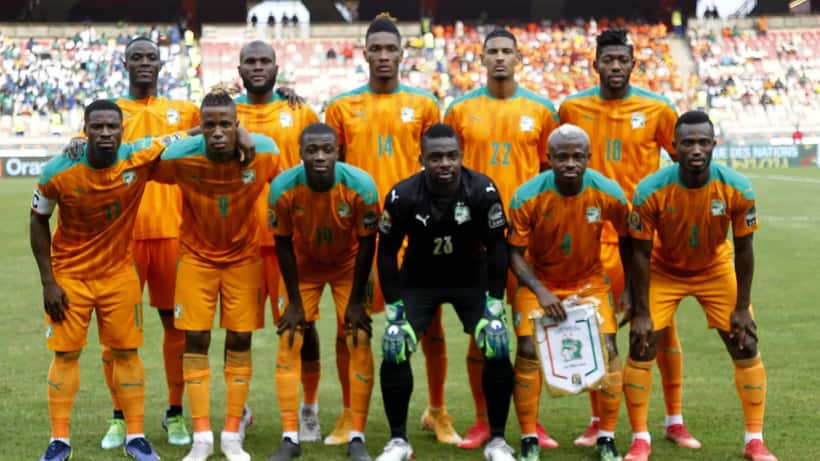
Ivory Coast kicked off their 2026 World Cup campaign today against Ecuador at Lincoln Financial Field in Philadelphia, but the story behind their squad reveals something just as compelling as the match itself. Nine of their 26 players were born abroad — and at least one, Yoan-Ange Bonny, only switched his international allegiance from France to Ivory Coast within the past week.
The Rule That Decided Who Wears the Elephants' Shirt
FIFA's international eligibility rules are notoriously complex, but the core principle is straightforward: a player can represent a country if they hold nationality of that country, were born there, or have a parent or grandparent who was born there. The rules are governed by FIFA's Regulations on the Status and Transfer of Players, updated for 2024 and applicable through the 2026 World Cup cycle.
The critical issue for dual-national players is the "one-appearance rule". Once a player has appeared for one nation in a competitive match (not a friendly), they are locked in. They cannot switch allegiance, even if they hold two passports. Yoan-Ange Bonny, who plays for Inter Milan and had represented France's under-21 side, was able to switch to Ivory Coast because his competitive appearances were made at youth level, not for the senior France national team in a FIFA-recognised competitive fixture.
This distinction matters enormously. It is not simply about which passport you hold — it is about which shirt you have already worn on the competitive stage.
Why 17 of 26 Ivory Coast Players Were Born in Côte d'Ivoire — and What the Other 9 Tell Us
Ivory Coast's diaspora, especially in France, is one of the largest of any African country. Decades of migration to Paris, Lyon, and Marseille produced a generation of footballers who grew up in French youth academies while retaining strong family ties to the Ivory Coast. Guela Doué — older brother of PSG's Désiré Doué, who plays for France — is in the Ivory Coast squad, illustrating how families can be split between two footballing nations by the choices their children make before they compete professionally.
For UK-based players, this scenario is not hypothetical. England's elite football system includes thousands of players born in or descended from families with roots in Nigeria, Ghana, Jamaica, South Africa, Zimbabwe, and beyond. Many of those players — particularly at youth level — face the same decision that Bonny faced: commit to the country where they developed, or switch to represent their heritage nation.
Under FIFA rules, a player born in England who has a parent or grandparent born in another country has the right to choose which national team to represent — provided they have not yet made a competitive senior appearance. As covered in our earlier analysis of George Hirst's Scotland World Cup eligibility switch, the decision to switch is irreversible once a competitive cap is earned at senior level.
The Legal and Administrative Complexity of Switching Nationality
Switching footballing allegiance is not simply a matter of informing FIFA. The player must first meet the citizenship or ancestral requirements of the destination country. Obtaining a second passport or citizenship certificate takes time — often months, sometimes years. For a player hoping to represent Ivory Coast at a tournament beginning in June 2026, the legal process would have needed to begin long before the squad announcement.
The FIFA eligibility application process itself requires formal documentation: birth certificates, parental nationality proofs, and evidence of citizenship. FIFA's Secretariat adjudicates disputed cases, and its decisions can be challenged through the Court of Arbitration for Sport (CAS). For dual-national players navigating this process, immigration lawyers and sports law specialists are essential.
As analysed in our guide on England's FIFA player release rules and what clubs can legally demand, the legal framework around international football participation is far more regulated than most fans assume. Club contracts, release obligations, and insurance liabilities all intersect with the player's national team rights.
What This Means If You Have Dual Nationality
The FIFA example has a broader legal lesson for UK residents. Dual nationality — holding citizenship of both the UK and another country — is an increasingly common situation, particularly among second and third-generation immigrants, children of expats, and those who have acquired naturalisation rights abroad.
The legal implications vary significantly by country pair. Some countries do not recognise dual nationality and may require individuals to renounce one citizenship upon naturalising in another. Tax treatment differs between nations: a UK citizen who is also an Irish national and spends significant time in Ireland may face questions about tax residency. Inheritance laws in two jurisdictions may apply simultaneously to an estate, with potentially contradictory outcomes.
For most people, dual nationality is straightforward and beneficial. But the edge cases — when a parent dies leaving assets in two countries, when a marriage crosses jurisdictions, or when a business operates internationally — require expert legal advice. A solicitor with international law experience can map out your obligations and rights clearly.
The Ivory Coast Match: Why Eligibility Is the Story Within the Story
Ecuador will pose a genuine test for Ivory Coast in Philadelphia today. But the deeper narrative in the Ivory Coast camp is about the legal machinery that assembles a modern international squad. Yoan-Ange Bonny's late switch is neither unusual nor controversial — it is simply how world football now works, given the scale of global migration over the past fifty years.
Understanding the legal rules that shape international allegiance is not just a matter for professional footballers. For anyone with complex nationality, family roots spanning multiple countries, or assets spread across borders, the same principles apply: know your rights, act early, and take specialist advice.
Consulting a solicitor through Expert Zoom takes minutes. Whether your question involves dual nationality, inheritance across jurisdictions, or any area of international law, the right legal expert can clarify your position before a deadline — whether that deadline is a FIFA registration cutoff or a probate filing.
This article is for informational purposes only and does not constitute legal advice. Please consult a qualified solicitor for guidance specific to your circumstances.
