 Harriet Price
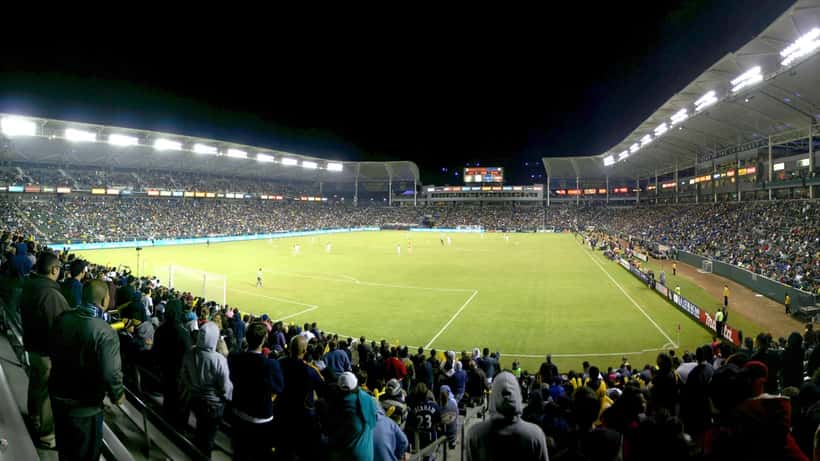
Major League Soccer paused its 2026 season on 25 May, with all fixtures suspended until 16 July to allow players to compete at the FIFA World Cup hosted across the United States, Canada, and Mexico. For the hundreds of players released by their MLS clubs — including a significant cohort of British and European professionals — the break raises a legal question with major financial consequences: if a player is seriously injured playing for his national team, who bears the cost?
The World Cup Break and What It Means for Clubs
MLS clubs have no choice in the matter. FIFA's Regulations on the Status and Transfer of Players require clubs to release contracted players for international duty when called upon by their national associations. Clubs cannot block a player's participation, withhold wages during the period, or penalise the player for prioritising international fixtures.
The break runs for 52 days, covering the group stage, knockout rounds, and final of the 2026 World Cup. Inter Miami, Philadelphia Union, and LA Galaxy — among the favourites in the Eastern and Western Conferences respectively — will see key squad members depart simultaneously. The new era of MLS under Apple TV's exclusive broadcast deal has only heightened global interest in how the league manages this enforced pause.
For the clubs, the financial risk sits in a grey area that many UK sports lawyers describe as one of the most misunderstood aspects of professional football contracts.
Who Is Liable for Injuries on International Duty?
Under standard NFL and MLS contract templates, injury liability during international duty depends on three factors: the specific contract language, the player's insurance policy, and whether the club participates in FIFA's Club Protection Programme.
FIFA introduced the Club Protection Programme to address exactly this risk. The programme provides financial compensation to clubs when a player suffers a serious injury — defined as one requiring surgery or resulting in incapacity for more than 28 days — while on international duty. Compensation covers a portion of the player's salary during the period of incapacity, capped at a maximum defined in the regulations.
However, the programme has limits. It applies only to players registered with FIFA-affiliated national associations and participating in FIFA-sanctioned competitions. A British MLS player injured in a pre-tournament friendly, for example, may fall outside the automatic protection window.
For UK sports professionals playing abroad, the lesson is clear: never assume your club's insurer or FIFA's programme will cover every scenario without reading the policy carefully.
The UK Parallel: Premier League and International Duty
British football fans are familiar with the tension between clubs and international fixtures. Every international window sees Premier League managers publicly lamenting the loss of key players. What is less discussed is the contractual architecture underneath those complaints.
Under the Premier League's standard player contract, clubs must release players for international duty and continue paying wages throughout. If a player is injured on international duty and the national association's own insurance does not fully cover the loss, the club bears the residual financial exposure.
Several high-profile cases in the past decade have resulted in insurance disputes between clubs, national associations, and private insurers. Cole Palmer's FA Cup Final contract performance clauses highlighted how a single match appearance can trigger substantial contractual obligations. International duty carries equivalent weight — but the liability pathway is far more complex.
What Happens When a Player Cannot Return After the World Cup?
The most severe scenario is a World Cup injury that ends or significantly curtails a player's career. In this case, multiple parties may be liable simultaneously:
The national association: Under FIFA rules, national associations must insure every called-up player against injury during international duty. The minimum cover required is set by FIFA, but policy maximums vary significantly between associations. The FA's Group Personal Accident policy for England players covers medical expenses and a lump sum for permanent total disability, but the exact terms are not public.
The player's club: If the national association's insurance payout falls short of the player's remaining contract value, the club may seek to recover the shortfall from a private insurer — or, in some circumstances, from the national association directly. This is rarely straightforward and often ends in arbitration.
FIFA's Club Protection Programme: Covers salary compensation for a defined period, but does not replace the full value of a player's contract if his career ends prematurely.
UK sports lawyers consistently advise professional athletes to negotiate personal income protection insurance that sits above and beyond employer and governing body policies. The gap between what FIFA's programme pays and what a career-ending injury actually costs a player can amount to millions.
Practical Steps for UK Sports Professionals
Whether you play in the Premier League, the Championship, or a lower-league club, the following steps can help protect your position before international duty:
- Ask to see your club's liability policy: Clubs are not always forthcoming about this, but a sports lawyer can request sight of the relevant policy provisions on your behalf.
- Understand your national association's cover: The FA, the Scottish FA, and the FAW all carry insurance for international players. Requesting a policy summary is a reasonable ask before a major tournament.
- Take out personal income protection: Covers income if injury prevents you from working, regardless of what other policies pay out.
- Check your contract's injury provisions: Some contracts include specific clauses that limit the club's wage obligations if the injury occurred outside club-sanctioned activities.
Gibbs-White's England World Cup situation: the legal employment rights explained explored how international selection decisions intersect with UK employment rights. The contractual side of international duty is an equally important dimension.
The MLS World Cup Break: A Wider Point About Cross-Border Sports Contracts
The 2026 World Cup is the first co-hosted tournament, bringing together teams from across the globe on North American soil. For UK players who have moved to MLS — attracted by the league's growing commercial profile and Apple TV's global reach — the tournament represents a unique challenge: competing under a FIFA calendar that is technically designed for European football seasons, inside an American contract framework that operates on different legal assumptions.
UK sports lawyers with expertise in cross-border sports contracts are increasingly valuable for professionals navigating this intersection. The MLS World Cup break is not merely a scheduling curiosity. For injured players, for clubs managing cap space, and for national associations balancing squad welfare with competitive pressure, it is a legal event as much as a football one.
If you have questions about your contractual position before an international tournament, consulting a qualified sports lawyer early — before selection, not after injury — gives you the strongest possible position.
