 James Harrison
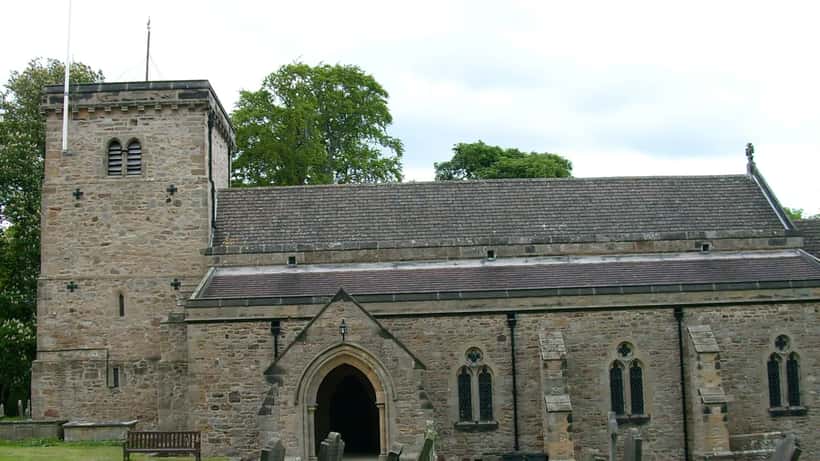
The village of Dry Doddington in Lincolnshire has launched an urgent £100,000 fundraising campaign to save its 12th-century St James' Church — a Grade II-listed building that leans at 5.1 degrees, steeper than the Tower of Pisa's 3.97 degrees, and is now showing signs of structural deterioration that could accelerate without immediate intervention.
England's Wonkiest Church — and Why It Matters Beyond Tourism
St James' Church in Dry Doddington is not simply an architectural curiosity. Built in the 12th century, with its characteristic tower added in the 14th century, the building began leaning significantly in the late 19th century. Emergency underpinning in 1918 arrested the movement, and the structure has remained stable at its current angle for over a century — but stable is not the same as sound.
The fundraising appeal, launched in April 2026, identifies deteriorating floor stone slabs, crumbling masonry, and failing electrical systems as the most pressing concerns. Critically, the lean itself is not the target: the restoration team has been explicit that the building's famous angle will be preserved. What needs urgent attention is the fabric that surrounds and supports it.
This distinction — between the headline-grabbing feature and the underlying condition — is one that surveyors and structural engineers encounter constantly, and it carries a lesson well beyond Grade II-listed churches.
What Leaning Buildings Tell Structural Professionals
A building that leans is not automatically a building at risk. The Tower of Pisa has leaned since the 12th century without collapse. Dry Doddington's church tower has maintained its 5.1-degree angle since 1918. What matters is whether the lean is active or arrested, and whether the underlying causes of movement have been addressed.
Structural engineers assess leaning or tilting structures by examining several factors:
Foundation type and condition. Most historic British buildings sit on shallow rubble foundations that were never designed for clay soils with high plasticity. Clay expands when wet and contracts when dry — a process called shrink-swell — and differential movement across a foundation can cause gradual tilting over decades. Modern surveys use soil investigation to determine whether movement is ongoing or historical.
Crack patterns. The shape, width, and distribution of cracks in masonry tell a forensic story. Diagonal stair-step cracks typically indicate differential settlement. Horizontal cracks suggest outward thrust, often from failed roof timbers. Vertical cracks frequently indicate thermal expansion or old repairs that have debonded. A chartered structural engineer reads these patterns the way a doctor reads an X-ray.
Deformation monitoring. For suspected active movement, engineers install inclinometers and crackmeters to measure whether a structure is still moving or has reached a new equilibrium. Digital photogrammetry now allows entire building facades to be modelled in three dimensions, creating a baseline against which future surveys can be compared.
Why Older UK Properties Face Similar Risks
The problem confronting Dry Doddington's fundraisers is not unique to medieval churches. Across the UK, millions of homes are built on clay soils with significant shrink-swell potential — a risk the Royal Institution of Chartered Surveyors (RICS) identifies as one of the most common causes of structural movement in residential property. During the summer droughts of 2022 and 2023, insurers recorded a sharp increase in subsidence claims as soil moisture levels fell to historic lows, causing unprecedented foundation movement in properties that had been stable for generations.
For owners of older properties — particularly Victorian and Edwardian terraces, converted farmhouses, and period cottages — the combination of shallow foundations, clay subsoil, and ageing drainage can create conditions that lead to exactly the kind of gradual differential settlement seen in historic structures like St James'.
The warning signs are often subtle at first:
- Doors and windows that begin to stick or jam without obvious cause
- Hairline cracks appearing at the corners of door and window openings
- Gaps developing between skirting boards and floors
- External render cracking in a diagonal pattern across corners
None of these is automatically alarming in isolation. All of them, appearing together or progressing over time, warrant a professional assessment.
The Role of a Chartered Surveyor
When historic or older properties show signs of movement, the first step is almost always a structural survey carried out by a chartered building surveyor or structural engineer. In England, the most relevant professional bodies are the Royal Institution of Chartered Surveyors (RICS) and the Institution of Structural Engineers (IStructE), whose members are bound by professional standards and carry appropriate indemnity insurance.
A structural survey goes significantly beyond the mortgage valuation that most buyers receive when purchasing a property. Where a valuation survey notes visible defects without necessarily investigating their cause, a full structural survey aims to determine the nature, extent, and likely trajectory of any movement — and to recommend remediation proportionate to the actual risk.
For Grade II-listed buildings specifically, any structural work must comply with Historic England's conservation guidelines and will typically require listed building consent before work begins. This adds regulatory complexity: the wrong intervention on a listed structure — such as modern polymer resins in traditional lime mortar joints — can cause irreversible damage and legal liability.
The fundraising challenge facing Dry Doddington reflects a broader reality in UK heritage conservation: the regulatory framework that protects listed buildings from inappropriate change also, in some cases, makes repairs more expensive and slower to execute than equivalent work on unlisted properties.
From Church to Home: Practical Steps for Property Owners
If you own an older property in the UK and have noticed any of the warning signs described above, the recommended sequence is straightforward:
Document what you observe. Photograph cracks with a reference scale — a coin or ruler — and note the date. Repeat every three to six months. Progression is more informative than a single snapshot.
Instruct a qualified surveyor. A RICS-accredited structural engineer or building surveyor can carry out a condition report and, if movement is suspected, recommend monitoring. Costs for a specialist structural survey typically range from £500 to £2,000 depending on property size and complexity — substantially less than the cost of remediation if a problem is left untreated.
Check your insurance. Buildings insurance policies vary considerably in how they handle subsidence and settlement claims. Some policies require you to use the insurer's approved contractors; others allow you to instruct your own engineer. Reviewing your policy before a problem develops is advisable.
For owners of listed buildings, consulting a conservation architect or specialist heritage surveyor — rather than a general contractor — from the outset will help ensure that any proposed works are both appropriate and approvable.
On Expert Zoom, you can connect with qualified building surveyors and structural engineers across the UK who can assess your property's condition and advise on the right course of action. For more on structural assessment and what the collapse of historic structures can reveal about maintenance, see our guide to Redheugh Bridge's Crumbling Concrete and how to spot early structural decay in homes.
The church at Dry Doddington has stood — at a tilt — for over 700 years. The fundraising campaign aims to give it the care it needs to stand for 700 more.
