 Stephen Hall
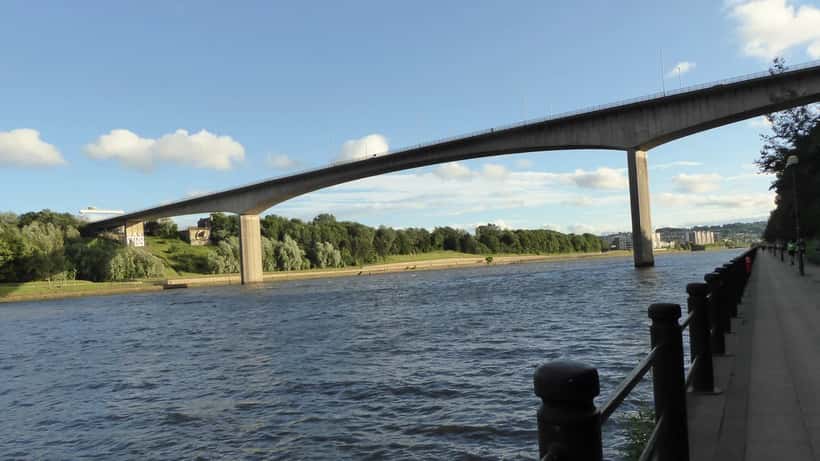
Gateshead Council has set aside £1 million to repair the Redheugh Bridge following an inspection that found crumbling and spalling concrete, multiple structural cracks, and drainage failure on the Newcastle-Gateshead crossing. Sections beneath the northern approach have already been fenced off after chunks of concrete fell from the deck. While the bridge dates from 1983 and carries far heavier loads than a typical house, the deterioration mechanisms that are eating away at the Redheugh are the same ones that affect millions of UK homes — and most homeowners don't spot them until serious damage has already occurred.
Why Concrete Fails: The Science Behind the Redheugh
The Redheugh Bridge was opened by Princess Diana in May 1983. More than 40 years of exposure to wind, rain, temperature cycling, de-icing salt spray, and the vibration of heavy vehicles have caused the concrete to deteriorate in several predictable ways.
The most visible problem at the Redheugh is spalling — the process by which surface layers of concrete flake and fall away. Spalling typically begins with carbonation, where carbon dioxide from the atmosphere penetrates the concrete and reacts with calcium hydroxide to produce calcium carbonate. Over time, this lowers the pH of the concrete, which strips the protective oxide layer from the steel reinforcement bars inside.
Once the rebar corrodes, it expands — steel rust occupies roughly three times the volume of the original metal. That expansion generates internal pressure within the concrete, causing it to crack and eventually shed chunks. This process can continue unseen for years before breaking through to the surface.
How the Same Process Affects UK Homes
While most UK homes are brick rather than concrete-frame, the same corrosion chemistry affects concrete lintels, garage floors, external steps, retaining walls, balcony slabs, and reinforced concrete extensions — all common in British housing stock, particularly in homes built from the 1950s to the 1980s.
In the UK's wet and salt-laden climate, the risk is amplified in coastal areas, road-facing properties, and anywhere de-icing salt from nearby roads reaches structural surfaces. Properties in northern cities like Newcastle, with their colder winters and older concrete infrastructure, are particularly susceptible.
Warning signs to look for:
- Rust staining running in streaks from hairline cracks — a tell-tale sign that reinforcement bars below are corroding
- Cracking along concrete lintels above windows or doorways, particularly horizontal cracks that follow the line of reinforcement
- Flaking or bubbling on the surface of concrete steps, garden walls, or balcony edges
- Hollow sounds when you tap a concrete surface — indicating that the material beneath has separated from the substrate
- Visible gaps appearing between a concrete element and the brickwork around it
- Damp patches on interior walls adjacent to concrete elements
The Hidden Danger: What You Can't See
The Redheugh Bridge's principal inspection — carried out in January 2026 — was only possible by closing the road and examining the structure at close range. For most homeowners, the interior of a concrete lintel, the underside of a balcony, or the base of a retaining wall is invisible without deliberate investigation.
This is why the Building Research Establishment (BRE) and the Royal Institution of Chartered Surveyors (RICS) recommend that homeowners commission a structural survey when purchasing any property built before 1990 that includes concrete elements — and that existing owners in older properties arrange for periodic visual inspections by a qualified structural engineer or chartered surveyor.
A RICS Level 3 Building Survey (formerly known as a full structural survey) is the most comprehensive form of property survey in England and Wales. Unlike a standard mortgage valuation or Level 1 survey, it examines the structural condition of the building in detail and will flag concrete elements that show early signs of carbonation or corrosion.
According to RICS guidance on building surveys, a Level 3 survey is recommended for properties that are older, of unusual construction, or where significant structural defects are suspected.
What Happens If You Ignore Concrete Deterioration
Homeowners who fail to act on early warning signs risk escalating costs. A hairline crack in a concrete lintel that costs a few hundred pounds to stabilise can, if left untreated, develop into a full structural failure requiring replacement of the lintel and the brickwork above it — a job that can run to several thousand pounds. Similarly, a deteriorating balcony slab that falls away at the edges is not just expensive to repair: it is a safety hazard.
Insurers are also relevant here. Standard UK home insurance policies generally do not cover gradual deterioration — they cover sudden, unforeseen damage. If an insurer determines that concrete spalling was a pre-existing, progressive condition that the homeowner failed to address, a claim may be rejected or reduced.
What to Do If You Spot the Warning Signs
If you notice any of the warning signs described above, the following steps apply:
Immediate safety: If you see fallen or loose concrete — particularly from elevated areas like balconies, lintels, or retaining walls above pedestrian areas — cordon off the area and contact a structural engineer or builder before allowing anyone underneath.
Get an assessment: Cosmetic repairs to cracked or stained concrete may mask a deeper problem. A structural engineer or chartered surveyor can use a combination of visual inspection, hammer testing, and (where appropriate) carbonation testing to assess the extent of any deterioration and recommend appropriate remediation.
Act before it spreads: Concrete corrosion is progressive. Early intervention — including repointing, surface sealing, or targeted repair of exposed reinforcement — is far less costly than full replacement.
Check your planning position: In listed buildings or conservation areas, like parts of Newcastle and Gateshead near the Tyne bridges, some repairs to external concrete elements may require planning consent or listed building consent. A local architect or surveyor can advise on whether permitted development rights apply.
The Redheugh Bridge will now receive a full programme of professional repair. Whether your home needs the same attention is a question worth asking sooner rather than later. ExpertZoom connects you with qualified structural surveyors, chartered surveyors, and home improvement specialists who can assess the condition of concrete elements in your property and advise on cost-effective repairs.
