 Sophia Hamilton
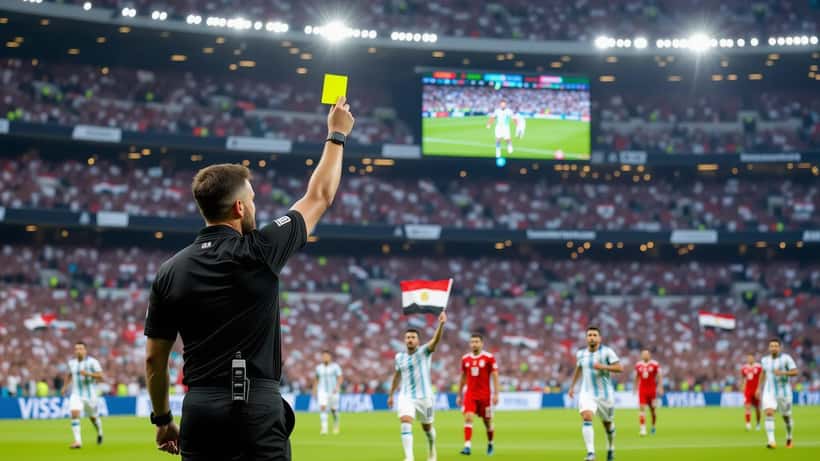
When French referee François Letexier was appointed by FIFA to officiate Argentina versus Egypt in the Round of 16 at Mercedes-Benz Stadium in Atlanta on 7 July 2026, the reaction in Buenos Aires was immediate and furious. Social media exploded with accusations of conspiracy, referencing the bitter 2022 World Cup final in which Letexier's compatriot Didier Deschamps led France against the Albiceleste. The question being asked from Rosario to Redditch was blunt: can Argentina — or anyone — legally challenge a World Cup referee appointment?
FIFA's Referee Appointment Process: The Rules Behind the Outrage
FIFA assigns referees through its Referees Committee, a body operating under Article 46 of the FIFA Statutes. Officials are allocated on the basis of merit, linguistic suitability, and neutrality protocols — but nationality alone does not disqualify a referee from high-profile fixtures.
Letexier, 37, is one of the most decorated officials in European football. He has held a FIFA badge since 2017, officiated the 2021 UEFA Europa League Final and the 2023 UEFA Super Cup, and refereed multiple matches at Euro 2024. His only prior Argentina involvement came in the 2023 FIFA U-20 World Cup — a 2-1 win over Uzbekistan for Argentina, not a pattern of persecution. On paper, his appointment is procedurally solid.
Yet perception matters enormously in a tournament where trust in governing bodies is already strained. Argentina's own road to this stage was not without controversy: their Round of 32 win over Cabo Verde went to extra time, accompanied by multiple VAR disputes over a quick free-kick and an offside query on Lisandro Martínez's decisive goal. Nerves on the Argentine side were already frayed before Letexier's name appeared on the team sheet.
Can Teams or Fans Legally Challenge a Referee Appointment?
The short answer, according to UK sports law specialists, is: almost never before the match, and only in extraordinary circumstances after it.
FIFA operates under its own legal framework — the FIFA Statutes and the FIFA Disciplinary Code. Member associations contractually agree to resolve disputes through the Court of Arbitration for Sport (CAS) in Lausanne, not ordinary civil courts. Article 59 of the FIFA Statutes explicitly prohibits recourse to domestic courts of justice. Before a ball is kicked, no independent tribunal has jurisdiction to intervene in a referee appointment.
After a match, the picture is more nuanced. Under FIFA's Disciplinary Code, clubs and associations can raise concerns about referee conduct through official match reports. If credible evidence of bias or material error emerges, FIFA's Disciplinary Committee can investigate. But overturning a result on the basis of referee error alone is extraordinarily rare.
The cautionary precedent from this very tournament is the Folarin Balogun red-card affair. Referee controversies have already defined WC2026: earlier in the tournament, the appointment of Alireza Faghani to officiate England vs Mexico drew similar scrutiny from fans questioning FIFA's neutrality standards. After reported political pressure led FIFA to reverse a red card decision, UEFA described it as "an unprecedented line being crossed." CAS subsequently ruled a Belgian appeal inadmissible on grounds of standing. The episode underlines both the fragility and the almost sovereign authority of FIFA's internal process — once a decision is made, reversing it is a formidable legal challenge.
Five Legal Scenarios Where UK Fans and Businesses Do Have Rights
While individual fans cannot challenge a referee appointment, UK sports lawyers can assist in several related scenarios that arise from tournament controversies:
Betting disputes — If your wager was materially affected by a decision you believe constitutes a breach of bookmaker terms, a sports lawyer can advise on claim routes through licensed operators and the Gambling Commission. Under UK law, bookmakers must act in good faith.
Sponsorship and broadcast contracts — Commercial agreements often include clauses triggered by disqualification, corruption findings, or force majeure events. If a brand's World Cup sponsorship is linked to a specific team's progress, legal review is essential. Similar eligibility and nationality disputes at WC2026, such as the FIFA dual-nationality eligibility rules tested in the Ivory Coast vs Ecuador match, show how quickly legal questions can arise.
Defamation in UK media — If a referee or official is unjustly accused of corruption in UK publications, defamation law under the Defamation Act 2013 applies, regardless of where the match was played.
Fan disorder and banning orders — If protests over referee decisions at UK viewing events turn physical, UK public order law and Football Banning Orders under the Football Spectators Act 1989 can apply rapidly and with serious consequences.
Agent and club commercial disputes — UK-registered agents and analysts working for clubs involved in FIFA disciplinary proceedings may face contract implications that require specialist employment and sports law advice.
The Sporting Reality: Messi, Salah and a Match Worth Watching
Away from the legal debate, Argentina versus Egypt is a genuinely extraordinary occasion. Lionel Messi, 39 years old, arrives at Mercedes-Benz Stadium having scored 7 goals in this tournament, tying his own record from 2022 and registering his 20th World Cup goal overall — the first player ever to score 7 goals across two separate tournaments. He is level with Erling Haaland and Kylian Mbappé in the Golden Boot standings entering the knockout rounds.
For Egypt, Mohamed Salah made history simply by being here. Egypt's Round of 32 win over Australia — their first knockout-stage victory in 92 years — required 120 minutes and a Panenka penalty from Salah himself, despite a hamstring concern that remained unresolved heading into Atlanta. He led all R16-bound players in chances created during the group stage.
For UK fans, kick-off is at 17:00 BST. You can find coverage across major broadcasters — Argentina are expected to advance but Egypt's tournament so far has defied every expectation.
When to Consult a Sports Lawyer
If you believe your rights — as a fan, a business, an agent, or a broadcaster — have been affected by a FIFA ruling, tournament decision, or officiating controversy, a sports law specialist can clarify your position quickly. The intersection of international sporting regulations, UK consumer law, and CAS arbitration is complex territory that general legal practitioners often lack the background to navigate.
Expert Zoom connects you with qualified sports law and commercial legal professionals who understand both FIFA's governance framework and UK domestic law. Whether you are assessing a commercial contract's exposure to tournament outcomes or simply need to understand the boundaries of your rights, specialist advice is the right first step.
