 Charlotte Hughes
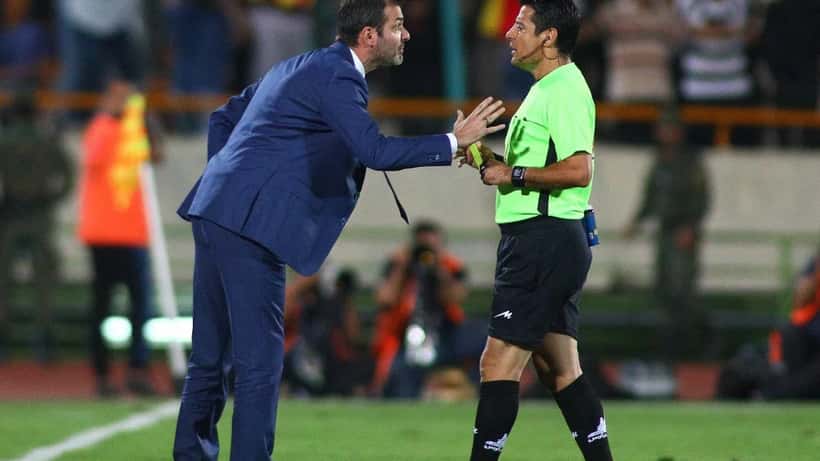
Alireza Faghani stepped onto the pitch at the Estadio Azteca on 6 July 2026 to referee England's last-16 World Cup clash against Mexico — making history as the first official ever to appear at four consecutive FIFA World Cups. For England supporters, his appointment carries both admiration and anxiety: Faghani has already sparked controversy at this tournament, declining to award a Kylian Mbappé penalty during France vs Senegal after reviewing the incident on the pitch-side monitor. The question on fans' lips is not just who he is, but what anyone can actually do when a refereeing decision changes the fate of a match.
The Man Behind the Whistle
Alireza Faghani, 48, is an Australian official of Iranian origin who migrated from Iran to Australia in September 2019 and has represented his adopted country internationally since 2023. He became a FIFA-listed referee in 2008 and has officiated at the 2014, 2018, 2022, and now 2026 World Cups — an unprecedented achievement. At Russia 2018 alone, he took charge of four matches, including France's dramatic 4-3 victory over Argentina in the last 16 and England's third-place play-off against Belgium.
His record is distinguished, if not without controversy. At WC2026, his decision to deny Mbappé a penalty against Senegal following a VAR check drew sharp criticism from French commentators. FIFA's Match Review Committee found no breach of protocol — but the episode has rekindled a debate as old as football itself: what legal remedies, if any, exist when a referee appears to get it badly wrong?
Can a World Cup Referee Decision Be Appealed?
The short answer, under FIFA's rules, is almost always no.
Under the Laws of the Game published by the International Football Association Board (IFAB) — the body that governs football's rules — referee decisions made during a match are considered final. FIFA's Disciplinary Code reinforces this: facts established by a referee during play are explicitly protected from appeal. This principle, sometimes called the lex sportiva rule of referee finality, is upheld by virtually every sport governing body worldwide.
That means no national association can file a formal challenge to have a result overturned simply because they believe a call was incorrect. England cannot reverse a Faghani decision by protest — however passionately fans might feel otherwise.
When Can a Decision Be Challenged?
The exceptions are narrow and specific. FIFA's regulations allow formal challenges only in a handful of defined circumstances:
Player eligibility breaches: If a fielded player was ineligible — serving a suspension or incorrectly registered — a result can be overturned regardless of the scoreline. This mechanism operates independently of any referee decision.
Serious procedural failures: Matches played in the wrong venue, with the wrong number of players, or under conditions that fall outside agreed protocols can be subject to review. Officiating errors do not qualify.
Match manipulation: If there is credible evidence of corruption — a bribed referee, fixed outcome — the matter is referred to FIFA's Integrity Unit and, in international disputes, to the Court of Arbitration for Sport (CAS) in Lausanne, Switzerland.
For VAR controversies specifically — such as Faghani's Mbappé call — FIFA's guidance is unambiguous: the VAR system exists to correct "clear and obvious errors." Where a referee and the VAR official agree no clear error occurred, no further appeal mechanism applies. The only recourse is public criticism and, occasionally, a post-tournament review of officiating standards.
The Court of Arbitration for Sport: Sport's Supreme Tribunal
For disputes that extend beyond a single match — transfer conflicts, doping bans, eligibility challenges, or alleged breaches of sporting regulations — the Court of Arbitration for Sport (CAS) in Lausanne functions as the supreme international tribunal. CAS handles more than a thousand cases per year, the majority originating from football.
Crucially, CAS does not overturn in-game referee decisions. It reviews disciplinary bans, transfer disputes, eligibility rulings, and cases where a governing body is alleged to have violated its own procedures. If a federation believed FIFA had violated its own referee appointment rules in selecting Faghani, a complaint could theoretically be lodged — though such actions are extraordinarily rare.
Cases at CAS are governed by Swiss law. Filing deadlines typically run 21 days from notification of a decision, procedural rules are strict, and legal representation costs can be substantial. For anyone pursuing a dispute through CAS, engaging a qualified sports lawyer with international arbitration experience is not optional — it is essential.
What This Means Away from the World Cup Stage
Faghani's moment in the global spotlight illustrates a fundamental truth about sport and law: once the whistle blows, the rules of the game take precedence over the rules of the court. But away from the elite stage, amateur athletes, club officials, and grassroots coaches regularly encounter situations where legal guidance is genuinely needed.
Suspension appeals: If a player receives a red card or a lengthy domestic ban, the FA or a county FA disciplinary panel typically allows a formal appeal. Unlike FIFA's protection of in-match decisions, post-match sanctions at domestic level are generally challengeable — a point covered in our guide on World Cup yellow cards and FIFA suspension rules.
Contractual disputes: Coaching contracts, player agent agreements, sponsorship deals, and facility hire contracts are all governed by ordinary contract law. A sports lawyer can assess whether a club or agent has breached their obligations and advise on remedies — including damages or injunctions where appropriate.
Employment rights: Semi-professional players and coaches have full employment law protections. Unfair dismissal, unpaid wages, and discrimination claims are increasingly brought by athletes who previously assumed sport operated outside normal employment frameworks.
Injury and liability: When a referee, player, or volunteer sustains an injury on the pitch, questions of duty of care, negligence, and liability arise. Understanding your rights — and your club's obligations — matters whether you are operating at the level of the Azteca Stadium or a muddy local ground on a Sunday morning.
When to Seek Expert Legal Advice
If you or your club face a formal disciplinary sanction, a contract dispute, or a compensation claim arising from sport, professional legal advice is frequently the difference between a successful appeal and a missed opportunity. The regulatory environment governing football alone — FIFA's Disciplinary Code, the FA Rules, UEFA's regulations — runs to thousands of pages. A specialist sports lawyer understands not only the law, but the specific timelines, precedents, and procedures that govern each body.
This article is for informational purposes only and does not constitute legal advice. For guidance on your specific situation, consult a qualified solicitor or sports law specialist.
ExpertZoom connects individuals and clubs with qualified legal professionals experienced in sports law, employment disputes, and contractual matters. Whether you are challenging a ban, reviewing a coaching contract, or seeking clarity on your rights after an incident, a consultation with a specialist provides the kind of informed guidance that turns uncertainty into action.
Alireza Faghani spent decades mastering every nuance of the Laws of the Game. Navigating sports law requires the same depth of expertise — and knowing when to bring in a professional may be just as decisive as any VAR review on the biggest stage in football.
