 Elara Deschamps
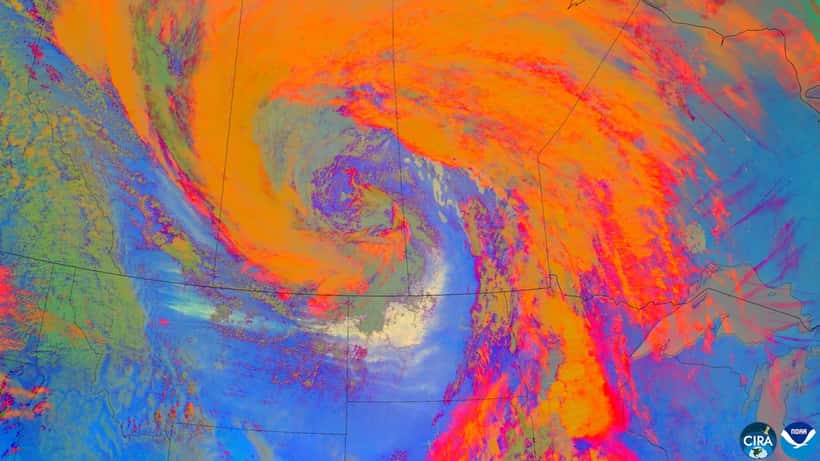
Environment Canada issued a rare dust storm warning across southern Manitoba, Saskatchewan, and Alberta on May 14, 2026, as a powerful spring cyclone drove wind gusts up to 119 km/h across the Prairies — triggering questions from thousands of Canadians about what breathing that wall of airborne soil actually does to your lungs.
The storm, one of the most severe on record for the region, reduced visibility to near zero in parts of southern Saskatchewan and Manitoba. While meteorologists focused on downed power lines and agricultural damage, doctors say the health chapter of this story is only beginning.
What Made the May 2026 Prairie Dust Storm Unusually Dangerous
A deep low-pressure system developed over Alberta and tracked east through Saskatchewan into Manitoba, churning up exposed topsoil left dry by a spring drought. Sustained winds of 50–70 km/h mixed down from upper-level jet stream air, with peak gusts reaching 119 km/h near Winnipeg and 115 km/h at Radville, Saskatchewan, according to Environment Canada data.
The combination of unusually high winds, drought-parched soil, and early-season bare fields — not yet covered by growing crops — created conditions that sent tonnes of fine particulate matter into the atmosphere. Satellite imagery from the University of Wisconsin's CIMSS showed aerosol plumes extending from Alberta through the Dakotas and into Ontario by May 15.
Southern Manitoba even experienced a rare "dirty rain" event, where precipitation mixed with suspended dust before reaching the ground.
The Hidden Health Risk: What's Actually in Prairie Dust
Prairie soil dust is not simply dirt. During the May 2026 event, the suspended particles would have included a mixture of:
- PM10 particles (up to 10 micrometres in diameter): captured in the nose, throat, and upper airways
- PM2.5 particles (2.5 micrometres and smaller): small enough to penetrate deep into the bronchial tubes and lung tissue
- Agricultural chemicals and fertilizer residues from cultivated fields
- Dried animal waste and biological material from prairie farmland
- Fungal spores, including Coccidioides and other soil fungi
Canada's Air Quality Health Index (AQHI), maintained by Environment and Climate Change Canada, assigns risk ratings based on concentrations of PM2.5 and PM10, along with ground-level ozone. During an event of this scale, AQHI values in affected communities would have spiked to 7 or higher — classified as "High Risk" — prompting official advisories to reduce outdoor activity.
According to Canada's AQHI guidance, even short-term exposure to high particulate levels can trigger inflammation of the airways, reduced lung function, and cardiovascular strain.
5 Symptoms That Warrant a Doctor's Attention
Most people exposed to a brief dust event recover quickly once they're indoors with clean air. But for some Canadians, symptoms that emerge in the hours or days after the storm can signal something more serious. Doctors advise seeking care if you notice:
1. Persistent cough that lasts more than 48 hours A dry, irritating cough is the most common response to inhaled dust. If it lingers more than two days or produces discoloured mucus, that indicates airway inflammation that may need treatment.
2. Wheezing or chest tightness Bronchospasm — the narrowing of the airways in response to inhaled particles — produces a whistling sound during breathing and a feeling of pressure in the chest. People with no prior respiratory history can experience this for the first time after significant dust exposure.
3. Worsening asthma or COPD control For Canadians already living with asthma or chronic obstructive pulmonary disease, dust exposure is a known trigger for acute flares. An increase in rescue inhaler use or difficulty breathing that is worse than your usual baseline is a signal to contact your physician promptly, rather than waiting it out.
4. Fever with respiratory symptoms A fever appearing one to three weeks after dust exposure in the Prairies can indicate Valley Fever (coccidioidomycosis), a fungal lung infection caused by inhaling Coccidioides spores found in dry soil. While more common in the U.S. Southwest, cases have been documented in Canada, and the condition is frequently misdiagnosed as bacterial pneumonia.
5. Eye irritation that persists beyond 24 hours Dust particles embed in the conjunctiva and cornea, causing redness, gritty sensation, and tearing. Persistent symptoms may indicate a corneal abrasion or infection requiring medical assessment.
Who Is at Highest Risk After the Prairie Storm?
Alberta Health Services identifies six groups who face elevated risk during air quality events:
- Infants and young children, whose airways are still developing
- Adults over 65, who have reduced respiratory reserve
- People with asthma or COPD
- Those with cardiovascular disease, since PM2.5 particles enter the bloodstream and increase cardiac workload
- Outdoor workers in agriculture, construction, and emergency services who were exposed for hours
- Pregnant women, as particulate exposure has been linked to reduced fetal lung development
If you fall into one of these categories and were outdoors during the May 14–15 storm in Manitoba, Saskatchewan, or Alberta, proactive consultation with a physician — even without dramatic symptoms — is medically reasonable.
Practical Steps If You Were Exposed
Doctors recommend the following in the days after significant dust exposure:
- Stay indoors until outdoor air quality returns to "Low" on the AQHI scale
- Use a HEPA-certified air purifier if available; close windows and doors
- Rinse eyes and nasal passages with clean saline solution
- Avoid strenuous outdoor exercise for at least 48–72 hours after the storm
- Check on elderly neighbours or relatives who may not recognize worsening symptoms
- Do not rely on cloth masks — they offer minimal filtration against PM2.5; an N95 or KN95 is required for effective protection outdoors
When to Consult a Health Expert
Dust storms are becoming more frequent on the Canadian Prairies as drought cycles intensify. The May 2026 event is unlikely to be the last of its kind this season. While online resources offer general guidance, a physician can assess your individual risk, review your lung function history, and — for patients with asthma or COPD — adjust your management plan before the next weather event.
If you or a family member experienced significant dust exposure during the prairie storm and have concerns about respiratory symptoms, connecting with a health professional on ExpertZoom allows you to get a consultation without waiting weeks for an in-person appointment.
For guidance on extreme-weather health risks affecting Canadians in 2026, see also our earlier coverage on health risks during Canada's spring weather extremes.
This article is for informational purposes only and does not constitute medical advice. If you are experiencing a medical emergency, call 911 or go to your nearest emergency department.
