 Emilie Wang
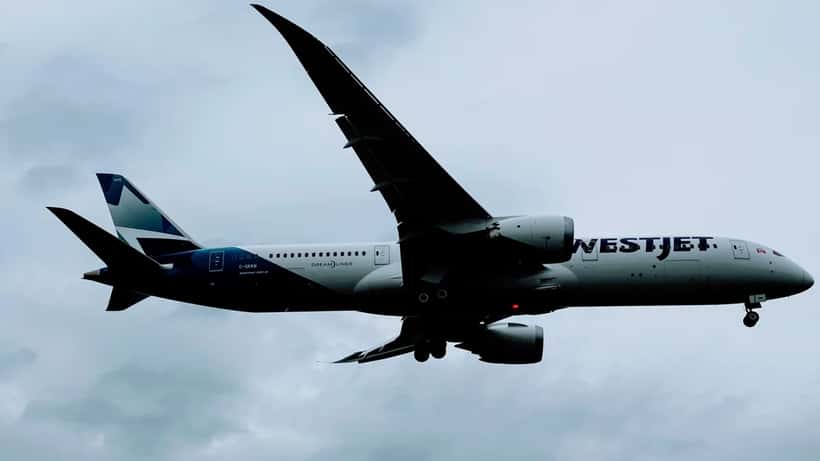
WestJet and Canada's major airlines have added fuel surcharges of up to $60 per booking as of April 2026, following a 100% spike in jet fuel prices triggered by the conflict in the Middle East. Domestic flight costs in Canada are now up 26% compared to April 2025, leaving millions of travellers facing unexpected charges — and wondering what recourse they have.
Why Jet Fuel Costs Doubled Almost Overnight
The Strait of Hormuz disruption in late February 2026 sent global jet fuel prices soaring from roughly $96 to $195 per barrel within weeks. For a single long-haul flight such as Vancouver to Hong Kong, the fuel bill for one aircraft now tops $71,000 per trip.
WestJet responded by cutting flight capacity 1% in April, 3% in May, and 5.5% in June 2026 — while introducing a $60 fuel surcharge on companion vouchers (effective April 8) and a $50 surcharge per person on WestJet Vacations packages. Air Canada followed with a $50 per-passenger surcharge on sun-destination flights, and Porter Airlines added a $40 temporary surcharge on VIPorter redemptions.
For Canadian families planning spring and summer travel, these aren't small numbers. A family of four flying WestJet Vacations to a beach destination could pay $200 in surcharges alone — on top of already-elevated base fares.
What Your Legal Rights Actually Are
Here's where many Canadians get confused. Fuel surcharges are legal under current Canadian transportation law — airlines are permitted to pass increased fuel costs to passengers. However, that's not the end of the story.
Under Canada's Air Passenger Protection Regulations, you have specific rights that airlines cannot waive, regardless of why a disruption occurred:
- If your flight is cancelled or delayed 3+ hours due to an airline-controllable reason: You are entitled to rebooking on the next available flight or a full refund.
- If you're bumped from a flight due to overbooking: Compensation ranges from $125 to $1,000 depending on the delay length and the airline's size.
- If a fare surcharge is added after you purchase: In most cases, airlines must either honour the original fare or offer a refund — though enforcement depends on the ticket conditions at time of booking.
The critical distinction is whether the disruption is "within the airline's control." Fuel costs are considered an external factor, meaning surcharges themselves may be legally defensible — but the way they're communicated and applied to existing bookings can still be challenged.
The Grey Zone: Where Passengers Get Caught
The most contentious situations in April 2026 involve travellers who:
- Purchased companion vouchers before the April 8 surcharge announcement, then found $60 added at checkout
- Booked vacation packages and discovered the $50 surcharge only when reviewing their confirmation
- Had existing bookings modified due to WestJet's route cuts, being rebooked onto less convenient flights
According to legal experts familiar with consumer protection law, travellers in these situations have a legitimate basis to dispute charges — particularly if the surcharge wasn't disclosed at the time of sale. Under Canada's Competition Act and provincial consumer protection legislation, material changes to contract terms generally require notice and may entitle consumers to cancel for a full refund.
YMYL Disclaimer: This article provides general information only and does not constitute legal advice. For guidance specific to your situation, consult a qualified Canadian lawyer or consumer rights specialist.
When to Consult a Lawyer About an Airline Dispute
Most Canadians assume airline disputes aren't worth pursuing legally. In many cases, that's incorrect — especially when:
- The disputed amount exceeds $500 (enough to warrant small claims or a formal complaint)
- The airline misrepresented fare conditions at the time of booking
- You were denied compensation after a flight cancellation the airline caused
- Your travel insurance claim was denied following airline-induced disruption
The Canadian Transportation Agency (CTA) provides a free complaint mechanism, but its backlog is significant. A consumer law specialist can often resolve disputes faster through direct negotiation or demand letters — and the cost of a single consultation is frequently offset by the recovery.
At ExpertZoom, Canadian travellers can connect with licensed legal professionals who specialize in consumer rights and transportation disputes. A brief consultation can clarify whether your situation warrants a formal complaint, a credit card chargeback, or a demand letter.
What You Can Do Right Now
If you have an existing WestJet or Air Canada booking that's been affected by surcharges or route changes, here's a practical checklist:
- Screenshot your original booking confirmation — preserve the fare conditions as they were at purchase
- Document the new charges — note the date you were notified and the amount
- Contact the airline in writing — email creates a paper trail; phone calls do not
- File a CTA complaint if refused — the Canadian Transportation Agency (otc-cta.gc.ca) handles airline disputes
- Consult a lawyer if the amount is significant or if the airline misrepresented terms
The Air Passenger Protection Regulations are publicly available on the CTA website — and knowing your rights before you call the airline makes a significant difference in how those calls go.
The Bigger Picture: Will Airfares Stay High?
Analysts are cautious. The Strait of Hormuz crisis shows no sign of immediate resolution, and airlines have signalled further capacity cuts through summer 2026. If you're planning to travel in the next three to six months, booking flexible fares — even at a slight premium — may prove cost-effective. Some travellers are also switching to Canadian domestic routes or exploring train alternatives for shorter trips where the surcharge impact is disproportionate.
Whether fares stabilize depends largely on geopolitical developments beyond any airline's control. What Canadians can control, however, is whether they understand their rights — and act on them.
