 Stéphanie Fournier
On May 9, 2026, Environment Canada confirmed Ontario's first tornado of the year near Lucan and Granton, south of London — roughly 200 kilometres from Toronto. Wind speeds reached 130 km/h in the microburst zone, ripping a barn roof off its frame and toppling a truck and trailer. A week later, tornado watches and severe thunderstorm warnings are prompting thousands of Toronto-area residents to search for weather updates. But the question most people forget to ask before the storm arrives is a legal one: if extreme weather damages your neighbour's car, your shared fence, or the apartment below yours — who is actually responsible?
Ontario's Storm Season Is Getting Longer
The confirmation of Canada's first tornado of 2026 on May 10 — from a Northern Tornadoes Project investigation — came earlier in the season than many Ontarians expected. Severe weather that once arrived reliably in July and August now extends into May and even April across the province.
For Toronto homeowners, this seasonal expansion matters. A longer severe weather window means more opportunities for falling trees, hail damage, flooded basements, and the legal disputes that often follow. According to the Insurance Bureau of Canada, severe weather events now generate more than $2 billion annually in insured losses across Canada — a figure that has doubled over the past decade.
When Nature Causes Damage: Who Pays?
Ontario's legal framework for storm damage and property liability rests on the concept of negligence rather than strict liability. This distinction matters enormously for homeowners navigating disputes after extreme weather.
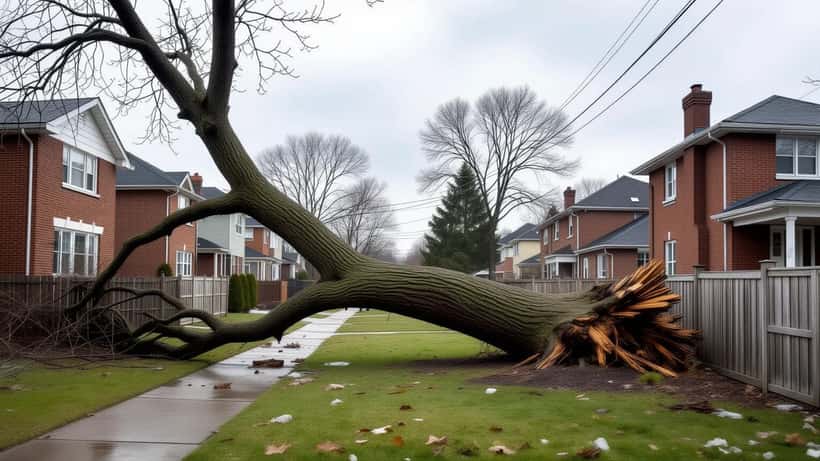
The general rule: if a natural event — a tornado, a windstorm, a heavy ice storm — causes damage without any contributing negligence on your part, you are typically not liable for that damage. If your healthy tree falls on your neighbour's car during a storm, your insurer generally does not owe your neighbour anything. Their own auto or property insurance covers it.
However, the word "healthy" is doing significant legal work in that sentence.
When liability shifts: If your neighbour (or their insurer) can demonstrate that you knew about a pre-existing condition — a dead or diseased tree, a cracked retaining wall, a loose section of fence — and failed to remedy it, negligence may be established. A 2024 Ontario Superior Court ruling in a case involving storm damage from a diseased elm found that the tree's owner had received written notice from the municipality three months earlier but had not acted. The court assigned partial liability.
Shared structures: Fences, driveways, and retaining walls on or near property lines create recurring dispute territory. If a fence collapses in a storm and there is an existing fence agreement registered on title, the agreement typically governs repair obligations. If there is no agreement, Ontario's Line Fences Act may apply — but only between rural properties. Urban Toronto homeowners often find themselves in a legal grey zone.
Tenant and landlord exposure: Tenants in flooded or storm-damaged units frequently face confusion about rights and repair timelines. Under the Residential Tenancies Act, Ontario landlords must maintain rental units in a good state of repair regardless of the cause of damage, including weather events. A landlord who fails to address storm damage quickly — broken windows, water intrusion, loss of heat — may face rent abatement applications at the Landlord and Tenant Board.
What You Can Do Before the Next Storm Warning
Toronto's spring storm season is at its peak in May and June. Taking a few steps now can protect your legal position and reduce your exposure if something goes wrong.
Document your property's condition. Walk your property line and photograph every tree, fence, and shared structure. Note any signs of disease, structural weakness, or deferred maintenance. If you are aware of a problem, address it promptly — awareness without action is the core element of storm-related negligence claims.
Review your insurance policy. Standard Ontario homeowner and tenant policies differ significantly in what they cover for overland water, sewer backup, and wind damage. Many policies exclude overland flooding unless a rider has been purchased. Call your insurer before a storm, not after.
Send written notice to your neighbour if necessary. If you believe a neighbouring tree or structure poses a risk to your property, document your concern in writing. This creates a record and may be relevant if a dispute arises.
Understand your municipality's tree bylaw. Toronto's Tree Protection By-law restricts cutting or removing trees over a certain diameter without a permit — even dead or dangerous ones. Removing a storm-damaged tree without proper authorization can create a new legal problem rather than solving the existing one.
When to Consult a Lawyer
If storm damage results in a property dispute — a contested insurance denial, a liability claim from a neighbour, a landlord refusing to repair a damaged unit — the facts and timelines matter enormously. Ontario lawyers who specialize in property law can assess whether negligence was established, advise on the appropriate process (civil court, the LTB, or a direct insurance claim), and help you document your position for an insurer or adjudicator.
Platforms like Expert Zoom connect Toronto-area residents with property lawyers and legal experts who offer consultations on storm liability, neighbour disputes, and insurance claims — without requiring an in-person office visit.
According to Environment Canada's official weather service, severe weather alerts for Toronto and the surrounding region are updated in real time — Canadians can check active warnings for their area — the simplest step toward knowing what is coming before it arrives.
Preparation before a storm is cheaper than litigation after one. In 2026, with Ontario's tornado season starting weeks earlier than forecast, the time to review your legal exposure is now.
This article provides general legal information for educational purposes. Consult a licensed Ontario lawyer for advice specific to your situation.
