 Leah Adams
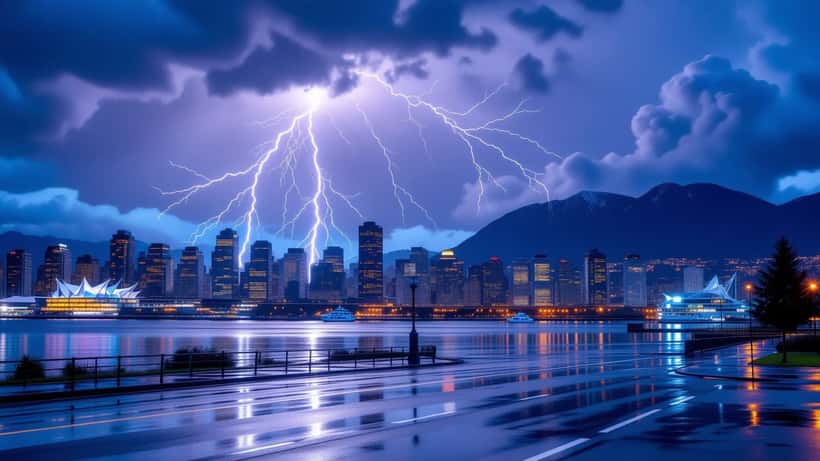
Metro Vancouver faced a rare severe thunderstorm risk this week, as an active July 2026 weather pattern pushed hail, heavy downpours and lightning across British Columbia's South Coast. Environment Canada and forecasters warned of hail up to 2 to 3 centimetres, strong winds and dry lightning over the Lower Mainland, the Sunshine Coast and Vancouver Island. For a city where thunderstorms are unusual, the bigger household risk is often invisible: the power surge that rides through your wiring the moment lightning strikes nearby.
A rare storm for a city built for rain, not lightning
Vancouver gets plenty of rain, but electrical storms are genuinely uncommon here. According to The Weather Network, if a thunderstorm had registered at Vancouver International Airport during this event, it would have been the first recorded at YVR since November 2024. Storms this week were enhanced by topographic lift along the North Shore mountains, bringing sudden heavy rain, gusty winds and hail, with a humidex climbing past 30°C ahead of the front.
That rarity is precisely why local homes are exposed. In lightning-prone regions such as the Prairies or southern Ontario, many households already run whole-home surge protection as a matter of course. In Metro Vancouver, most people have never needed it, so laptops, televisions, gaming consoles, heat pumps and home-office gear sit plugged directly into the wall with no defence against a voltage spike.
Why lightning wrecks electronics without a direct hit
A common myth is that lightning has to strike your house to fry your devices. It does not. Environment Canada notes that a single bolt can carry as much as 100 million volts and strike a target up to 16 kilometres away. When lightning hits a power line, a transformer or even the ground near your street, it sends a surge of excess voltage racing through the electrical grid and into every outlet on the circuit.
Modern electronics are the most vulnerable things in your home. A microchip in a smart TV or a laptop charger is designed to handle a steady 120 volts. A surge can briefly push thousands of volts through that circuitry in microseconds, melting components long before your breaker has time to react. The damage is often silent: a device that still powers on but behaves erratically, a router that keeps dropping, or a heat pump control board that fails weeks later.
What an electronics expert would tell you to do first
The single most effective step is also the cheapest. During an active thunderstorm warning, unplug what you can. The Government of Canada explicitly recommends unplugging appliances and electronics to protect them from power surges, because an unplugged device simply cannot be reached by a spike travelling through the wiring.
For everything you cannot easily unplug, a qualified electronics technician would point to layered protection:
- Use a proper surge protector, not a power bar. A basic power strip only splits one outlet into several. A true surge protector is rated in joules and diverts excess voltage away from your devices. Look for a joule rating above 1,000 for a home-office setup and replace units every few years, as their protective components wear out after absorbing repeated smaller surges.
- Protect the whole home at the panel. A whole-home surge protective device installed at your electrical panel by a licensed electrician catches the largest surges before they enter the house. In a low-lightning region like Vancouver, it is an inexpensive insurance policy many homeowners have simply never considered.
- Do not forget the data lines. Surges can also travel through coaxial cable and older phone lines. If you have equipment connected to those, use a surge protector that includes coax and network protection.
- Delay water-linked tasks. Because water conducts electricity, Canadian safety guidance advises against showering, bathing or hand-washing dishes during a storm, which also protects any smart plumbing or connected water heaters.
If a device has already taken a hit, an electronics repair specialist can often diagnose whether the fault is a blown power supply, a damaged mainboard, or salvageable data on a drive, before you write off an expensive appliance entirely. You can read more on preparing your property in these severe weather home safety tips for Canadian households.
Insurance, warranties and the paperwork that follows
There is also a financial side worth understanding before the next storm. Manufacturer warranties frequently exclude damage from power surges and "acts of nature," which is exactly why documented surge protection and receipts matter. Many Canadian home insurance policies do cover electrical surge damage from lightning, but often with a deductible and a requirement to prove the cause. Photograph damaged units, keep the model numbers, and note the date and time of the storm alongside the official weather warnings for your area.
For homeowners already dealing with storm season on multiple fronts, the same documentation habits apply across hail, water and fire risk, as BC residents saw with recent wildfire insurance claims near Vancouver. The forecasters' warning about dry lightning sparking new blazes is a reminder that a single storm can trigger several types of claim at once.
The bottom line before the next rumble
The rare thunderstorm risk over Metro Vancouver in July 2026 is a useful wake-up call. Remember the simple rule from Environment Canada: if you can hear thunder, you are already within striking distance, and more people and property are affected before and after a storm than during it. Wait at least 30 minutes after the last rumble before assuming the danger has passed. You can review the full official guidance on the Environment and Climate Change Canada lightning safety pages.
A twenty-dollar surge protector, a habit of unplugging during warnings, and a quick call to an electronics or electrical expert can save you far more than the cost of replacing a television, a laptop and a heat pump control board all in the same afternoon. In a city that rarely thinks about lightning, that small bit of preparation is what separates a dramatic sky from an expensive one.
This article is general information, not professional electrical, insurance or legal advice. For work on your electrical panel or claims specific to your policy, consult a licensed electrician, a qualified electronics technician or your insurer.
