 Eliza Perron
BC's Wildfire Season Arrives Early: What the Cultus Lake Fire Means for Your Insurance Rights
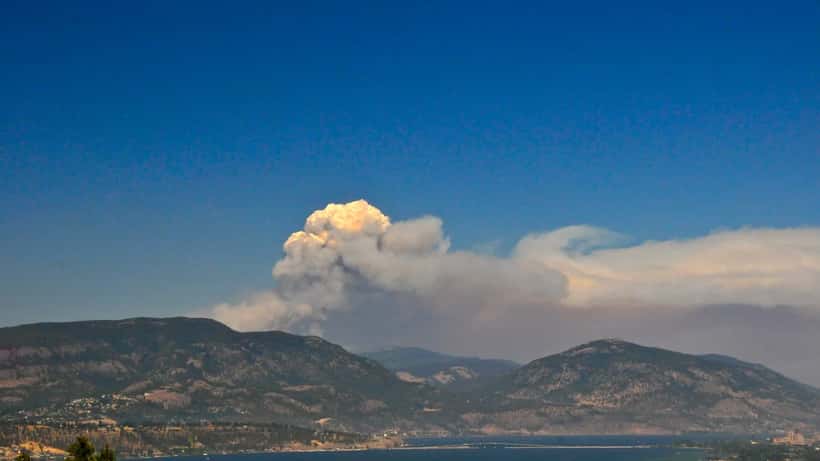
A 1.1-hectare wildfire broke out near Cultus Lake in BC's Fraser Valley in the early morning hours of May 4, 2026 — just south of Chilliwack and roughly two hours from Vancouver. By 6:40 a.m., the BC Wildfire Service declared the blaze "out of control," dispatching 14 firefighters and a helicopter to run water-bucketing operations over the Jade Bay area. By mid-afternoon, the fire had been reduced to half a hectare and upgraded to "being held," according to the Coastal Fire Centre.
It was the first significant wildfire alarm near Metro Vancouver in 2026 — and it arrived weeks earlier than most residents expected.
An Early Season and a Familiar Pattern
Hot, dry conditions have blanketed the South Coast of British Columbia throughout early May. Provincial fire authorities confirmed that campfire bans were expected to take effect across the Lower Mainland and Fraser Valley by the end of the same week. The Cultus Lake fire ignited near a day-use campground area frequented by families and recreational visitors every spring — a reminder that wildfire risk doesn't wait for summer.
British Columbia has experienced increasingly severe wildfire seasons over the past decade. In 2023, the province recorded its most destructive wildfire season in history, with more than 2.8 million hectares burned, according to the BC Wildfire Service. Insurance claims from that season totalled billions of dollars across residential, commercial, and agricultural properties — and the lessons many homeowners learned were expensive ones.
The early start to the 2026 fire season is a clear signal: now is the time to understand your rights before a fire gets close to your property.
What Standard Canadian Home Insurance Actually Covers
For homeowners and renters in BC, the sudden appearance of a wildfire near your community raises an immediate question: am I protected?
Under most standard Canadian home insurance policies, wildfire damage falls under the "fire" peril, meaning your insurer is obligated to cover damage or destruction caused by wildfire — up to your policy's coverage limits. But "covered" does not mean "automatic payout," and there are several distinctions that matter enormously in the days following an evacuation or structural loss.
Evacuation and displacement costs: Most comprehensive home insurance policies include Additional Living Expenses (ALE) coverage. This pays for temporary accommodation, meals, and related costs when you are forced from your home. However, ALE coverage is typically triggered by a mandatory evacuation order, not a voluntary advisory. Knowing the difference between an "evacuation alert" (prepare to leave) and an "evacuation order" (leave immediately) determines whether your displacement costs are reimbursable.
Replacement cost vs. actual cash value: These two policy types produce dramatically different claim outcomes. A replacement cost policy reimburses you for what it would cost to rebuild or replace today. An actual cash value (ACV) policy deducts depreciation — meaning a roof damaged in 2026 might only be reimbursed for a fraction of what it costs to replace with current materials and labour. If you don't know which type of policy you hold, check now.
Renters and cottage owners: If you rent your home, your landlord's insurance covers the building — not your belongings. Tenant's insurance is the only way to protect your contents and access ALE benefits. Similarly, seasonal properties left unoccupied for more than 30 days may have reduced or voided coverage under standard policy exclusions. Recreational properties near wildfire zones, including cottages in the Cultus Lake area, often fall into this grey zone.
How Wildfire Claims Go Wrong
Wildfire insurance claims involve a number of pitfalls that catch even experienced homeowners off guard.
Documentation before cleanup. After a wildfire threatens or damages your property, it's natural to want to start cleaning up immediately. But beginning debris removal or repairs before an adjuster documents the damage can complicate — or in some cases invalidate — portions of your claim. Photograph and video every affected area, room, and item before touching anything. Store backups off-site or in cloud storage.
Filing deadlines. Most insurance policies require prompt notification of a loss — typically within a "reasonable" period, though some policies set specific deadlines. Delayed reporting gives insurers grounds to dispute portions of your claim.
Underinsurance. Many BC homeowners carry policies with coverage limits that reflect what they paid for their home years ago, not what it would cost to rebuild at current construction prices. In high-inflation periods, this gap can be substantial — and the difference comes out of your own pocket.
When the Insurer Disputes Your Claim
The Insurance Bureau of Canada (IBC) — the national industry association for Canada's home, auto, and business insurers — provides guidance and ombudsman services to help policyholders navigate disputes with their insurers. Their wildfire insurance resources explain your rights and the claims process in plain language.
However, when an insurer delays, undervalues, or denies a wildfire claim, the situation can quickly become adversarial. A lawyer specializing in property insurance disputes can review your policy for coverage obligations your insurer may be downplaying, challenge low settlement offers, and represent you in arbitration or litigation if an insurer refuses a fair resolution.
Insurance companies employ experienced adjusters and legal teams. Having independent legal advice — even for a single consultation — often changes the trajectory of a disputed claim. For significant losses, the cost of legal guidance is modest compared to the potential difference in settlement value.
Earlier this year, BC homeowners filing claims after winter storms learned similar lessons about coverage gaps — you can read more about how Canadian homeowners navigated those claims.
Steps to Take Before the Fire Season Peaks
The Cultus Lake fire was contained. The next one may not be so quickly controlled. If you live anywhere in BC's fire-prone regions — including the Fraser Valley, the Okanagan, the Thompson-Nicola, or the Southern Interior — this is the moment to act:
- Review your policy's fire and ALE clauses — Know your limits and exclusions before you need to use them.
- Create a home inventory — A room-by-room video stored off-site is invaluable for a contents claim.
- Verify your property's occupancy status — If you own a seasonal cottage, confirm with your broker that coverage applies during periods it sits empty.
- Know your evacuation levels — Evacuation alert vs. evacuation order carries real financial consequences under your ALE clause.
- Ask your broker about your rebuild coverage — If your limits reflect an older appraisal, a review with your broker can close the gap.
The fire season is here. A 30-minute review of your policy today costs nothing. Discovering a gap in your coverage the day after a wildfire destroys your home costs far more.
This article provides general information about insurance and legal rights in Canada. It does not constitute legal advice. For guidance specific to your situation, consult a qualified legal or insurance professional.
