 Amelia Chen
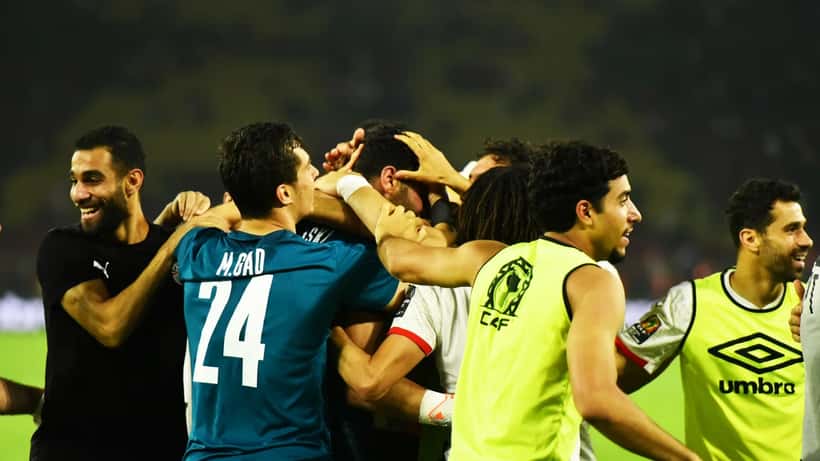
When Egypt's Trézéguet headed home in the 84th minute on June 22, 2026 — sealing a 3-1 victory over New Zealand at the FIFA World Cup in North America — millions of Canadians watching from home got an unexpected geography lesson. The Egyptian winger, born Mahmoud Ahmed Ibrahim Hassan in Kafr El Sheikh governorate, has carried the nickname "Trezeguet" since age nine, when his youth coach compared his shaved head and clinical finishing instinct to French World Cup winner David Trezeguet.
Egypt's Group G win sends the Pharaohs to the top of the standings, ahead of Belgium, Iran, and New Zealand. For a nation of 120 million people making only their fourth World Cup appearance, this result carries enormous cultural weight. And for Canadian students watching the match — played across host cities in Canada, Mexico, and the United States — the game opened a window to one of the world's most historically and geographically significant nations.
Here are five geography lessons about Egypt every Canadian student should know, inspired by Trezeguet's breakthrough moment at WC2026.
1. Egypt Is a Transcontinental Country — Not Simply African
Most students place Egypt squarely in Africa on a classroom map, and they are mostly right. Egypt occupies the northeastern corner of the African continent. But here is the geographic twist: the Sinai Peninsula, a triangular land bridge in Egypt's northeast, sits in Asia. This makes Egypt one of the world's few transcontinental countries — nations whose territory spans more than one continent.
The Suez Canal, completed in 1869, cuts through Egyptian territory to connect the Mediterranean Sea with the Red Sea. That 193-kilometre waterway carries approximately 12% of global trade annually. When Canadian students study global supply chains and trade routes in geography class, Egypt's unique bridging position between Africa, Asia, and Europe becomes impossible to ignore. A homework help tutor can show students how to map these trade corridors using modern geographic tools — transforming a history fact into a living economic lesson.
2. The Nile Is the World's Longest River — and Egypt's Lifeline
The Nile River stretches more than 6,650 kilometres from its sources in central Africa to its delta on Egypt's Mediterranean coast, making it the longest river on Earth. Approximately 95% of Egypt's 120 million people live within a few kilometres of the Nile's banks or the Nile Delta, because the surrounding landscape is otherwise the Sahara and Arabian deserts.
The Nile Delta — where the river fans out into multiple branches before reaching the sea — is one of the most fertile agricultural zones on the planet. Cairo, Egypt's capital and largest city, sits at the southern tip of that delta. Understanding how a single river sustains the majority of a nation's population is a core concept in physical geography and directly relevant to Canada's own ongoing conversations about freshwater sustainability and river basin management.
3. Cairo Is One of Africa's Largest Megacities
Egypt's capital is home to approximately 22 million people in its greater metropolitan area, placing it among the largest cities on the African continent and in the Arab world. By comparison, Toronto — Canada's largest city — has a metropolitan population of roughly 6.7 million people.
Cairo's position at the junction of North Africa and the Middle East has made it a global centre of culture, religion, and politics for thousands of years. The city borders the Giza Plateau, where the Great Pyramids have stood since approximately 2560 BCE. Egypt holds seven UNESCO World Heritage Sites in total, according to the UNESCO World Heritage Convention, including the Memphis Necropolis and the ancient city of Thebes. For students studying urbanization and world cities in geography class, Cairo offers a case study in how ancient settlements evolve into modern megacities across millennia.
4. Egypt Made World Cup History — Starting in Africa in 1934
Here is a fact that surprises most students: Egypt was the first African nation to participate in a FIFA World Cup. The Pharaohs debuted at the 1934 tournament in Italy, losing 4-2 to Hungary in their only group match but marking the continent's inaugural presence on the world's biggest football stage.
Fast forward to 2026: Egypt returned for only their fourth World Cup — now competing on North American soil, including right here in Canada. Africa has grown from one team at early World Cups to nine qualified nations for WC2026. Egypt's run through Group G provides a powerful framework for exploring how African nations have shaped and been shaped by international sporting geography over the past century. Students curious about how Trezeguet's physical conditioning contributed to his WC2026 campaign may also find sports medicine an unexpected window into athletic geography.
5. The Story of Trezeguet's Nickname Is a Cultural Geography Lesson
The detail Canadian students will not find in a standard textbook: Mahmoud Ibrahim Hassan received the nickname "Trezeguet" at age nine from a youth coach in Kafr El Sheikh who saw his natural scoring instincts and shaved head and thought immediately of French striker David Trezeguet — the man who scored France's golden goal in the UEFA Euro 2000 final.
The nickname followed Mahmoud Hassan across Turkey's Süper Lig (stints at Kasımpaşa and Trabzonspor, with 43 and 41 goal involvements respectively), into England's Premier League with Aston Villa, and on to Qatar before he returned to boyhood club Al Ahly in Cairo in January 2025. His 95 international caps and 23 goals for Egypt make him one of the most experienced players in the squad.
This story is cultural diffusion in action — the way ideas, names, and icons travel across borders and generations. An Egyptian child in a small governorate delta town is named after a French-Italian footballer; decades later, that Egyptian man scores at a World Cup hosted partly in Canada. It is the kind of geographic and cultural thread that turns a classroom map into a living story.
When Should Canadian Students Work With a Homework Help Tutor?
Egypt's WC2026 campaign is a perfect entry point for geography assignments — from mapping transcontinental nations to tracing the Nile Delta to calculating the cultural reach of a single sporting event. But many students find physical geography, geopolitical history, and cartography challenging to master on their own.
A homework help tutor can make these topics accessible through current-event-based lessons, structured map skills practice, and exam-ready review. Whether the goal is understanding river systems like the Nile, mastering regional geography for a provincial exam, or exploring the cultural stories behind world events like WC2026, the right tutor makes the material stick.
On ExpertZoom, qualified tutors in geography, world history, and social studies are available for students at every grade level across Canada. Trezeguet brought Egypt's ancient geography to life on June 22, 2026 — a homework help tutor can make sure your student carries that lesson well beyond the final whistle.
