 Aria Nguyen
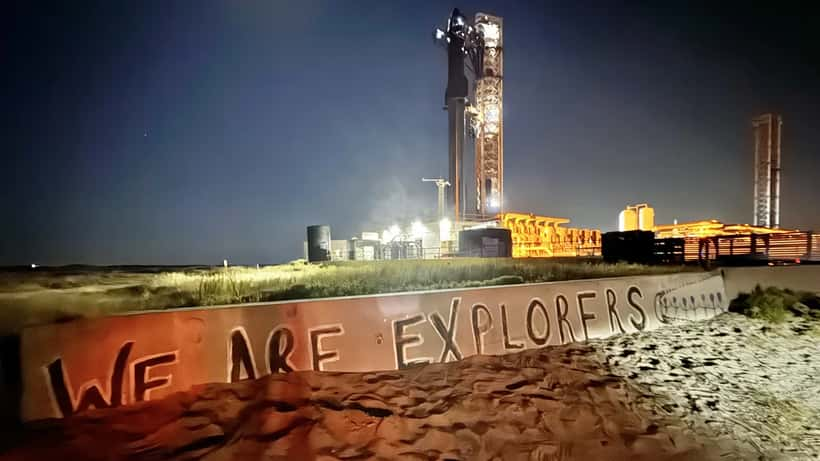
SpaceX's Starship megarocket completed its 13th test flight on July 24, 2026, deploying 20 next-generation Starlink V3 satellites in what SpaceX called a landmark for commercial spaceflight. The mission followed two scrubbed attempts — an automated abort on July 16 when four Raptor engines failed pre-ignition parameters, and a weather delay on July 23. Controllers were "over the moon," the company said. But as Starship's launch cadence accelerates and more hardware enters low Earth orbit, a quieter legal question is materializing for Canadians: what happens when something comes back down — and lands on your property?
A Record Flight With Growing Ground-Level Stakes
Flight 13 carried Starship's first operational Starlink payload: 20 V3 satellites that deployed, extended their solar arrays, and attempted laser-link connections with ground stations in South Africa. The achievement marks Starship's transition from test vehicle to commercial workhorse. SpaceX now plans 40 to 60 Starlink missions annually across its rocket fleet, and Starship is central to that ambition.
That cadence matters on the ground. More launches mean more hardware in orbit, and more hardware in orbit means more eventual re-entry events. In April 2026, Canada took notice: Transport Minister Steven MacKinnon tightened re-entry regulations under the Canadian Space Launch Act, giving Ottawa explicit authority to oversee re-entry activities impacting Canadian territory and to establish liability protocols for debris that fails to fully demise during atmospheric re-entry. The regulatory update was triggered in part by SpaceX's decision to lower the orbital altitude of approximately 4,400 Starlink satellites from 550 km to 480 km — a move that shortens natural de-orbit time from four years to several months. Faster de-orbit, more frequent re-entries. The math is straightforward; the legal framework is not.
Canada Has Been Here Before — and It Took Decades
The most striking fact about space debris liability in Canada is how old the law is. The 1972 Convention on International Liability for Damage Caused by Space Objects — the foundational international treaty — has been formally invoked exactly once in history. That case involved Canada.
In 1978, the Soviet Cosmos 954 satellite fell out of orbit and scattered radioactive debris across a remote stretch of the Northwest Territories. The cleanup operation, codenamed Operation Morning Light, took years and cost approximately $14 million. Canada filed a $6 million claim against the Soviet Union under the Liability Convention. The eventual settlement was $3 million — paid after years of diplomatic negotiation, and only because the launching state was an identifiable sovereign government. A private company like SpaceX is a different matter entirely.
The Liability Convention operates between states, not between individuals and corporations. If debris from a U.S.-licensed launch damages Canadian property, the legal path requires the Canadian government to file a diplomatic claim against the United States — not a lawsuit in civil court. Canada's government is under no obligation to do so, and even if it does, the timeline is measured in years, not months.
Domestically, the picture is equally complicated. Canadian negligence law could theoretically apply to a SpaceX debris incident, but no Canadian court has ever adjudicated a commercial space debris case. Jurisdictional questions — a Texas-based company, a Texas launch, Canadian soil — create layered procedural barriers that can dwarf the value of the underlying claim. Your home insurer almost certainly has no answer ready either: fewer than 5% of standard Canadian residential policies have been updated since 2020 to address space debris, according to industry surveys, and most aircraft exclusions sweep in "spacecraft components" without homeowners realizing it.
What the Legal Gap Looks Like in a Specific Case
Picture a property owner in rural Manitoba — a 54-year-old with a hobby farm on three acres, 40 km north of Brandon. In the early morning after a Starship re-entry, a 15 kg titanium pressure vessel — the type commonly found on rocket upper stages and known to survive atmospheric re-entry intact — falls through the roof of her barn. The structure is destroyed. Two horses are injured, requiring emergency veterinary care.
Here is the realistic sequence under current Canadian law:
Her home insurer denies the claim under the aircraft/spacecraft exclusion ($0 from insurance). Her broker suggests this "might be an act of God" — legally meaningless, but a preview of the argument she will face. She consults a lawyer with aerospace experience, who advises filing a request with Global Affairs Canada to initiate a diplomatic claim. That process alone takes 18 to 36 months to reach any assessment decision. If pursued, the international claim covers the barn replacement value ($85,000) and veterinary costs ($12,000) — but not legal fees, loss of income from the property, or the cost of temporary boarding for her horses.
If the United States disputes liability — arguing, for example, that the specific pressure vessel cannot be conclusively attributed to a Starship flight, or that it deorbited naturally rather than prematurely — resolution could take years beyond the initial assessment.
Total out-of-pocket exposure in the interim: potentially $120,000 or more, with no guaranteed recovery timeline.
A lawyer specializing in aviation or international law can change this calculus significantly. They can: document and preserve the debris through a proper chain of custody (critical for both insurance and diplomatic claims), negotiate directly with SpaceX's legal team outside the treaty framework, and assess whether provincial small claims options apply for amounts under the relevant threshold. The critical rule is this — do not move the debris, do not allow an insurance adjuster to remove it without full documentation, and consult a specialist before filing anything. The first filing sets procedural deadlines that are difficult to reset.
Note: This article contains general legal information only. Space liability law is a specialized field; consult a qualified Canadian lawyer for advice specific to your situation.
The Insurance Gap Worth Closing Today
Even without a debris incident in your postal code, this is a risk worth reviewing now. Ask your home insurer directly: "Does my policy cover damage from spacecraft or satellite components falling from orbit?" If the answer is uncertain or no, ask whether a rider or endorsement is available. Some insurers with commercial aviation portfolios now offer space debris riders on residential policies for under $200 per year — a modest premium given the asset values at stake.
If you own rural or agricultural property, the stakes are higher. Outbuildings, equipment, and livestock are frequently underinsured for unusual risks, and space debris events in Canada have become measurably more common as commercial launch cadence increases. The Canadian Space Agency maintains a debris tracking database and a reporting hotline — a resource most Canadians don't know exists until they need it.
Review your property insurance policy this year. Confirm your coverage with your broker in writing. If you have significant outbuildings or equipment, ask specifically about the aircraft and spacecraft exclusion language in your policy and whether a rider is available.
If Debris Lands on Your Property: The Five Steps
Acting correctly in the first hours after a debris event can make the difference between a successful claim and years of uncompensated loss:
- Do not touch or move anything — pressure vessels, fuel residue, and exotic materials from rocket components can be hazardous
- Call 911 and report the incident to local emergency services, who will contact Transport Canada
- Document everything immediately — timestamped photos and video of the debris, the impact site, and any damage, before anyone else arrives
- Notify your insurer but do not accept any decision or sign any release without independent legal advice
- Consult a lawyer with aerospace, aviation, or international law experience — this is not a standard property dispute, and a generalist may not know the specific procedural steps that protect your claim
As Starship's commercial mission cadence grows — and Flight 13's success makes the next launch more likely, sooner — the probability of a debris event somewhere in Canada is no longer theoretical. Knowing your rights before it happens is the only genuinely protective move. An Expert Zoom legal consultant can help you understand where you stand under both domestic and international law — and how to document a potential claim before the window closes.
