 Olivia Dubois
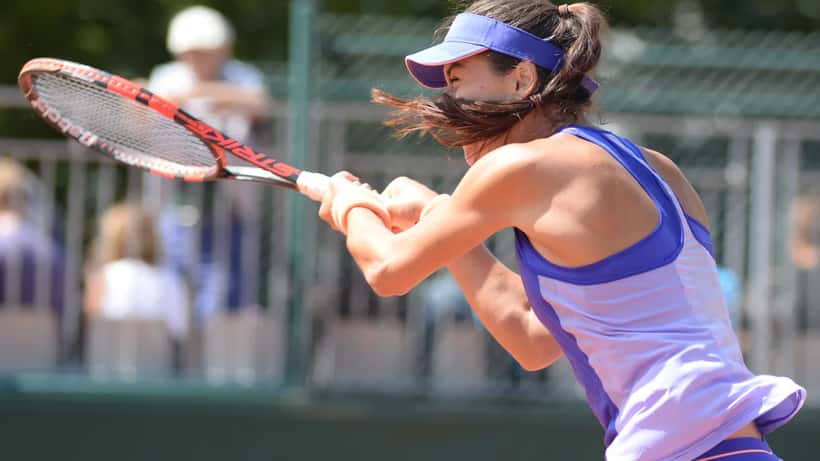
Sorana Cirstea stepped onto Arthur Ashe Stadium in September 2026 not as a curiosity or a sentimental favourite, but as a genuine threat. At 36, the Romanian has beaten Jasmine Paolini in straight sets — 6-3, 6-3 — to reach the US Open quarterfinals, confirming what her 38-13 season record had already suggested: age, managed correctly, is no longer a ceiling for elite athletic performance.
The feat is objectively remarkable. On 13 July 2026, Cirstea became the oldest player in WTA history to enter the top 20 for the first time, reaching a career-high ranking of world No. 17. She has admitted publicly that she never expected to still be playing competitive professional tennis in her mid-30s. Yet here she is in Flushing Meadows, hitting cleaner than ever and recovering faster than players a decade her junior.
For recreational athletes — the weekend tennis players, joggers, and recreational competitors who make up a substantial share of Canadian sports culture — Cirstea's continued excellence raises a deceptively important question: what does the body actually need to sustain high-level physical activity after 35, and when does pushing through pain become a risk that demands professional guidance?
What Makes a 36-Year-Old Body Different on the Court
Human physiology begins shifting in the mid-30s in ways that are subtle but measurable. Muscle fibre composition changes: the proportion of fast-twitch fibres — responsible for explosive speed and power — begins to decline. Connective tissue becomes less elastic, meaning tendons and ligaments absorb repetitive force differently than they did at 24. Aerobic base, paradoxically, can remain strong or even improve with training discipline, which is why elite athletes in technically demanding sports can peak later than pure sprinters.
In tennis specifically, the demands are asymmetric. One shoulder, one hip, and one knee absorb far more load than the other. Over a 20-year career, this cumulative stress shows up differently in older bodies. Recovery windows stretch from 24 hours to 48 or even 72 hours for intense match play. Sleep quality becomes as strategically important as time on court.
Cirstea's run through the 2026 US Open draw without dropping a set in the first two rounds — beating Grabher 6-3, 6-0 in Round 1 and Parry 6-2, 7-5 in Round 2 before dismantling the third seed — suggests her team has built a recovery protocol sophisticated enough to handle back-to-back hard court matches in August heat. That protocol almost certainly involves sports medicine specialists, physiotherapists, and nutritional planning that goes well beyond what most recreational players apply to themselves.
The Recovery Gap Between Professionals and Recreational Athletes
This is where the comparison becomes clinically meaningful. Elite athletes like Cirstea have access to daily monitoring: heart rate variability tracking, lactate threshold testing, and targeted manual therapy after every session. They know, with precision, when their bodies are accumulating load that will result in injury if not addressed.
Recreational athletes typically do not have that level of monitoring — and they often apply the professional mindset (push harder, play through discomfort, recover with rest alone) without the professional infrastructure. According to the Government of Canada's physical activity surveillance data, musculoskeletal injuries from recreational sport affect millions of Canadians annually, with a disproportionate burden falling on adults aged 35-55 who underestimate the recovery demands of the activities they love.
The gap between what a 36-year-old body needs and what a recreational athlete provides it is exactly where preventable injuries occur. Similar patterns emerge across other sports: as explored in Anastasia Potapova's 2026 Madrid Open performance analysis, even younger professional players require structured health support to sustain peak output across a full season. For recreational athletes in their 30s and 40s, that support need is often higher, not lower.
What Recreational Athletes Over 35 Consistently Misread
A sports health specialist working with Canadian recreational players consistently identifies three patterns that lead to preventable injuries in the over-35 population.
The first is confusing fatigue signals for weakness. A twinge in the knee after a long tennis match is not always a reason to push harder. In adults over 35, it is often an inflammatory signal from the patellar tendon or the IT band responding to accumulated load. Simply resting for 48 hours addresses discomfort; it does not address the underlying cause.
The second is skipping warm-ups because time is limited. Cold connective tissue in a 36-year-old body behaves very differently from the same tissue at 24. A proper dynamic warm-up — not static stretching, which can decrease explosive performance — takes 12 to 15 minutes and measurably reduces acute injury risk. This step is non-negotiable in professional programmes for players of Cirstea's age. It is routinely skipped at recreational level.
The third is treating the sport itself as the recovery activity. Playing tennis twice a week while sleeping six hours a night and sitting at a desk the other five days creates a physical environment primed for overuse injuries. Cirstea's performance is not just the result of playing tennis skillfully; it is the result of optimising everything that happens around the tennis.
A health professional who specialises in sports medicine can assess movement patterns, identify muscular imbalances that increase injury risk, and recommend load management strategies tailored to age and activity level. This kind of expert input is not reserved for elite athletes.
A Concrete Case: The 37-Year-Old Club Player with Persistent Shoulder Pain
Consider a scenario that sports physiotherapists across Canada see regularly.
A 37-year-old who plays club tennis three times a week develops a dull ache in the serving shoulder after matches. It clears within a day or two, so they continue playing. Over four months, the threshold shifts: the pain now begins during the second set rather than after. Sleep is occasionally disrupted. Reaching overhead becomes slightly uncomfortable off the court.
This trajectory is typical of supraspinatus tendinopathy — a degenerative process in the rotator cuff that, in adults over 35, can progress to partial tears if load is not modified. If caught at the dull-ache-after-play stage, the clinical pathway is straightforward: manual therapy, targeted strengthening of the external rotators, and a temporary volume reduction. Typically 4 to 6 physiotherapy sessions over 6 to 8 weeks. The player returns to full competition.
If left until the pain occurs during play and sleep is affected, the timeline changes. Imaging — an ultrasound or MRI — is usually necessary to rule out structural damage. If there is a partial tear, management becomes significantly more complex and the return-to-sport window extends to 3 to 6 months, or longer depending on the grade. The financial cost rises substantially; the cost in lost playing time is higher still.
The if/then logic is direct: if shoulder pain during sport persists for more than two weeks, then early assessment by a health professional reduces recovery time and long-term injury risk by a measurable margin. Waiting for the pain to become severe before seeking help is, statistically, the highest-risk strategy available.
This article provides general health information only. It does not constitute medical advice. Consult a qualified health professional for diagnosis and treatment of any specific condition.
When to Stop Playing Through It and See a Specialist
The recreational athlete's instinct is to manage discomfort independently — to tape, ice, and continue. That approach works within certain parameters. When the following signals appear, it no longer does:
- Pain that begins during activity rather than after it
- Swelling in a joint that persists beyond 48 hours
- Any change in the way you move to avoid pain — compensatory mechanics that place stress on secondary structures
- Night pain that disrupts sleep
- The same pain recurring in the same location more than twice in a season
These are clinical indicators, not just comfort thresholds. A sports medicine physician, physiotherapist, or health consultant with expertise in athletic populations can evaluate the specific pattern and recommend an appropriate path — whether that is targeted imaging, manual therapy, load modification, or referral.
Sorana Cirstea's appearance in the 2026 US Open quarterfinals at 36 is the product of two decades of precisely managed physical health decisions. Her body did not simply hold together; it was maintained with expert support. For recreational athletes in Canada, the lesson is not that you need to train like a professional. It is that the professionals — even the ones who look effortlessly durable — take their health seriously enough to ask for expert help before problems become injuries. That standard applies off the tour as much as on it.
