 Stéphanie Fournier
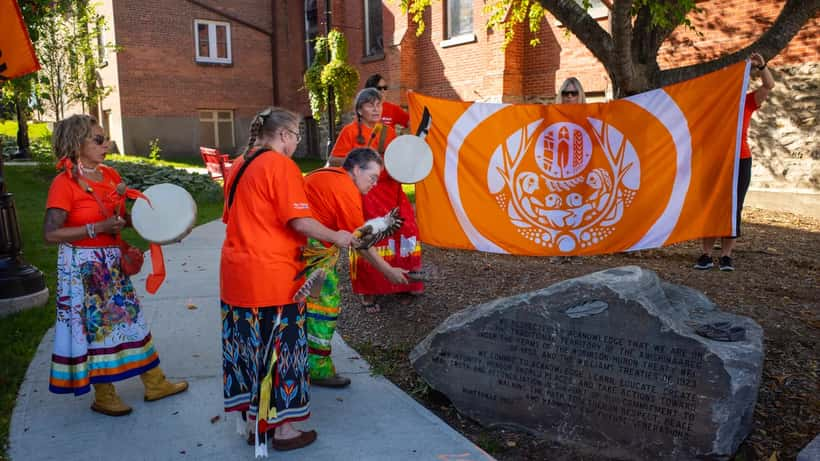
Every September 30, Canada marks the National Day for Truth and Reconciliation — a statutory holiday created in 2021 to honour the thousands of First Nations, Métis, and Inuit children who survived the residential school system, and to remember those who never came home. As the sixth anniversary arrives in 2026, many survivors and their families still carry unresolved legal questions: what claims remain open, what compensation was never received, and whether it is too late to act.
A Day Rooted in Survivors' Stories
September 30 was chosen to align with Orange Shirt Day, a grassroots commemoration dating to 2013 and inspired by Phyllis Webstad, a Northern Secwépemc woman whose orange shirt was confiscated on her first day at St. Joseph Mission Residential School in 1973. The colour became a national symbol: "Every Child Matters."
The history the day marks is documented in detail. Between 1831 and 1996, more than 150,000 Indigenous children were removed from their families and sent to federally funded, church-run residential schools across Canada. The Truth and Reconciliation Commission, which concluded its work in 2015, recorded over 6,000 deaths — and noted the true number is likely much higher. Since 2021, community-led ground-penetrating radar searches have identified hundreds of unmarked burial sites at former school grounds, including 215 at the former Kamloops Indian Residential School in British Columbia, rekindling national grief and fresh legal scrutiny.
What the 2007 Settlement Covered — and What It Left Out
The Indian Residential Schools Settlement Agreement (IRSSA), approved in 2007, was the largest class action settlement in Canadian history at the time. It included two main components:
- Common Experience Payments (CEP): A base payment of $10,000 for the first year attended, plus $3,000 for each additional year. Approximately $1.9 billion was distributed to over 79,000 survivors.
- Independent Assessment Process (IAP): A separate stream for survivors of physical or sexual abuse, with individual awards up to $275,000, and an additional $250,000 for the most severe cases. The IAP closed to new claims in September 2012 and concluded hearings by 2020.
What the settlement did not cover is equally significant. Day school survivors — children who attended federally funded Indigenous day schools but returned home each night — were excluded entirely. They had to pursue a separate class action (Gottfriedson v. Canada), settled in 2022 for $2.8 billion. Certain Métis-run institutions and schools operated outside the IRSSA class definition were also excluded. Intergenerational harm — the trauma passed to survivors' children and grandchildren — has never been formally compensated under any settlement. And losses tied to the discovery of unmarked graves have no dedicated legal mechanism at all.
According to the National Centre for Truth and Reconciliation, fewer than half of the 94 Calls to Action issued by the TRC in 2015 have been fully implemented as of 2026.
Legal Rights Survivors and Families Still Hold Today
The closure of the IAP in 2012 does not mean all legal avenues are exhausted. Several pathways may still be available:
1. Claims for institutions excluded from the IRSSA A number of schools operated by provinces, religious orders, or the federal government fell outside the original settlement class. Survivors of those institutions have pursued independent litigation or been included in subsequent settlements. A legal consultation can determine whether a specific school was covered or whether a separate claim is viable.
2. Abuse claims under extended provincial limitation periods Several provinces have amended their Limitations Acts to remove or extend time limits for claims involving childhood sexual abuse. In Ontario, there is no limitation period for civil claims based on sexual assault when the claimant was a minor. British Columbia's Limitation Act, amended in 2019, allows such claims without a fixed deadline. Alberta and Manitoba have similar provisions. Where the abuse was ongoing and systematic — as it was in many residential schools — courts have also applied the "discoverability" principle, meaning the clock on a limitation period may not start until the claimant reasonably understood the full nature and legal significance of what was done to them.
3. Estate claims on behalf of a deceased survivor If a survivor passed away before receiving their CEP or IAP payment, or before a viable new claim was identified, their estate may have rights in limited circumstances depending on the province and the nature of the claim.
4. Indian Status and identity rights Some survivors were denied legal Indian Status or had their status stripped while in residential school. Reclaiming status under the Indian Act — as updated by Bill S-3 in 2017 — carries material consequences: access to federal programs, treaty rights, and inheritance of on-reserve lands.
If a Family Member Died Before Claiming: A Concrete Legal Scenario
Consider a representative situation that legal experts across Canada encounter regularly. A Cree woman from northern Quebec attended a residential school from 1965 to 1971. She received her Common Experience Payment of $28,000 in 2009 — $10,000 for year one, plus $3,000 for each of the six additional years. But she never filed an Independent Assessment Process claim for the physical abuse she experienced during those years. She passed away in 2019.
Under the IRSSA's design, IAP entitlements were personal to the living claimant. Her estate cannot recover IAP compensation for abuse she never formally reported before the 2012 deadline.
However — and this is where independent legal advice becomes critical — if that abuse also constituted a criminal offence, and if documentary evidence exists (a medical record, a church log, a teacher's report, testimony from a classmate), her estate's executor may have grounds to pursue a civil claim in Quebec.
In 2020, Quebec's Bill 55 reformed the prescription rules for childhood sexual violence: victims or their heirs now have 30 years from the claimant's age of majority to file, and the period can be suspended when the heir only recently discovered the nature of the cause — for example, through documents released during TRC follow-up proceedings in 2021 or later.
If the woman's family only learned the full extent of the documented abuse in 2021, their 30-year window may not have started until that date. In practical terms: the family could potentially have a viable claim running into the late 2040s.
Civil awards in Canadian courts for sustained physical and emotional abuse in residential school settings have ranged from approximately $75,000 to $500,000, depending on severity, duration, and documented psychological harm. The question of which province's law applies, when the abuse was first "discovered" in legal terms, and whether the estate has legal standing to sue are all threshold questions a lawyer specializing in Indigenous rights or personal injury can answer in a single consultation.
What to Do on September 30, 2026
The National Day for Truth and Reconciliation is observed as a federal statutory holiday. Federal public servants, Crown corporation employees, and workers in federally regulated sectors have the day off. Ontario, Nova Scotia, Prince Edward Island, and the Northwest Territories also observe it as a statutory holiday; several other provinces mark it as a day of significance without full statutory status — meaning provincially regulated workers may still be required to work.
For survivors, descendants, and anyone with unresolved questions, the day is also a concrete prompt to act:
- Request residential school records from Library and Archives Canada — requests are free and can be filed online.
- Contact the National Centre for Truth and Reconciliation if a family member's name is missing from the memorial register of students.
- Speak with a lawyer or Indigenous legal aid clinic to assess whether a claim for an excluded institution, a limitation-period extension, or an estate-based action may still be open.
Legal consultations in this area are often available through community legal clinics at no cost. For complex estate or abuse claims, a private consultation with a lawyer who specializes in residential school litigation can clarify in a single meeting whether a viable path exists — and what the likely timeline and process would look like.
ExpertZoom connects you with lawyers across Canada who specialize in Indigenous rights, residential school claims, and personal injury. Use the platform to find a qualified legal expert in your province and get answers on September 30 — not someday.
This article is for informational purposes only and does not constitute legal advice. Limitation periods, eligibility rules, and procedural requirements vary by province and by the specific institution attended. Consult a qualified lawyer before taking any legal action.
