 Aria Nguyen
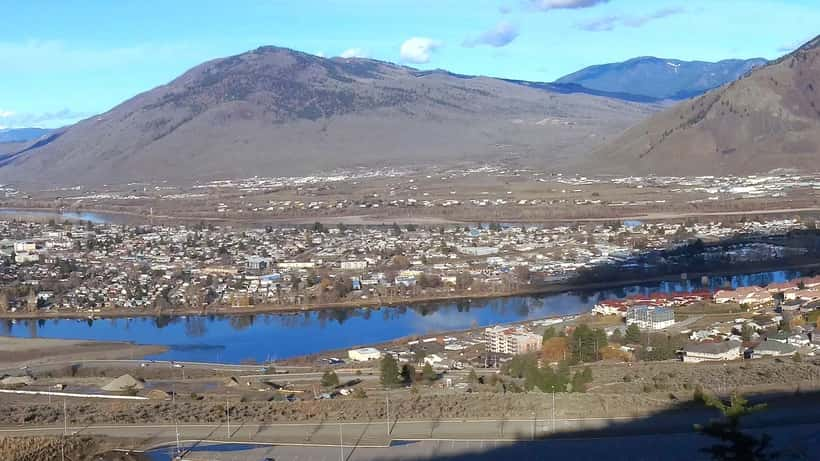
Three days before Canada's National Day for Truth and Reconciliation, approximately 30 masked members of Second Sons Canada gathered on Tk'emlúps te Secwépemc territory near the former Kamloops Indian Residential School. The September 27, 2026 demonstration — which included members holding a banner reading "Got bones?" from the Pacific Way overpass above the Trans-Canada Highway — prompted an immediate safety warning from Tk'emlúps te Secwépemc Chief Rosanne Casimir, a security review, and an active Kamloops RCMP investigation. For Indigenous communities, legal advocates, and any Canadians wondering where hate-motivated demonstrations end and criminal conduct begins, this incident exposes a legal gap that many do not fully understand until they are in the middle of it.
A Calculated Provocation at a Sensitive Moment
The timing of the Second Sons Canada demonstration was not incidental. The former Kamloops Indian Residential School is the site where, in May 2021, Tk'emlúps te Secwépemc announced the discovery of 215 potential burial sites detected by ground-penetrating radar — a finding that shook the country and helped accelerate the creation of the National Day for Truth and Reconciliation on September 30. Choosing to appear at this location with a banner reading "Got bones?" three days before that commemorative date signals a deliberate effort to intimidate and demean.
Second Sons Canada, founded in 2024, describes itself as a men's nationalist group focused on "fitness, camaraderie and political activism." Its public statements oppose immigration and cite what it calls "globalist forces." Following the September 27 incident, RCMP issued a statement condemning what it called a "cowardly attempt to intimidate." Police asked the public to submit any photos, videos, or information about future gatherings as part of an active investigation. The Tk'emlúps community responded by initiating a formal security review.
What Canadian Hate Crime Law Actually Covers
Canada's Criminal Code contains specific provisions that address hate-motivated conduct — but the bar for criminal charges is high, and the distinction between protected free expression and criminal hate speech is one that often requires qualified legal counsel to navigate clearly.
Section 319(1) — Public Incitement of Hatred: This provision makes it a criminal offence to communicate statements in a public place that incite hatred against an identifiable group "in such a way that there will likely be a breach of the peace." An identifiable group includes race, national or ethnic origin, colour, religion, sex, age, mental or sexual disability, sexual orientation, gender identity, and — since a 2022 amendment — Indigenous identity. Maximum sentence: 2 years imprisonment.
Section 319(2) — Wilful Promotion of Hatred: This broader provision covers anyone who, other than in private conversation, wilfully promotes hatred against an identifiable group. It does not require an imminent breach of peace — only that hatred is wilfully promoted. Maximum sentence: 2 years imprisonment. The Crown must prove intent beyond reasonable doubt, which is why police collection of photos and video from the event carries direct legal significance.
Section 430.1 — Mischief Motivated by Hate: If property is damaged or a person is prevented from using property in a context motivated by hate, additional charges under this section apply. Courts can impose sentences enhanced by up to 50% compared to the base offence.
Section 264 — Criminal Harassment: If masked individuals followed, repeatedly communicated with, or besieged members of the Tk'emlúps community in a way that caused reasonable fear for their safety, criminal harassment charges are possible regardless of a hate motivation finding.
According to the Department of Justice Canada's guide on hate crimes, hate-motivated offences are prosecuted as aggravated versions of base crimes — meaning the underlying conduct (mischief, harassment, assault) must be established before the hate motivation can be applied. A protest alone, even one using deeply offensive symbols or slogans, may fall short of the criminal threshold. That is precisely why understanding these distinctions matters, and why early legal consultation is more valuable than most people realize.
When Does a Demonstration Cross the Legal Line? A Concrete Scenario
Consider this scenario: a community organization in Kamloops learns that a group of 15 masked individuals plans to gather with banners outside an Indigenous cultural centre on September 30, 2026 — National Day for Truth and Reconciliation — and livestream the event online.
The sequence of legal options and thresholds looks like this:
If the banners contain language a court could find "likely to incite a breach of the peace" against Indigenous people: a Crown prosecutor can pursue Section 319(1) charges. Based on case law from similar incidents, gatherings with explicit derogatory references to residential school deaths have been found to meet this threshold in at least two BC court decisions since 2023.
If the gathering stays peaceful but the banners wilfully promote hatred with no clear factual or artistic justification: Section 319(2) charges remain possible, but prosecution requires Attorney General consent in most provinces — a process that can take 60 to 120 days from the date of the incident.
If individual community members receive direct threats — in person or via social media linked to the group — they have 2 years from the incident date to file a human rights complaint with the BC Human Rights Tribunal under Section 13 of the BC Human Rights Code. Monetary awards for injury to dignity in the tribunal typically range from $15,000 to $80,000.
If the gathering causes physical interference with access to the cultural centre: police can lay charges under Section 430.1, with potential sentences up to 18 months — enhanced further if hate motivation is proven.
In this scenario, the fastest available legal remedy for the organization is an emergency civil injunction — a court order requiring the demonstration to stop. A lawyer experienced in Indigenous rights or civil liberties can draft and file an urgent application to BC Supreme Court in as little as 24 to 48 hours. Filing fees start at approximately $230. Without legal counsel, most community members do not know that this option exists until the moment has passed.
This distinction — between what is morally wrong and what is immediately actionable at law — cannot be reliably assessed without professional advice.
Civil Options Beyond the Criminal Code
British Columbia offers additional civil mechanisms that can move faster than a criminal prosecution:
BC Human Rights Tribunal: Indigenous community members who experience discrimination in the provision of services or in public spaces can file a complaint. The tribunal can order monetary compensation, policy changes, and public apologies. There is no filing fee for complainants.
Civil suits for intentional infliction of mental suffering: If identifiable harm — such as documented trauma, medical treatment, or measurable economic loss — can be demonstrated, civil claims are possible. Masked individuals present specific identification challenges, which is why RCMP's collection of photographic evidence is legally meaningful for both criminal and civil proceedings.
Section 35 constitutional claims: Demonstrations that interfere with Indigenous ceremonial or cultural practices on traditional territory may raise constitutional issues under Section 35 of the Constitution Act, 1982, which recognizes and affirms existing Aboriginal and treaty rights. These claims require specialized expertise and typically involve longer timelines, but they carry significant precedent weight.
For more context on how Canadian courts have addressed racist abuse and legal remedies, the recent case of Zion Suzuki and systemic racial harassment in professional sport illustrates how hate-motivated conduct in public settings can lead to both criminal and civil accountability in Canada.
What to Do If Your Community Faces a Hate-Motivated Incident
Legal experts across BC consistently advise the same core steps when communities face hate-motivated gatherings:
1. Document everything immediately. Photographs, videos, audio recordings, the exact time and GPS location, the number of individuals present, and any identifying details that are visible. Collect witness names and contact information. This documentation is the foundation of any legal action.
2. File a police report the same day. Kamloops RCMP can be reached at 250-828-3000. Ask specifically whether officers will collect evidence for a potential Section 319 review and request a file number for your records. A report filed within 24 hours strengthens both criminal and civil cases.
3. Preserve digital evidence. Screenshot any online content — social media posts, livestreams, websites — associated with the group before it is deleted. Note that digital evidence collected by private parties outside lawful authority can be challenged in court; a lawyer can advise on proper procedures to ensure admissibility.
4. Consult a lawyer within 72 hours. Hate crime law involves procedural timelines and evidentiary requirements that shift quickly after an incident. An Indigenous rights lawyer or civil liberties specialist can assess whether criminal charges, a human rights complaint, or a civil injunction is the most effective remedy given the specific facts. Time-sensitive options like injunctions close rapidly.
5. Contact the BC Human Rights Commission. The Commission provides free initial guidance on whether your situation involves a rights violation and can connect you with legal resources and community support organizations.
The incident near the Kamloops Indian Residential School is a reminder that the intersection of free expression, hate crime law, and Indigenous rights is legally complex — and that community safety depends on knowing exactly where those lines fall. The difference between a demonstration that is deeply offensive and one that is criminally prosecutable is not always obvious, and it is rarely something a community should try to assess alone.
This article provides general legal information only and does not constitute legal advice. If you believe your rights or the rights of your community have been violated, consult a qualified lawyer licensed to practise law in British Columbia or your province.
