 Chloé Dubois
On the evening of August 6, 2026, scores of travellers bound for Toronto found themselves stranded overnight at Victoria International Airport after Porter Airlines cancelled flight PD444 — not because of weather or a mechanical fault, but because a toddler repeatedly refused to buckle their seatbelt. The incident, confirmed by Porter Airlines and reported by CBC News and Global News, has ignited a pointed question among Canadian air passengers: when a safety-related disruption leaves you without a bed for the night, what are you actually owed under Canadian law?
What Happened on Flight PD444
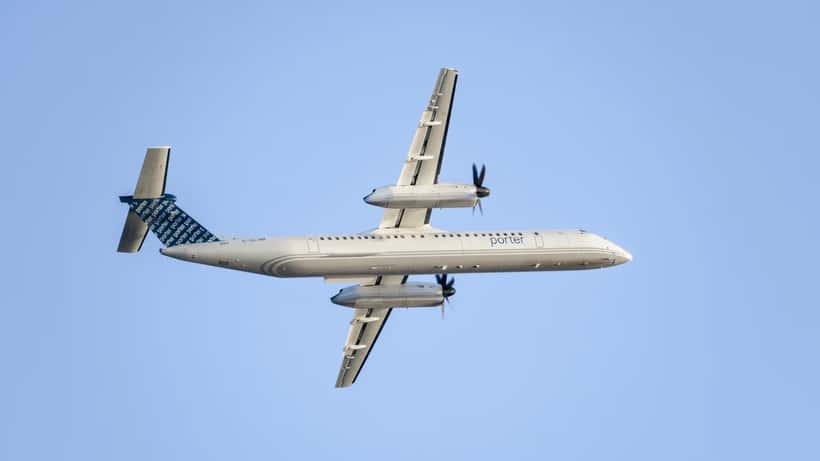
Porter Airlines flight PD444 departed its gate at Victoria International Airport (YYJ) on schedule on the evening of August 6, 2026. As the aircraft taxied toward the runway, a young child onboard stood up and repeatedly refused to wear their seatbelt, despite the efforts of the accompanying parent and multiple cabin crew interventions. Under Transport Canada's aviation safety regulations — and international standards set by ICAO — an aircraft cannot take off with an unsecured passenger. There is no workaround.
The crew elected to return to the terminal and disembark all passengers. That delay, however modest it may have seemed in the moment, pushed flight PD444 past a hard deadline: Victoria International Airport operates under a curfew of 12:30 a.m. No departures after that hour. With the curfew triggered, the approximately 100 passengers onboard — including families with young children — had no flight until the following morning and, for many, no accommodation arranged.
Porter Airlines confirmed it provided rebooking on its next available service. What it did not immediately communicate: whether those passengers were entitled to cash compensation, and under which category of the Air Passenger Protection Regulations (APPR) the cancellation would be classified.
The Three-Category Test That Determines Your Payout
Canada's APPR is built on a three-tier system. Every flight disruption falls into one category, and the category determines how much the airline owes you:
Category 1 — Within the airline's control: Full compensation applies. For a large carrier like Porter, that means up to $400 per passenger for delays of three to six hours, scaling to $1,000 for delays exceeding nine hours.
Category 2 — Within the airline's control, but required for safety: The airline must provide care and rebooking. Cash compensation for inconvenience is waived.
Category 3 — Outside the airline's control: Minimum care standards only, no compensation.
At first read, the PD444 cancellation looks like a Category 2 event. A crew enforced a mandatory safety rule; passengers were protected; the curfew was an unavoidable downstream consequence. That categorization, if upheld, means everyone on PD444 walks away with a rebooked seat — but zero cash for their trouble.
There is, however, an important distinction most passengers miss: care obligations under Category 2 still apply in full, and they carry real dollar value.
Your Immediate Rights: What Porter Was Obligated to Provide That Night
Regardless of which compensation category a cancellation falls into, airlines have non-negotiable care obligations the moment a disruption extends your wait beyond two hours. On the night of August 6, Porter was required to provide:
- Meals and refreshments proportional to the wait — vouchers should have been issued within two hours of the cancellation
- Hotel accommodation for all affected passengers who could not reasonably return home, given that the delay forced an overnight stay
- Ground transportation to and from the hotel (or reimbursement if passengers arranged their own)
- Rebooking on the next available Porter flight at no additional cost, or a full refund for those who chose not to travel
These are not goodwill gestures. They are mandated standards under the Air Passenger Protection Regulations, as published by the Canadian Transportation Agency. An airline that fails to provide them — for any reason, including a safety-related cancellation — is in breach of federal regulation, and passengers can file a formal complaint with the CTA to recover those costs.
What an Overnight Stranding Actually Costs: A Concrete Claim Breakdown
Take a realistic scenario based on the typical PD444 passenger profile: a couple travelling from Victoria to Toronto for a week-long trip, booked on an economy fare with a checked bag each.
They land back in the terminal at 11:45 p.m. on August 6. There are no Porter representatives readily visible. They book a hotel near the airport through a travel app: $195 for the night (a common Victoria airport-corridor summer rate in 2026). Dinner at the terminal before leaving: $58 for two people. A rideshare to the hotel and back the next morning: $71 return. Total out-of-pocket expenditure before their rescheduled flight boards: $324.
Under the APPR's care provisions, Porter was required to cover all three line items. If the airline failed to provide vouchers or reimburse these expenses, those passengers have a clear, documentable claim for $324 — independent of any compensation dispute about which category the cancellation falls under.
Now apply the Category 1 scenario for comparison. If a passenger successfully argues the disruption was within Porter's control — not required for safety — the same couple would be entitled to an additional $400 per person in inconvenience compensation, or $800 total. Combined with the $324 in expenses, the full value of their claim rises to $1,124.
The difference between Category 2 and Category 1, for a single couple, is $800. For a family of four, it exceeds $1,600. That gap is precisely why the legal characterization of this cancellation matters.
The New APPR Framework: Parliament Has Shifted the Burden
The APPR landscape is less settled than it was two years ago. Parliament has passed amendments to the Air Passenger Protection Regulations that restructure how the safety exemption works. Under the old framework, passengers bore the de facto burden of proving a disruption was controllable. Under the amended framework, airlines must demonstrate that exceptional circumstances applied, or compensation is owed.
This creates genuine legal ambiguity for PD444. Is an unruly toddler an "exceptional circumstance" in the amended sense? Or could it be argued that reasonable alternatives existed — reseating the family, offering a departure on a later date, or giving the parent additional time to manage the child before the curfew window closed? These are live questions that the CTA has not yet resolved consistently.
For Canadians who have navigated flight disruptions across major Canadian hubs, the gap between a safety exemption and a controllable-event finding has already produced meaningfully different outcomes — sometimes depending on the specifics of how an individual claim is framed. That is where legal expertise adds measurable value.
How to File Your Claim Before the August 2027 Deadline
Canadian passengers have one year from the date of a disruption to file a formal complaint with the CTA. For PD444, that deadline falls on August 6, 2027. Acting well before that date is strongly advisable:
- Gather all receipts now — hotel, meals, rideshares, any communication from Porter, your rescheduled boarding pass
- Submit an expenses claim directly to Porter — the airline must acknowledge within 30 days and resolve within a reasonable timeframe
- If Porter invokes the safety exemption, request written confirmation of which APPR category they have applied and their specific reasoning
- Escalate to the CTA if Porter denies your claim, fails to respond, or provides inadequate care compensation
- Consult a legal expert if the total value of your claim — care expenses plus potential inconvenience compensation — exceeds a few hundred dollars
At the $1,124 level illustrated above, a consultation with a Canadian lawyer familiar with aviation regulation and CTA proceedings is a proportionate step. ExpertZoom connects you directly with legal professionals who specialize in passenger rights claims, without requiring you to commit to traditional retainer arrangements.
A toddler refusing a seatbelt is an unusual trigger for a cancelled flight — but what follows for stranded passengers is governed by the same regulatory framework as any other disruption. Knowing precisely where your claim sits within that framework, and whether Porter has correctly applied the safety exemption, is not a technicality. It is the difference between recovering nothing and recovering over a thousand dollars.
YMYL disclaimer: This article provides general information about Canadian air passenger rights and does not constitute legal advice. For guidance specific to your situation, consult a licensed legal professional.
