 Adèle Chartrand
Victoria Day 2026 brought Ottawa's first heat event of the season, and Environment Canada has since issued a heat warning for the region as temperatures push toward 31°C with humidex values approaching 40°C. For a city accustomed to months of winter, the sudden shift to intense summer heat catches many residents — and their bodies — unprepared.
Heat illness is not just discomfort. According to Ottawa Public Health, heat-related conditions send hundreds of Canadians to emergency rooms each year and cause preventable deaths among vulnerable populations. With the current warning active and warmer weeks ahead, knowing the specific symptoms that require a physician's attention could be life-saving.
Who Is Most at Risk During Ottawa's Heat Warnings?
Ottawa Public Health identifies six groups at highest risk during heat events:
- Adults over 65, whose bodies regulate temperature less efficiently and who often don't register thirst until dehydration is already advanced
- Young children under 4, who cannot communicate heat symptoms and overheat faster than adults
- People experiencing homelessness, without reliable access to cooling or hydration
- Outdoor workers — construction crews, landscapers, postal carriers, and delivery drivers
- People with chronic conditions — heart disease, diabetes, kidney disease, or respiratory illness
- Anyone exercising outdoors, including the tens of thousands of runners at this weekend's Tamarack Ottawa Race Weekend
Heat illness can develop quickly. Ottawa Public Health notes that indoor temperatures of 26°C (79°F) already increase risk for vulnerable individuals. A humidex reading of 40°C outdoors can produce heat exhaustion in under 30 minutes of sustained exposure for those in high-risk categories.
4 Symptoms That Mean Call a Doctor, Not Just Cool Down
Most Canadians know to drink water and find air conditioning during a heat warning. But there are specific symptoms that go beyond what rest and rehydration can fix:
1. Confusion or disorientation. This is the most serious warning sign and indicates heat stroke rather than heat exhaustion. If a person is acting confused, cannot answer simple questions, or is stumbling, call 911 immediately. Heat stroke drives the body's core temperature above 40°C and can cause permanent brain damage within minutes if not treated with rapid cooling measures.
2. Hot, dry skin on a hot day. If someone who has been exposed to heat stops sweating entirely, this signals that the body's primary cooling mechanism has failed — a hallmark sign of heat stroke. Sweating is protective; its sudden absence is a medical emergency requiring immediate hospital care.
3. Rapid or irregular heartbeat. Heat stress forces the cardiovascular system to work substantially harder to circulate blood to the skin for cooling. In people with existing heart conditions, this strain can trigger arrhythmias or angina. Any sensation of racing or irregular heart rhythm during heat exposure should be assessed by a physician the same day — not monitored at home.
4. Persistent vomiting that prevents drinking. Heat exhaustion produces nausea, but when vomiting prevents a person from taking in any fluids, the condition can escalate rapidly. Oral rehydration becomes impossible, and intravenous fluids administered at a hospital or urgent care clinic may be the only safe path to recovery.
The Most Common Mistake During Ottawa Heat Warnings
Emergency physicians consistently report the same pattern during heat events: families underestimate symptoms in elderly relatives. A 75-year-old who seems "a bit tired" and "just not hungry" may already be in the early stages of heat exhaustion — with a rising core temperature and declining blood pressure — before anyone in the house thinks to check on them.
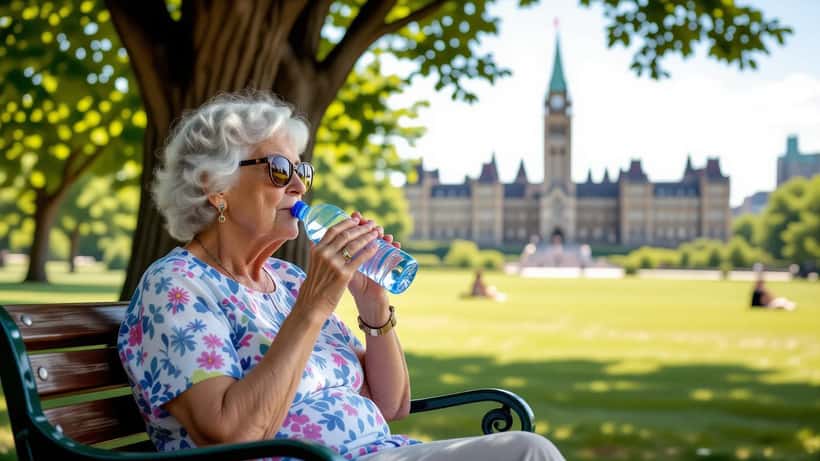
Seniors often lose their sense of thirst as they age. By the time an older adult feels thirsty, they may already be significantly dehydrated. Proactive hydration — a glass of water every 30–60 minutes regardless of thirst — is essential during heat warnings for anyone over 65.
The City of Ottawa operates cooling centres during active heat warnings: air-conditioned public facilities where anyone can spend the hottest hours of the day free of charge. These are especially important for residents in older homes without central air conditioning or those with units that cannot handle extreme humidity. The city lists active cooling centres at ottawa.ca during warning periods.
How Environment Canada's Heat Warning System Works
Environment Canada issues a heat warning for Ottawa when either of two criteria are met:
- Forecast daytime highs will exceed 31°C AND nighttime temperatures will stay above 20°C for two or more consecutive days
- The humidex reading will reach 40°C or above
These thresholds are not arbitrary. They reflect the point at which the body's thermoregulatory mechanisms begin to fail even in healthy, well-hydrated adults. The combination of high daytime temperature and a warm overnight low is particularly dangerous because the body never gets a chance to recover from heat stress during the cooler night hours.
Ottawa's Climate Ready strategy acknowledges that heat events will become more frequent and more intense through the end of this decade. The 2026 spring heat event is consistent with that trend.
See also: Canada's Spring Weather Extremes 2026: 4 Health Risks Facing Seniors
What to Tell Your Doctor After Heat Exposure
If you seek medical care after heat exposure, bring as specific a description as possible:
- How long you were outdoors and at what approximate temperature and humidity
- Whether you were drinking fluids, and what kind — water versus sports drinks versus alcohol
- Maximum effort level if you were exercising
- Any existing conditions involving the heart, kidneys, or blood pressure
- Your current medications — diuretics, antihistamines, beta-blockers, and antipsychotics all increase heat risk significantly
A physician can assess for acute kidney injury from dehydration, electrolyte imbalances (low sodium or low potassium) that may not be obvious without blood work, and rhabdomyolysis — muscle breakdown that can occur from heat stress combined with exertion.
Actions Ottawa Residents Should Take Now
During any active heat advisory in Ottawa:
- Drink 2–3 litres of water daily, and more if you are outdoors — aim for electrolyte-balanced drinks rather than plain water if perspiring heavily
- Close curtains on south- and west-facing windows before temperatures peak (typically 2–4 PM), trapping cooler morning air inside
- Check on elderly neighbours and family members — a single phone call can identify someone who needs help
- Know your nearest cooling centre — the City of Ottawa posts updated locations at ottawa.ca during heat warnings
- Call Telehealth Ontario at 1-866-797-0000 for guidance if you are unsure whether symptoms require an emergency room or can wait until morning
Heat illness is entirely preventable with the right precautions. A physician or nurse practitioner can assess your specific risk profile — including medications, existing conditions, and living situation — to give you personalized guidance for getting through Ottawa's summer heat safely.
This article provides general health information for educational purposes. It is not a substitute for professional medical advice. If you or someone you know is showing signs of heat stroke, call 911 immediately.
