 Olivia Dubois
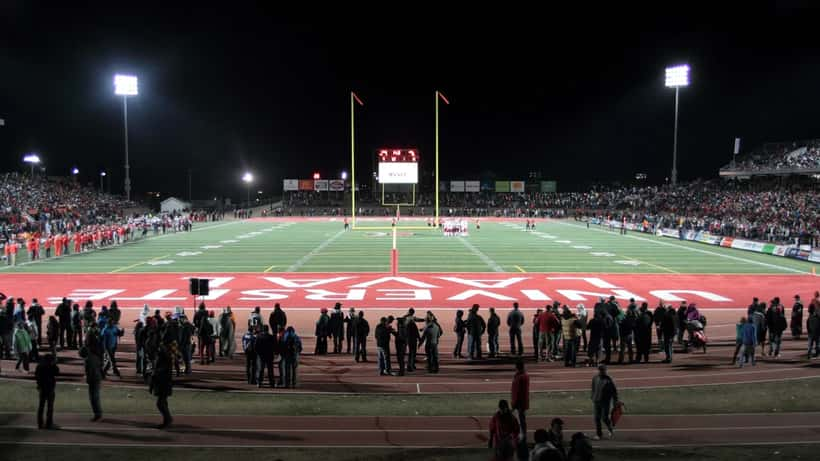
Olivier Cool caught two touchdown passes of 13 and 14 yards in the second quarter of Laval's 24-0 halftime lead over McGill on October 18, 2026. The two scores lifted the Rouge et Or receiver to 23 career touchdown catches, tying Kevin Mital's school record from 2021 to 2023, according to Caucus Football. The milestone comes after Cool missed the first two games of the season with a lower-body injury, as Dose.ca reported on October 2.
The question behind the record: how does a player come back that fast?
Cool's season raises a question many recreational athletes ask after their own injuries. If a top-level receiver can sit out two games and then produce at this pace, how long should an everyday player wait before returning to sport?
The short answer is that the calendar matters less than the criteria. Dose.ca reported that after returning, Cool recorded 15 receptions, 168 yards and 3 touchdowns in his first two games back. Laval is 6-0 and hosts a semifinal at PEPS Stadium on November 7, according to Caucus Football.
Neither report specifies the nature of his injury, so we cannot say what his recovery involved. What we can do is explain how sports medicine professionals generally decide when a lower-body injury has healed enough for explosive sport.
What "lower-body injury" usually means in football
Teams often use the label "lower-body injury" to avoid giving opponents information. It can cover a hamstring strain, a groin problem, a sprained ankle or a knee issue. Each has a different timeline.
Muscle strains in the back of the thigh are among the most common injuries in sports that involve sprinting. Receivers sprint at full speed repeatedly, so those muscles take heavy loads. A mild strain may settle in a couple of weeks, while a more serious one can take much longer.
The important point is that pain disappearing is not the same as the tissue being ready. Sprinting, cutting and jumping place far higher loads on a leg than walking or jogging does.
How do professionals decide a player is ready?
Physiotherapists and sports physicians typically look at several checkpoints rather than one date:
- Pain-free movement. Walking, stairs and daily tasks cause no symptoms.
- Full range of motion. The injured leg moves as freely as the healthy one.
- Strength comparison. Testing shows the injured side close to the other, commonly around 90 percent, though exact thresholds vary by clinic and injury.
- Graded running. The athlete moves from jogging to build-up sprints to full-speed efforts over several sessions.
- Sport-specific drills. Cutting, accelerating and catching under fatigue come last.
Skipping the later stages is how many athletes reinjure themselves. Studies in running-based team sports report that recurrence is common in the weeks after a return, which is why staged progressions exist.
A concrete case: the weekend flag-football player
Consider a 34-year-old who plays in an eight-game fall flag-football league. In game three, they feel a sharp pull in the back of the thigh while sprinting for a pass and leave the field.
If they rest and return for game five, they will have missed two of eight games, which is 25 percent of the season. That is the same number of games Cool missed, but the comparison ends there. Cool had a team's medical staff, regular testing and a structured return plan. The weekend player has none of that.
Here is how the if/then logic plays out. If the player can walk without pain after about five days but has not tested strength or done graded sprints, then returning at full speed in game five carries a real risk of a second injury. A second strain often costs more time than the first. A setback could turn a two-game absence into five or six games, wiping out most of the rest of the season.
If instead the player sees a physiotherapist in the first week, completes a four-session running progression and passes a strength comparison before game five, then they return with a much lower risk. The cost is typically a small number of appointments, compared with several lost weeks if the injury recurs.
The takeaway for recreational athletes: a staged plan can feel slower in week one and faster by week six.
Recovery is more than the injured muscle
Return-to-play plans also look at what surrounds the injury. Sleep, nutrition and the way a player has been training all influence how quickly tissue repairs and how well it tolerates load afterwards.
A few practical habits help most recreational athletes:
- Sleep. Seven to nine hours a night supports tissue repair and reaction time, and short sleep is linked to higher injury risk in young athletes.
- Protein and overall energy intake. Muscle repair needs fuel, so crash dieting during rehab slows progress.
- Strength work for the whole leg. Hips, glutes and calves share the load with the thigh, so a plan that trains only the injured spot leaves gaps.
- Honest symptom tracking. Note stiffness the morning after each session. Rising stiffness is a signal to ease off, not push through.
Many players find the mental side hardest. Fear of reinjury can make an athlete hesitate, which alters running mechanics. A clinician can pace the progression so confidence returns together with strength, rather than after a bad experience.
When should you see a professional?
Consider booking an assessment if any of the following applies:
- You felt a pop or a sudden sharp pain during activity.
- Bruising appears in the following day or two.
- You cannot bear weight comfortably, or the joint feels unstable.
- Pain or swelling is not improving after about a week.
- You have had the same injury before.
A physiotherapist or sports medicine doctor can identify which structure is involved, rule out more serious damage and build a return plan matched to your sport. Our earlier coverage of a playoff comeback after an Achilles injury explains how that same logic applies to another body part.
Why record-chasing seasons are also load-management stories
Cool's run also highlights a point coaches and trainers stress: sustained performance depends on managing workload. Laval's coach, Glen Constantin, said after the McGill game that his players eased off in the second half, per Caucus Football. With a 24-0 lead, that is a sensible moment to protect legs.
Recreational athletes can borrow the idea. Build weekly training gradually, warm up before sprints and avoid jumping from no activity to full-speed play. Fatigue is a well-documented factor in muscle injuries, so a tired leg late in a game or a season is more vulnerable.
The Public Health Agency of Canada publishes general guidance on injury prevention that is a useful starting point for anyone returning to activity.
What to do next
If you are coming back from a lower-body injury, write down the checkpoints above and ask your clinician which ones you have met. Do not use the date alone to decide. If you are unsure, an expert can examine you and build a plan based on your sport and your history.
On ExpertZoom, you can consult a health professional such as a physiotherapist or sports medicine doctor before your next game, so that your return is a comeback and not a setback.
This article is for general information only and is not medical advice. Consult a qualified health professional about your own injury.
