 Elara Deschamps
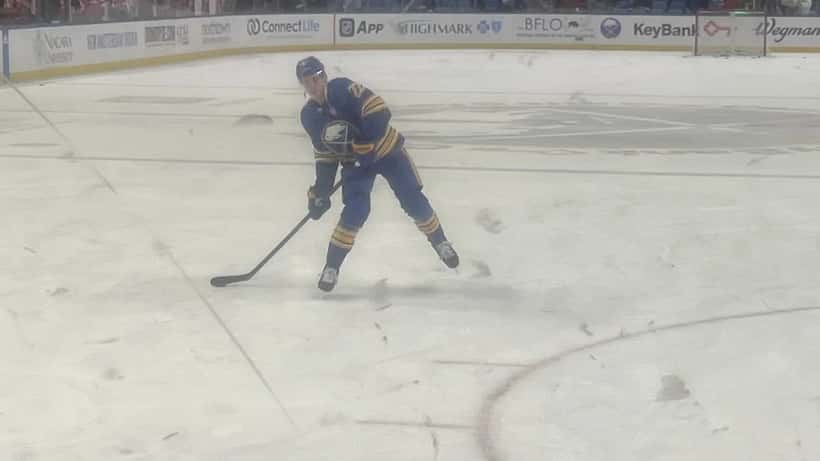
When the Buffalo Sabres opened their 2026 NHL playoff run, one of the names on the ice was Jack Quinn — a right winger who just 18 months earlier had been lying on an operating table after rupturing his Achilles tendon during an off-ice summer workout. For Quinn, 23, the comeback was a sporting achievement. For Canadian athletes and weekend warriors watching from the stands, it raises an important question: what does an Achilles rupture really mean for your body, and how do you know when it needs medical attention?
What Happened to Jack Quinn
In June 2024, Quinn suffered a complete Achilles tendon rupture during a conditioning workout at home in Ottawa. The injury sidelined him for the first 32 games of the 2024-25 NHL season. After surgery and intensive rehabilitation, he returned in December 2024 and immediately contributed — scoring five goals and adding 12 points in the 17 games he played before further setbacks.
The Sabres, recognizing his long-term potential, re-signed Quinn to a two-year contract worth an average of $3.375 million annually, a clear statement of confidence in his recovery trajectory. By the spring of 2026, he was back on playoff ice.
His journey — marked by surgery, months of physio, and the slow grind of returning to elite-level competition — mirrors what thousands of Canadians go through every year after the same injury, minus the team of specialists and recovery staff.
What an Achilles Tendon Rupture Actually Is
The Achilles tendon is the largest and strongest tendon in the human body. It connects the calf muscles at the back of the leg to the heel bone and is responsible for every pushing movement the foot makes — walking, running, jumping, cutting. When it ruptures, typically with a sudden explosive movement like a sprint or jump, the structural failure is both painful and dramatic. Many patients describe hearing or feeling a "pop," followed by an inability to push off the foot or point the toes downward.
A complete rupture — the kind Quinn suffered — means the tendon has torn through entirely. Unlike a strain or partial tear, a full rupture almost always requires surgery in active individuals. The procedure reattaches and reinforces the tendon, but it is just the beginning of the process. According to the World Health Organization's physical activity guidelines, musculoskeletal injuries are among the leading barriers to maintaining healthy activity levels long-term — making correct diagnosis and rehabilitation critical.
The Road Back: Why Recovery Takes Longer Than You Think
For a professional athlete like Quinn, recovery from Achilles surgery follows a rigorous, team-supervised protocol. The typical stages include:
Weeks 1-2: Immobilization in a boot or cast, zero weight-bearing, managing post-surgical swelling.
Weeks 3-8: Gradual reintroduction of weight-bearing, physiotherapy begins to restore range of motion and combat muscle atrophy.
Months 3-6: Strength rebuilding. The calf complex must be retrained almost from scratch, since prolonged immobilization dramatically reduces muscle mass and tendon tensile strength.
Months 6-12: Return to sport-specific movements, cutting, acceleration, and — in an elite athlete's case — full-contact competition.
Quinn's return after roughly six months falls at the faster end of this spectrum, made possible by daily access to physiotherapists, athletic trainers, and sports medicine physicians. For Canadians recovering without that level of professional support, the timeline is often longer, and the risks of re-rupture — which carries a significantly worse prognosis — are higher.
Signs That Your Achilles Needs Immediate Medical Attention
Achilles injuries exist on a spectrum. Many Canadians ignore early warning signs, attributing soreness to overuse or aging. The following symptoms warrant professional evaluation, not rest-and-hope:
- A sudden, sharp pain in the back of the ankle or calf during activity, especially with a popping sensation
- Inability to raise up on your toes or push off the affected foot
- A visible gap or dent in the tendon above the heel
- Significant swelling and bruising in the lower leg within hours of the injury
- Persistent tendon pain that returns with every bout of physical activity over several weeks
The distinction between tendinopathy (inflammation or degeneration) and a partial or full rupture changes the treatment path entirely. A sports medicine physician or orthopaedic surgeon can confirm the diagnosis with clinical tests and, where needed, imaging.
What Canadians Often Get Wrong About Achilles Injuries
Delayed diagnosis is one of the most common problems with Achilles ruptures in non-athletes. Because the initial pain may subside within hours, some patients walk on a ruptured tendon for days or even weeks before seeking care. By that point, the tendon ends have retracted, making surgical repair more complex.
If you're active — whether playing hockey in a recreational league, running half-marathons, or playing tennis on weekends — understanding that Achilles injuries can happen off the ice or field, during routine movement, is critical. Quinn's rupture occurred during a conditioning workout, not a game.
For context on how common these injuries are becoming in Canadian sport culture, see our earlier analysis of Alex Newhook's ankle injury recovery and return to playoff form, which outlines a comparable rehabilitation process.
When to Consult a Sports Medicine Professional
The good news for Canadians is that Achilles tendon outcomes — when treated promptly and correctly — are generally excellent. Full return to sport is achievable for the majority of patients who receive appropriate surgical and rehabilitation care.
A sports medicine physician or physiotherapist can assess the severity of the injury, recommend whether surgery is the right course, and design a structured rehabilitation programme tailored to your activity level. Waiting too long, or attempting self-directed recovery, significantly increases the risk of chronic tendon problems and re-rupture.
If you have recently experienced lower leg or heel pain during sports activity, ExpertZoom connects you with qualified sports medicine and health professionals across Canada who can advise on diagnosis and next steps.
This article is for informational purposes only and does not constitute medical advice. Consult a qualified health professional for a diagnosis specific to your situation.
