 Ella Singh
The Old Farmer's Almanac has begun releasing the early signals behind its Winter 2026–2027 outlook, and the picture forming for Canada is one word: volatile. According to Almanac.com editors, a strong El Niño is now driving the forecast, and long-range data shows a possible polar vortex disruption for January 2027 that could send Arctic air deep into the country. For Canadian pet owners and farmers, that uncertainty is a reason to prepare animals now, veterinarians say, rather than wait for the first deep freeze.
What the almanac is actually signalling
The full region-by-region Canadian forecast will not appear until the 2027 edition is published, but the Almanac's editors have already flagged the atmospheric drivers they are tracking. El Niño became officially established in June 2026 and has continued strengthening as ocean temperatures warmed across the tropical Pacific. Forecasters expect it to peak as one of the strongest such events in decades.
The second signal is the polar vortex — the pool of frigid Arctic air that normally stays locked near the North Pole. Early seasonal data points to a disruption trend around January, and when that circulation weakens, cold air can spill south in sudden, sharp outbreaks. A strong El Niño often nudges much of Canada toward milder-than-average conditions overall, but that headline average can hide brutal short cold snaps. It is exactly this pattern — mild stretches broken by sudden extreme cold — that catches animal owners off guard.
Why a swinging winter is a veterinary problem
A steadily cold winter lets animals acclimatize. A whipsaw winter does not. When temperatures plunge 20 degrees in a day, pets and livestock that were comfortable the week before are suddenly exposed to frostbite and hypothermia risk.
The Canadian Veterinary Medical Association warns that tails, ear tips and toes are poorly insulated and highly prone to frostbite — damage that is hard to detect and may not become obvious until days after it occurs. Hypothermia has clearer warning signs: a pet that is whining, shivering, appears anxious, slows or stops moving, seems weak, or starts looking for warm places to burrow should be brought inside immediately. Puppies, senior animals, short-haired breeds and pets with heart, kidney or hormonal conditions lose body heat fastest and need the most caution.
The volatility itself is the hazard. An owner who lets a dog stay out for an hour on a mild December afternoon may keep the same routine into a January cold snap without realizing the risk has changed overnight.
A vet's checklist for pets
Veterinary guidance for a swing-prone winter is straightforward but easy to neglect:
- Bring them in. If it is too cold, windy or raw for you to stay out comfortably, it is too cold for your cat or dog. Shorten walks during cold-snap warnings.
- Protect the paws. Road salt and de-icing chemicals irritate and crack paw pads. Wipe paws after every walk and check between the toes for ice balls, which can cause frostbite.
- Watch indoor heat sources. Heating pads and blankets warm pets, but an animal that falls asleep on an unprotected heat source can suffer thermal burns, and unattended space heaters can be knocked over and start fires.
- Lock away antifreeze. Some toxins are more common in winter. Ethylene glycol antifreeze is sweet-tasting and lethal in tiny amounts — clean spills immediately and store containers out of reach.
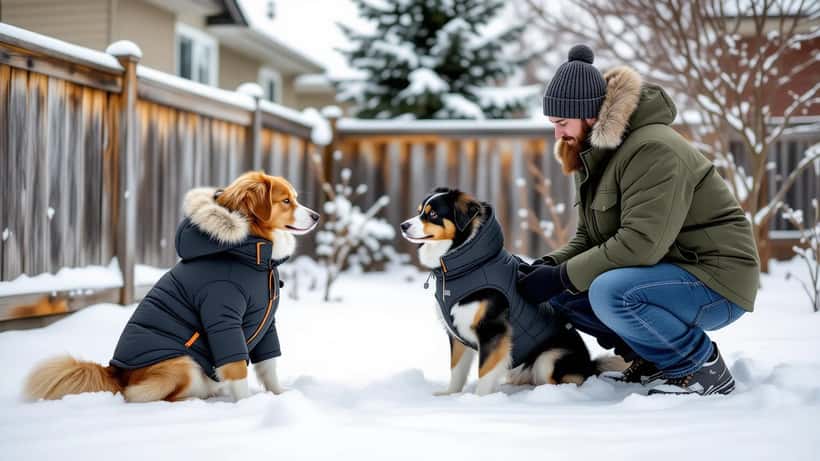
- Coat up the vulnerable. Short-haired and small dogs benefit from a well-fitted winter coat on cold-snap days.
Do not forget livestock and outdoor animals
Farm animals and outdoor working dogs face the same volatility on a larger scale. Even animals with heavy winter coats require a windbreak, clean dry bedding and a sheltered area to escape the elements. Water is the quiet emergency: troughs and bowls freeze fast during a cold snap, and a dehydrated animal chills far more quickly. Heated waterers or frequent checks become essential when a mild spell flips to deep cold.
Barns and coops that ventilated well in a mild December can trap moisture and cold in January, so shelter that seemed adequate should be re-checked once forecasts turn. Producers who follow Canada's national Codes of Practice for farm animal care already have a framework for cold-weather housing — the key this winter is applying it before, not after, the temperature drops.
What Canadian animal owners should do now
The practical takeaway is timing. Because a strong-El Niño winter is likely to arrive as sharp swings rather than a steady freeze, the safest move is to prepare during the mild stretches. Book a wellness check for senior pets and animals with chronic conditions, refresh outdoor bedding and windbreaks, and locate the nearest emergency clinic before you need it.
A licensed veterinarian can assess your specific animal's cold tolerance, recommend the right shelter or clothing, and advise on breed- and age-related risks that a generic checklist cannot cover. If you are unsure whether your pet or herd is ready for a volatile winter, an online consultation with a veterinary expert is a fast way to get a tailored plan before the first polar-vortex outbreak.
While you are winterizing the household, it is worth preparing your vehicle for the same forecast so a breakdown never leaves you or an animal stranded in the cold.
This article is general information and not a substitute for professional veterinary care. If your animal shows signs of frostbite, hypothermia or poisoning, contact a licensed veterinarian or emergency clinic immediately. For full cold-weather guidance, see the Canadian Veterinary Medical Association's Cold Weather and Pets resource.
