 Ethan Pellerin
The Old Farmer's Almanac is already shaping its Winter 2026–2027 outlook around a single dominant signal: El Niño, which arrived in June 2026. The 2027 edition will break the season down month by month and region by region, but forecasters have made one thing clear — Canadians should not read "milder and wetter" as "no winter." The Almanac's 2025–2026 read warned of snowy stretches and polar snaps even inside a mild pattern, with above-normal snowfall from Atlantic Canada through northern Quebec, western Ontario, and the northwestern Prairies. For homeowners, the smarter response to a long-range forecast is not to argue with it, but to use the lead time it buys.
That lead time matters most in one place: the space between your ceiling and your roof. Heat loss through a poorly sealed attic is the single most common reason Canadian homes rack up avoidable heating bills and roof damage every winter — and it is a problem best fixed in the fall, not in January when contractors are booked solid.
Why a "mild" forecast still threatens your roof
A wet, mild winter is in some ways more dangerous for a roof than a deep freeze. The Almanac's pattern of thaw-freeze cycles — snow, a mild spell, then a hard refreeze — is precisely the recipe for ice dams. An ice dam forms when heat escaping from your living space warms the roof deck, melts the snow sitting on it, and sends the meltwater down to the cold roof edge where it refreezes. The ridge of ice that builds up at the eaves traps the next round of meltwater, which then backs up under the shingles and into the attic, walls, and ceilings.
The root cause is not the weather. It is heat leaking out of your home. According to Natural Resources Canada, keeping house heat out of the attic through proper air sealing and insulation is the preferred fix for most houses, because it keeps the roof deck uniformly cold and stops the melt-refreeze cycle before it starts. A forecast that promises repeated mild spells is, in effect, a forecast for more ice-dam risk — not less.
The numbers that make the case
The financial argument for acting early is straightforward. Up to 25% of a home's total heat loss can occur through thermal bridging and gaps, and the attic is where much of that escaping warm air ends up. In Canada, attic insulation is generally recommended at R-50 to R-60 — a level written into the Ontario Building Code for most homes — yet a large share of older housing stock still sits well below that.
The gap between a builder-minimum attic from decades ago and a modern R-60 assembly is not academic. It shows up every month on the heating bill, and it shows up again as water stains on the ceiling after the first big thaw. A home that leaks heat is paying twice: once to the utility, and once to the contractor who repairs the water damage the leak caused.
Where a professional earns their fee
This is where the "do it yourself" instinct runs into limits. Rolling out extra batts in the attic feels simple, but insulation without air sealing can make ice dams worse, not better — trapping moisture and leaving the warm-air leaks that drive the melt untouched. The order of operations matters: seal the air leaks first, then insulate, then confirm the attic is ventilated so the roof deck stays cold.
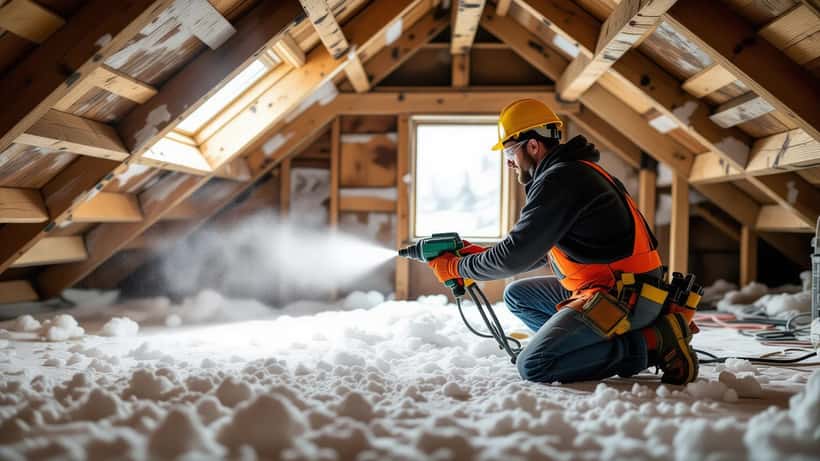
A qualified insulation or renovation contractor brings three things a weekend cannot. First, diagnosis — often with a blower-door test or thermal imaging that shows exactly where warm air is escaping, rather than guessing. Second, the right material in the right place: spray foam at the attic edges, for example, air seals and insulates in one step where batts alone would leave a gap. Third, the ventilation and moisture calculations that keep a newly sealed attic from turning into a mould problem.
Booking that work in the fall, before the Almanac's first cold snap, means you get an inspection on your schedule instead of an emergency call-out during a January thaw when every roofer in the region is chasing leaks. You can compare quotes, check for available energy-efficiency rebates, and have the job finished before the snow load arrives.
A homeowner's pre-winter checklist
Before the first heavy snowfall, walk through these steps — and know which ones warrant a professional:
- Measure your attic insulation depth. If it is visibly below the joists or you cannot recall an upgrade, you are likely under R-50. Get a contractor's assessment.
- Look for air-leak signs. Frost or dark staining on the underside of the roof deck, uneven snow melt on the roof, or drafts around ceiling fixtures all point to warm air escaping.
- Check the eaves after the first melt. Icicles and ridges of ice at the roof edge are the visible symptom of an ice dam forming.
- Confirm attic ventilation. Blocked soffit vents defeat even good insulation by letting the roof deck warm up.
- Ask about rebates. Energy-efficiency programs can offset a meaningful share of an insulation upgrade — a contractor doing this work daily will know what is currently available.
The same preparation logic applies well beyond the attic. Homeowners bracing for the season can review the wider list of home preparations experts recommend ahead of an El Niño winter, and keep a set of expert home-safety tips for severe weather on hand once the storms begin.
The bottom line
The Old Farmer's Almanac's Winter 2026–2027 forecast is not a guarantee, and it does not need to be. Whether the season lands mild, snowy, or somewhere in between, a home that leaks heat through its attic will pay for it — in bills, in ice dams, and eventually in repairs. The one variable you control is preparation, and the window to do it well closes the moment the first snow falls.
If your attic is under-insulated, poorly sealed, or you simply do not know, connecting with a qualified insulation or renovation professional through Expert Zoom now — while there is still time on the calendar — is the difference between reading a forecast and being ready for it.
