 Robert Miller
El Niño is expected to arrive in Canada by May 2026, and meteorologists are already warning of a potentially "Super El Niño" winter in 2026-2027 — the most damaging pattern on record. For Canadian homeowners, the message from renovation experts is clear: prepare your home this spring, before contractors are fully booked and material prices rise.
What the Forecast Actually Means for Your Home
La Niña has officially dissolved, and NOAA's Climate Prediction Center confirmed in late April 2026 that there is a 61% probability of El Niño conditions developing between May and July 2026 — with a 25% chance it escalates into a Super El Niño before winter.
The regional impact on Canada divides sharply at the Rocky Mountains. British Columbia, the Yukon, and Canada's northern territories typically experience warmer-than-average winters during El Niño years, with high precipitation and flooding risk along coastal areas. East of the Rockies — including Ontario, Quebec, the Prairies, and the Maritimes — expect a cooler, more unsettled pattern with above-normal precipitation and increased storm frequency.
The 1997-98 Super El Niño caused extensive structural home damage across western Canada from flooding and ice storm conditions in the east. Insurance claims for weather-related home damage in Canada already reached CAD $3.1 billion in 2024. A properly prepared home is the single most effective way to avoid being part of that statistic in 2027.
6 Preparations Home Experts Recommend Before Fall 2026
Licensed home inspectors and renovation contractors across Canada identify the same six vulnerabilities that El Niño weather cycles exploit most aggressively.
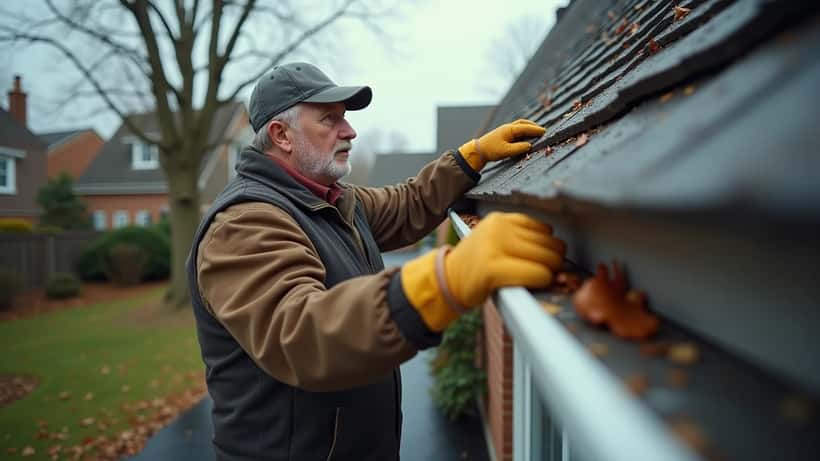
1. Inspect and clean gutters and downspouts. El Niño intensifies fall and early winter rainfall. Blocked gutters overflow and direct water toward your foundation — the leading cause of basement flooding. A professional cleaning costs between CAD $150 and $400. Do this before September.
2. Check your roof for weak or damaged shingles. Freeze-thaw cycles during El Niño winters expand small cracks into structural problems. A roof inspection costs CAD $100 to $250 and identifies vulnerable areas before a major storm. Replacing a shingle now costs far less than repairing a water-damaged ceiling in January.
3. Seal basement cracks and consider a backwater valve. Flooding risk is significantly elevated in areas east of the Rockies during El Niño years. A backwater valve — installed by a licensed plumber — prevents sewer water from entering your home during heavy rain events. Installation costs between CAD $1,500 and $3,000. Many municipalities offer rebates of up to 50%.
4. Service your HVAC and heating system. In western Canada, warmer and more humid El Niño winters place unusual demands on HVAC systems. An annual furnace and heat exchanger inspection costs CAD $80 to $150 and ensures your system handles both heating and dehumidification efficiently without overloading.
5. Trim trees and secure exterior elements. High wind events are more frequent during El Niño patterns. Overhanging branches crack under ice loading and collapse onto roofs or vehicles. Exterior furniture, antennas, and poorly anchored fences become hazardous projectiles during gusts. Secure or remove these elements before October.
6. Review your home insurance policy. Many standard home insurance policies in Canada do not cover overland flooding — a separate endorsement is required, typically costing between CAD $200 and $500 per year. With El Niño elevating flood risk significantly, checking your coverage and adding overland flooding protection before the fall renewal window is one of the most cost-effective steps available.
Why Timing Matters: The Spring Window
Home renovation contractors across Canada's major cities are already reporting strong booking demand for summer 2026. Once fall arrives, roofing, drainage, and waterproofing contractors are booked solid — and emergency work during a storm carries a 20-40% price premium.
Completing El Niño preparations between May and August gives homeowners the best combination of contractor availability, favourable weather conditions for exterior work, and the lowest material costs. Waiting until October is the most expensive and least effective strategy.
The investment math is straightforward. A comprehensive pre-winter inspection and targeted weatherproofing — roof inspection, gutter cleaning, foundation sealing, and insurance review — can be completed for CAD $2,000 to $5,000 depending on the home's condition. A single weather-related insurance claim for basement flooding or roof damage averages CAD $18,000 in Canada, according to industry data.
When to Call a Professional
If your home is more than 20 years old, a pre-winter assessment by a licensed home inspector or general contractor is strongly recommended. Older homes commonly present issues invisible to the untrained eye: incorrect drainage gradients, aged vapour barriers, deteriorating roof decks, and foundation settlement that worsens dramatically under El Niño precipitation loads.
A certified home inspector charges between CAD $400 and $600 for a full assessment and provides a detailed report of prioritized work. For homeowners who need renovation work scoped and coordinated, a licensed general contractor can manage the full process.
You can connect with a home improvement expert on Expert Zoom to get an independent assessment of your home's El Niño readiness — before conditions make the work urgent.
The Bottom Line
El Niño is not a guaranteed disaster, but the probability of above-normal precipitation, high wind events, and damaging temperature swings across Canada in 2026-2027 is now high enough that preparation is simply rational risk management. Home experts are uniform in their advice: complete your weatherproofing before September 2026, when contractors are available and conditions are right.
The cheapest and most effective time to protect your home from the next major weather cycle is now — while the forecast is still a warning, not a headline.
This article provides general information for homeowners and does not constitute professional renovation or insurance advice. Consult a licensed contractor or home inspector for guidance specific to your property.
