 Clara Thompson
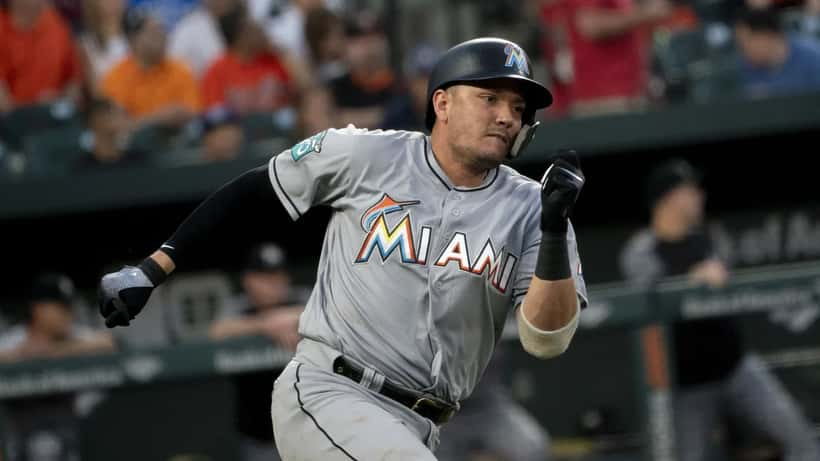
Miguel Rojas, the Los Angeles Dodgers infielder and two-time World Series champion, said "This is it" on Thursday, October 15, 2026, and announced his retirement after Milwaukee swept the Dodgers in the National League Championship Series, according to Yahoo Sports. The decision ends a 13-season major league career that included four years in Los Angeles. For fans it is a farewell. For the body of any long-serving athlete, it is also the start of a medical transition that few people plan for.
What Rojas actually said, and what is still unknown
Rojas told reporters after the series-ending loss that he did not want to take off his cleats. Yahoo Sports reported that he had said after the 2025 division series that he planned to retire following the next season, and that he later left the door open to a 2027 return with the Dodgers only. He played 2026 on a $5.5 million contract, and the same report says he was hurt during this year's division series against Atlanta.
What the reports do not include is any medical detail. We do not know the nature of that injury, whether it shaped his decision, or what his post-career health plan looks like. Anything beyond that would be speculation, so this article focuses on the question his announcement raises for everyone: what happens to a body trained for a decade or more when the training stops?
Rojas has also said he wants to stay connected to the organization in a different capacity. The Dodgers have not published the terms of any such role.
Why do athletes struggle physically after the final game?
An everyday-athlete reader might assume that retirement means rest, and rest means recovery. Sports medicine physicians often describe it differently. A professional baseball player may play around 160 regular-season games, plus spring training and playoffs, over roughly seven months. The routine of daily conditioning, medical staff and structured sleep disappears overnight.
Three issues come up repeatedly in the clinical literature on retired athletes. First, joint wear: shoulders, hips and knees that were managed with daily treatment now get none. Second, weight and metabolic change: energy intake stays high while expenditure drops. Third, mood: the loss of a team, a schedule and an identity is linked to anxiety and low mood in many former competitors.
None of this is unique to professionals. A recreational player who spent years in a competitive league, a former varsity athlete or a coach who stopped playing faces a smaller version of the same shift.
What does the "right" amount of activity look like afterward?
The Canadian 24-Hour Movement Guidelines for adults, published by the Canadian Society for Exercise Physiology, recommend at least 150 minutes of moderate-to-vigorous aerobic activity per week, plus muscle-strengthening work at least twice weekly. You can read the full recommendations at the CSEP guidelines site.
For a former elite athlete, 150 minutes is a floor rather than a target. A drop from daily training to that minimum is still a large reduction, which is why physicians often suggest a stepped taper instead of a full stop.
A concrete case: the weekend-league veteran who stops cold
Consider a hypothetical player, not Rojas, who is 38, plays in a competitive adult league and trains about 8 hours a week across games, batting practice and gym work. He eats around 2,800 calories a day to support that load. After one last season he stops completely, keeping his appetite and habits.
If his weekly activity falls from 8 hours to 1 hour and his intake stays near 2,800 calories, the daily surplus could approach 400 calories. Over a year, that is roughly 146,000 surplus calories. Using the common rule of thumb of about 7,700 calories per kilogram of body fat, that is the equivalent of roughly 19 kg, though real-world weight change is smaller because metabolism adapts and lean mass shifts.
Now add a joint that was already irritated, such as a shoulder or knee that was playable only with regular treatment. If he stops physiotherapy and strength work at the same time, then a flare-up within the first three to six months is a realistic outcome. Many sports clinicians would advise a scheduled review at about the three-month mark.
The if/then logic is simple. If activity falls below 150 minutes a week and food intake does not fall with it, then weight gain and joint loading both rise. If the player instead steps down to around 4 hours a week for six months, keeps two strength sessions and reduces intake toward 2,300 to 2,400 calories, the shift is far gentler. Those figures are illustrative, not a prescription, and a dietitian or physician would tailor them to the individual.
What about the mind, not just the joints?
The psychological side deserves equal weight. For more than a decade, Rojas's days were organized around a clubhouse, a travel calendar and a role that other people depended on. Rojas has said he hopes to keep wearing the Dodgers logo in another capacity, which may soften the break, yet a coaching or development role does not replace the daily rhythm of competing.
Mental health professionals describe several warning signs during a career transition: persistent low mood lasting more than two weeks, trouble sleeping, loss of interest in activities once enjoyed, or a growing reliance on alcohol to fill the evening hours. Any of these is a reason to speak with a family doctor or counsellor rather than wait it out.
A practical step is to plan structure before the season ends. That can mean a fixed morning workout, a weekly call with former teammates, or a volunteer coaching shift. Structure is not a cure, but clinicians consistently find that people who replace the routine do better than those who leave a gap.
Which experts can help, and when?
Different specialists address different pieces of the transition:
- Sports medicine physicians and physiotherapists assess old injuries and design a taper.
- Registered dietitians adjust energy intake once training load falls.
- Mental health professionals, including psychologists and counsellors, help with loss of identity and routine. Many athletes report that this is the hardest part.
- Family physicians can screen blood pressure, cholesterol and blood glucose, which often shift after a sudden change in activity.
Seeking help is not a sign of weakness. It is the same logic that put a trainer beside Rojas for 13 seasons.
How should fans and everyday athletes read this news?
The takeaway from Rojas's farewell is not about one player's body. It is that the end of a sport is a health event. Canadian readers who play in adult leagues, coach youth teams or are simply planning to step back from a long-time activity can use this moment as a prompt.
Book a check-up before you stop, not after symptoms start. Write down which injuries you have been managing. Decide what replaces the hours you are giving up, whether that is cycling, swimming or strength training. And tell someone you trust that the change is coming.
If you are retiring from a sport, or helping a family member through it, the experts on Expert Zoom can connect you with sports medicine and health professionals for a personal plan. For related reading, see how recovery timelines work in Jackson Holliday's wrist fracture return and what Drew Rasmussen's three elbow surgeries say about long-term joint health.
This article is for general information and is not medical advice. Consult a qualified health professional about your own situation.
