 Olivia Dubois
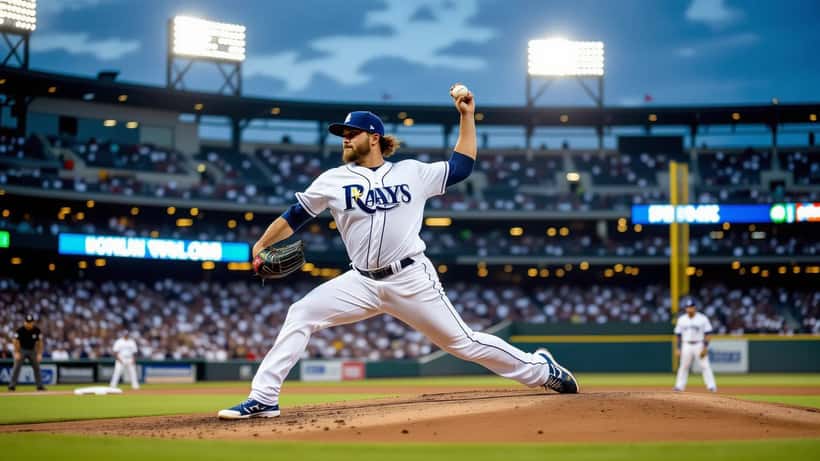
Drew Rasmussen took the mound against the Toronto Blue Jays on August 19, 2026, delivering another dominant performance in what has become one of MLB's most compelling comeback stories. The Tampa Bay Rays ace has won five consecutive starts since the All-Star break, posting a 1.20 ERA during that stretch — numbers that make it easy to forget he has undergone three separate elbow procedures, including two full Tommy John surgeries. His journey raises a question that resonates far beyond professional baseball: when is surgery the right answer for an elbow injury, and when should Canadian athletes explore other options first?
The Question Throwing Athletes and Their Coaches Are Really Asking
Every year, thousands of Canadians — from university pitchers at McGill and Dalhousie to recreational softball players in Calgary and Brampton — experience elbow pain linked to the ulnar collateral ligament (UCL), the small fibrous band that stabilizes the inner elbow during overhead throwing. For decades, the answer seemed almost reflexive: if the UCL tears, you get Tommy John surgery. But Rasmussen's story, which includes two traditional reconstructions and a newer internal brace augmentation procedure, is forcing sports medicine specialists across Canada to revisit that assumption in 2026.
When is the right procedure? At the right time? For which patient? According to current orthopaedic consensus, the answer depends on three overlapping factors: the anatomical extent of the tear, the athlete's competitive goals and timeline, and the quality of the existing ligament tissue — a variable that matters enormously when deciding between reconstruction and augmentation.
How Tommy John Surgery Works — and What the Internal Brace Changes
Tommy John surgery, formally called UCL reconstruction, replaces the damaged ligament entirely with a tendon graft harvested from elsewhere in the body — most commonly the forearm palmaris longus, the hamstring, or the gracilis tendon. First performed in 1974 by Dr. Frank Jobe on Dodgers pitcher Tommy John, the procedure has since been performed on more than 1,500 MLB players and is increasingly common at the amateur level. Recovery typically runs 12 to 18 months for pitchers, with return-to-sport rates of approximately 83%, according to a 2021 meta-analysis published in the American Journal of Sports Medicine. For position players who do not throw at maximum velocity, recovery can be shorter — sometimes nine to twelve months.
The internal brace is a newer augmentation technique pioneered in the early 2010s and refined significantly over the following decade. Rather than replacing the ligament, a surgeon reinforces the existing UCL with a flexible suture tape that acts as a mechanical scaffold while the native tissue heals around it. Recovery is substantially faster — many pitchers return to competitive throwing in six to nine months — but the procedure is appropriate only when the residual ligament tissue is of sufficient biological quality to support healing. Rasmussen received an internal brace augmentation following his second Tommy John surgery, when a post-operative assessment found his native UCL tissue still viable enough to benefit from the technique.
That distinction is critical. A pitcher with a 40% partial UCL tear does not face the same surgical calculus as one with a complete rupture. And a 43-year-old recreational tennis player asking about a nagging medial elbow pain has entirely different needs — and risk tolerances — than a 22-year-old pitcher with professional aspirations and a finite career window.
What Happens When Athletes Choose the Wrong Procedure at the Wrong Time
Sports medicine specialists across Ontario and British Columbia report increasingly encountering two failure modes in elbow injury management: athletes who delay surgery too long and convert a manageable partial tear into a full rupture, and athletes who rush into Tommy John reconstruction when conservative management or the internal brace would have served them better.
According to the Canadian Orthopaedic Association, UCL injuries in throwing athletes have climbed substantially at the youth and amateur levels over the past decade, driven by year-round sport specialization, inadequate rest periods, and rising pitch volumes at earlier ages. The COA notes that partial UCL tears in athletes under 18 are often successfully managed through physical therapy, activity modification, and — in appropriate cases — platelet-rich plasma (PRP) injections, avoiding surgery for six to twelve weeks or longer. In contrast, complete tears in adult competitive pitchers who throw more than 100 innings annually almost always require surgical intervention to restore functional elbow stability.
The consequences of poor timing are substantial. An athlete who delays appropriate intervention risks converting a 40-50% partial tear — a case that might respond to augmentation or conservative management — into a complete rupture requiring full reconstruction and 14 to 18 months off competitive throwing. An athlete who undergoes Tommy John surgery prematurely, when the ligament had sufficient residual quality for the internal brace, accepts a 12-to-18-month recovery timeline when a 6-to-9-month recovery was biologically available. Rasmussen experienced several of these cascading consequences firsthand: a flexor strain in 2023 placed him on the 60-day injured list, extending his rehabilitation and adding another setback on top of two prior surgeries. His return as the Tampa Bay Rays' Opening Day starter in March 2026 — backed by a 2.91 ERA, a 0.93 WHIP, and 122 strikeouts across 117.1 innings entering August — is a genuine medical and athletic achievement. But it came at a significant cost in cumulative surgical risk, lost seasons, and rehabilitative grind that most amateur athletes cannot afford to absorb.
A Real Scenario: Ryan, 22, Mississauga
Consider the situation Canadian sports medicine specialists encounter regularly. Ryan is a 22-year-old pitcher from Mississauga, Ontario, competing in the Ontario Baseball Association's Premier League — the highest level of amateur baseball in the province. In June 2026, he developed progressive medial elbow pain during a mid-season doubleheader. An MRI ordered through his sports medicine clinic showed a 50% partial UCL tear, with no signs of complete rupture and native tissue quality described by the radiologist as "adequate." Ryan is at full range of motion with physiotherapy but has not recovered full throwing velocity.
His coach is urging conservative management through the off-season. His agent is pressing for Tommy John reconstruction now, arguing a clean ligament is worth the longer recovery for a player at this stage. His family doctor is uncertain which recommendation to follow.
Here is what the numbers mean for Ryan's specific decision:
- Conservative management (PRP injection + structured 6-month rest protocol): Return-to-sport rates of 55-65% for partial UCL tears of this severity class, per a 2023 study in the Journal of Shoulder and Elbow Surgery. Cost under OHIP: $0 for the initial orthopaedic referral; $400-$700 for private PRP if not covered. If it works, Ryan is back on the mound by March 2027 — without surgery, without anesthesia risk, and without the nerve-damage complications that affect 1-3% of reconstruction cases.
- Tommy John reconstruction: ~83% return-to-throwing rate, but 14-18 months to competitive pitching means Ryan misses the entire 2027 season and potentially part of 2028. For a 22-year-old with a professional contract window closing by 25-26, that timeline is not neutral — it can determine whether a career happens at all.
- Internal brace augmentation: If a specialist independently confirms that Ryan's native UCL tissue meets biological criteria — which the initial MRI suggests it might — the internal brace offers a 75-80% return rate with a 6-to-9-month recovery timeline. That puts Ryan back pitching by February or March 2027, with his competitive calendar largely intact.
If Ryan proceeds to Tommy John surgery without first obtaining a specialist consultation that explicitly evaluates internal brace eligibility, he may accept 14-18 months of recovery when 6-9 months was physiologically available. That gap — for a 22-year-old — is not a scheduling inconvenience. It is potentially the difference between a playing career and an early exit. An initial orthopaedic consultation in Ontario is covered under OHIP; a private second opinion from a specialist who performs both reconstruction and augmentation typically runs $250-$500. The cost of the wrong procedure, measured in lost seasons and compounding surgical risk, is orders of magnitude larger.
See also how Dylan Cease's Blue Jays contract bet on long-term arm health played out at the professional level, and what multiple IL stints mean for pitchers evaluated by elbow specialists across the 2026 season.
What Canadian Athletes Should Do Next
If you are a competitive throwing athlete experiencing medial elbow pain in 2026, the clinical pathway recommended by Canadian sports medicine associations follows three steps:
Get imaging before accepting any verbal diagnosis. Elbow pain does not confirm a UCL tear. Medial epicondylitis, flexor-pronator muscle strain, and ulnar nerve irritation produce nearly identical symptoms and typically resolve without surgery. An MRI with arthrogram is the standard imaging for UCL assessment; plain X-rays alone are insufficient.
Request a consultation with an orthopaedic surgeon who specializes in upper extremity sports medicine — not just general orthopaedics. The decision between reconstruction, augmentation, and conservative management requires a clinician who has evaluated your imaging in the context of your throwing volume, your tissue quality, and your specific return-to-sport timeline.
Ask explicitly about the internal brace before consenting to any procedure. Not all surgeons have performed augmentation procedures, and some will default to Tommy John reconstruction in cases where augmentation might be appropriate. If your surgeon does not address the internal brace option, request a second opinion from someone who does.
Drew Rasmussen's three operations unfolded over years before he arrived at a 2026 season good enough to face the Toronto Blue Jays on equal terms on August 19. For Canadian athletes still at the beginning of their elbow journey, the most important step is the one Rasmussen took too late: finding the right specialist, asking the right questions, and understanding that in elbow surgery, as in most of medicine, the fastest path to recovery begins before the operation — not after it.
This article contains general health information only and does not constitute medical or surgical advice. Consult a qualified sports medicine physician or orthopaedic surgeon regarding any personal health concerns.
