 Leah Adams
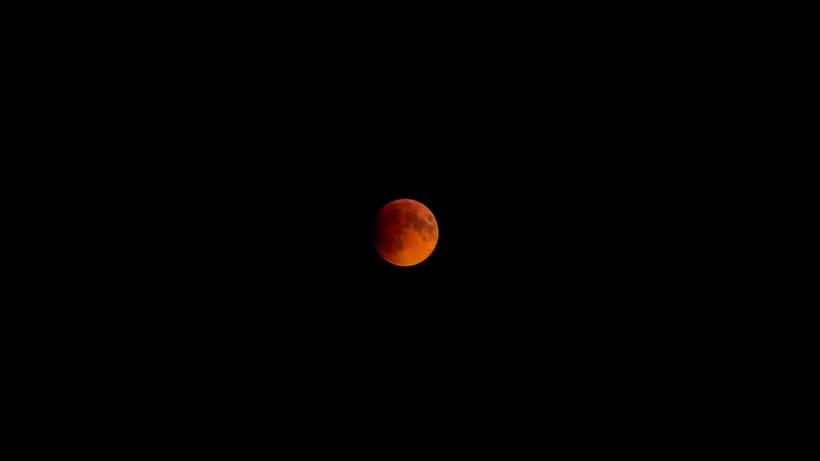
At 12:12 a.m. EDT on August 28 — that's 11:12 p.m. CDT, 10:12 p.m. MDT, or 9:12 p.m. PDT — 96.3% of the full Moon slides into Earth's darkest shadow. From Halifax to Victoria, Canadians have a front-row seat to one of the deepest partial lunar eclipses in years: what astronomers call "umbral coverage" that close to 100% produces the red-orange glow of a classic blood moon, even though a sliver of direct sunlight technically keeps it off the "total" list. You don't need equipment to enjoy it. But tonight might finally answer the question many Canadians have put off for years: is a telescope or astrophotography setup actually worth the money?
What the 96.3% Figure Actually Means
The umbral depth figure matters because it determines how vivid the red colouration will be. Earth's atmosphere scatters blue light and bends red wavelengths into the shadow cone — the same mechanism that makes sunsets red. At 96.3% coverage, virtually the entire lunar disk takes on that copper hue, while a thin crescent of grey-white remains in direct sunlight along one limb.
For comparison, a 70% eclipse looks mostly grey with a reddish tinge; at 96%, the difference is dramatic even to the naked eye. Eclipse maximum lasts roughly 40 minutes of deep colouration, with partial phases beginning around 10 p.m. EDT and ending after 2 a.m. EDT. Western provinces catch the fully red Moon already high in the sky at a convenient pre-midnight hour. Eastern Canada hits maximum close to midnight — late, but not unreasonably so for an event this intense.
The eclipse is completely safe to watch without any filters, glasses, or protective equipment. Unlike a solar eclipse, a lunar eclipse is simply Earth's shadow — not the Sun's direct light — and no optical damage risk exists at any stage. That also means there are no special solar filters to buy, which simplifies the equipment decision considerably.
The Equipment Spectrum: What Each Tier Costs and Delivers
Consumer electronics specialists who advise on astronomy gear consistently describe four investment tiers for lunar observing, each with a different return per dollar spent.
Tier 1 — Naked eye (cost: $0 CAD): Surprisingly satisfying for a 96% eclipse. The red colour is clearly visible from any dark-ish location. You lose crater detail but gain the panoramic sweep of the blood-red disk against a dark sky. Most Canadians who have never watched a lunar eclipse before are startled by how dramatic it looks unaided.
Tier 2 — Binoculars ($80–$250 CAD): A standard 10×50 pair (10× magnification, 50 mm objective lens) transforms the experience. Individual craters become visible at the shadow boundary. The gradient between the grey crescent and the copper umbra resolves into distinct bands. For occasional sky watching, 10×50 binoculars are the single most cost-effective astronomy purchase available — they also work for birding, travel, and sporting events.
Tier 3 — Entry-level telescope ($180–$400 CAD): At this price point, 60–70 mm aperture refractors or 114–130 mm Newtonian reflectors resolve lunar craters down to roughly 5–10 km across, letting you watch the shadow of Earth creep over named features like Tycho and Copernicus in real time. The limitation: many entry-level telescopes sold at Canadian retailers come with low-quality eyepieces and flimsy mounts that make tracking the Moon frustrating. Aperture is only half the equation.
Tier 4 — Intermediate visual or photographic setup ($500–$1,200 CAD): A 90–102 mm apochromatic refractor or a quality 6-inch Dobsonian on a sturdy mount, paired with a smartphone adapter or a mirrorless camera body, produces images that rival magazine photos. At this tier, you're also buying longevity: a well-made instrument purchased in 2026 will serve you through the next decade of eclipses, conjunctions, and planetary oppositions.
Concrete Case: What $300 vs. $700 Actually Gets a First-Time Buyer in 2026
Take a 38-year-old in Winnipeg who wants to photograph tonight's blood moon and has a first-time equipment budget of somewhere between $300 and $700 CAD. Here is exactly what each threshold delivers — and what it does not.
At $300 CAD: A reasonable split is roughly $180 on a 114 mm Newtonian reflector kit, $50 on a phone-to-eyepiece adapter clamp, and $70 on a stable mid-weight tripod. The telescope provides enough aperture to clearly see the lunar surface during eclipse. The phone adapter enables afocal photography — shooting video and stills through the eyepiece using the camera already in your pocket. The limitation: the included equatorial mount will require some practice to polar-align, and the bundled eyepieces may introduce chromatic fringing along the Moon's limb. The result is usable eclipse photos, but not publication-quality ones.
At $700 CAD: The budget opens the door to a 90 mm apochromatic refractor ($450), a universal phone adapter or basic planetary camera ($120), and a smooth alt-azimuth mount with slow-motion controls ($130). The "apo" refractor eliminates the colour fringing common in cheaper optics. The alt-azimuth mount tracks the Moon intuitively — push, release, and the Moon stays centred. If you later add a DSLR or mirrorless body, the same scope handles wider astrophotography of star clusters and nebulae. The $400 gap between these two tiers buys not just better optics, but the patience-preserving difference between a wobbly, frustrating image and a crisp view that keeps you outside for three hours straight.
The if/then decision: If tonight is a one-off experiment and you are not sure astronomy will stick, start at Tier 2 or 3 and spend under $250. If you have already watched multiple lunar events and want serious photographic results from the next one, the $600–$700 investment in a quality refractor pays dividends across dozens of future events. A total lunar eclipse of similar depth is unlikely to be visible from Canada again for several years after tonight's partial event.
What an Electronics Expert Can Help You Avoid
The Canadian astronomy equipment market has expanded rapidly in 2026, with dozens of budget imports flooding online platforms at price points that look attractive until the first night outside. Common problems that consumer electronics consultants identify include: focusers with excessive mechanical play that make achieving sharp lunar focus nearly impossible on a moving target; tripods with leg locks that slip under camera weight, blurring the image precisely at eclipse maximum; and "700× magnification" marketing claims that are optically meaningless — the maximum useful magnification on a 70 mm aperture instrument is roughly 140×, regardless of what the packaging says.
An independent electronics specialist, rather than a commission-paid sales associate, can evaluate your specific budget, your observing location (light pollution levels and climate affect which optical design suits you), and the type of work you want to do. For a first-time buyer, a 30-minute consultation can prevent several hundred dollars in poor purchases. According to the Canadian Space Agency, amateur astronomy participation among Canadians has grown steadily in recent years, and the equipment market has not always kept pace with buyer education.
A well-chosen setup also holds its resale value: quality apochromatic refractors from established brands typically sell second-hand at 60–75% of original retail, meaning the real cost of a $700 instrument, if you decide the hobby isn't for you, may be closer to $175–$280 after resale. A cheap instrument with a bad reputation is far harder to move on.
It is also worth knowing that tonight's event carries no special accessories beyond what you already own. No solar filters, no eclipse glasses, no protective coatings — the Moon is always safe to observe. If you already have a pair of 8×42 or 10×50 binoculars at home, they are perfectly suited to tonight's blood moon without any additional purchase at all.
What to Do Tonight and Who to Ask Before You Buy
Whether you own a telescope or plan to acquire one, tonight's eclipse needs no gear to enjoy. Choose a location with a clear view toward the east or south — away from direct streetlight glare — and allow 15 minutes for your eyes to adapt to the darkness. From most Canadian cities, a backyard or a local park provides a sufficient view.
If tonight's blood moon sparks the upgrade question — binoculars, telescope, camera adapter, mount — you don't have to navigate the market alone. The specifications matter, but knowing which specifications matter for lunar eclipses versus planetary viewing versus deep-sky photography requires experience that a consumer electronics expert brings to the conversation. Expert Zoom connects Canadians directly with electronics and technology specialists who can turn a confusing product list into a confident, well-matched purchase before the next event on your calendar.
The Moon rises in copper tonight. The equipment question can wait until tomorrow — but when it arrives, it's worth answering well.
