 Guillaume Lapointe
A rare mid-summer geomagnetic storm is lighting up skies across Canada this week — and while the northern lights are spectacular, the same solar event is quietly disrupting GPS navigation, satellite internet, and high-frequency radio communications from British Columbia to Newfoundland.
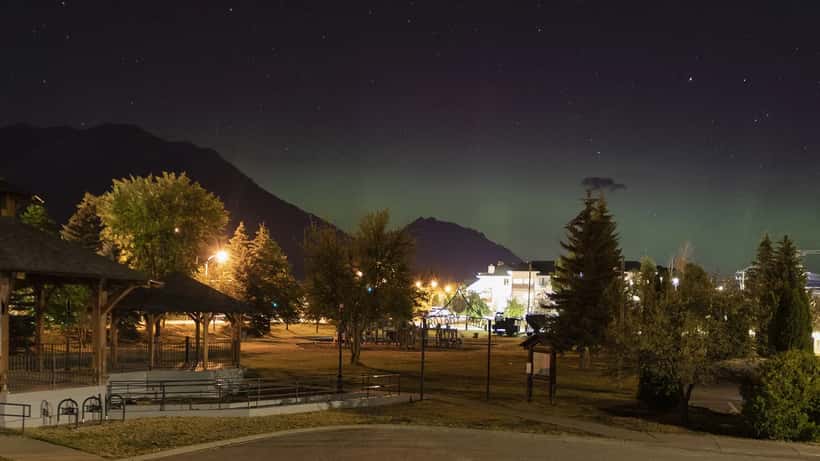
NOAA's Space Weather Prediction Center (SWPC) issued a G2 (Moderate) Geomagnetic Storm Watch on July 1, 2026, triggered by an X1.1 solar flare that launched a full-halo coronal mass ejection (CME) directly toward Earth. The watch forecasts G1 (Minor) conditions on July 1, easing briefly on July 2, then intensifying to G2 conditions peaking on July 3 — right when many Canadians are heading outdoors to catch the aurora. Skies above Vancouver cleared late Thursday night to reveal visible auroras as far south as the Lower Mainland, a rarity in early July.
What a G2 Geomagnetic Storm Actually Means
NOAA rates geomagnetic storms on a five-level G-scale, from G1 (Minor) to G5 (Extreme). A G2 storm is not an emergency — it won't knock out the power grid in Toronto or shut down the internet. But it does cause measurable interference with the technologies that modern Canadian businesses depend on daily.
During a G2 event, high-frequency radio communications can degrade or fail outright in high-latitude regions. GPS positioning accuracy drops. Satellite orbits shift as atmospheric drag increases. Voltage alarms trigger in transmission lines across the northern grid. These effects peak poleward of 55 degrees geomagnetic latitude, according to SWPC — which places large portions of British Columbia, Alberta, Manitoba, Ontario, and Quebec directly in the impact zone, along with the entire Canadian north.
Why GPS Accuracy Drops During Solar Storms
The most immediate and widespread business impact of a G2 storm is GPS positioning degradation. When energetic solar particles disturb the ionosphere — the electrically charged layer of atmosphere between 60 and 1,000 kilometres above Earth — they trigger what engineers call ionospheric scintillation. GPS signals flickering through this disturbed layer arrive late, jump unpredictably, or fade entirely.
For most smartphone users, this means Google Maps feels slightly sluggish or loses a few metres of precision. For industries that require centimetre-level accuracy, the consequences are more serious. Construction surveyors, precision-agriculture equipment, drone operators, and emergency dispatch systems can all experience errors of 10 metres or more during peak G2 conditions.
Canada's northern geography makes it especially vulnerable. Scintillation effects intensify with latitude, which means a business operating a fleet of GPS-tracked vehicles in northern Ontario or a drone inspection service in Alberta faces far more disruption than the same operation would experience in southern California during an identical storm.
Satellite Connectivity and Aviation Radio Under Pressure
Beyond GPS, the July 3 storm is putting stress on the low-Earth orbit (LEO) satellite networks that tens of thousands of remote and rural Canadian households and businesses rely on for broadband internet access. As solar heating expands the upper atmosphere, satellites experience increased drag and require orbital adjustments to maintain coverage. These adjustments can cause brief service interruptions or speed fluctuations, particularly for northern users.
High-frequency radio communications — still critical for aviation across Canadian airspace and for contact with remote northern communities — are also expected to weaken during the storm's peak. Nav Canada has flagged potential anomalies for polar and northern routes, where HF radio serves as a backup if VHF and satellite-based systems are unavailable. Pilots flying routes across Hudson Bay or into Nunavut should be aware that communications may be degraded on the night of July 3.
For Canadian businesses using satellite-based point-of-sale systems, tracking beacons on remote equipment, or VSAT connectivity at mining or resource sites, a continuity plan for the next 24 to 48 hours is worth reviewing today.
Power Grid Concerns in High-Latitude Provinces
Geomagnetically induced currents (GICs) are one of the less-discussed but potentially costly effects of moderate-to-strong storms. When the solar wind compresses Earth's magnetic field, rapidly changing field lines induce currents in long metal conductors — including power transmission lines.
Canadian provinces with long transmission corridors, particularly Quebec and Ontario, are more susceptible to GIC-related voltage fluctuations. During G2 conditions, utilities may record transformer heating and voltage alarms, especially in northern segments of the grid. A G2 storm is unlikely to cause widespread outages, but businesses running data centres, cold storage, or other power-sensitive operations in northern regions should verify that surge protection and uninterruptible power supply (UPS) systems are functional before July 3.
What IT Experts Recommend for Canadian Businesses Right Now
Information technology professionals who advise businesses on resilience and continuity have a consistent set of recommendations when a G2 storm is forecast:
Pause GPS-critical operations during peak storm windows. Fleet managers, land surveyors, and precision-agriculture operators should schedule high-accuracy work for before or after the storm's peak on the evening of July 3.
Test backup communication channels before the storm hits. If your business relies on LEO satellite broadband, check that a cellular or wired backup is functional. Many satellite providers issue service advisories during space weather events, but having an already-tested fallback is faster than scrambling during an outage.
Verify surge protection at your server room or data centre. GICs travel through the power grid, and even well-managed facilities in northern cities can see brief voltage spikes during active storm periods. Review UPS systems and confirm auto-failover settings are active.
Update your business continuity plan to include space weather. Most Canadian small and medium businesses have never assessed their exposure to geomagnetic events, despite Canada's position at one of the world's most vulnerable latitudes. An IT consultant can audit your GPS and satellite dependencies, identify single points of failure, and recommend redundancy measures that apply year-round.
For real-time space weather alerts, NOAA's Space Weather Prediction Center provides free email and text subscriptions updated throughout each day.
Should You Go Outside to Watch Tonight?
Absolutely — if skies are clear in your area. The July 3 aurora borealis is expected to be visible across much of southern Canada as far south as the northern United States. Yellowknife, already regarded as one of the world's top aurora-viewing destinations, may see activity three or more nights this week. Use the NOAA 30-minute aurora forecast tool to check the Kp index before heading out.
But while you admire the light show, keep in mind that the same magnetic forces painting the sky green and violet are also quietly testing the resilience of Canada's digital infrastructure. If your business depends on GPS precision, satellite connectivity, or stable power in a northern location, a quick check with an IT specialist today could prevent a costly disruption tomorrow. For more on how solar activity affects electronics and connectivity, see this earlier guide on how to protect your devices during solar flares.
Space weather is no longer just a concern for astronomers and power utilities. In a connected economy where precise positioning and always-on connectivity underpin everything from logistics to agriculture to emergency services, knowing how to prepare for a G2 storm is now a core piece of business continuity planning for any Canadian operation north of the 49th parallel.
