 Emilie Wang
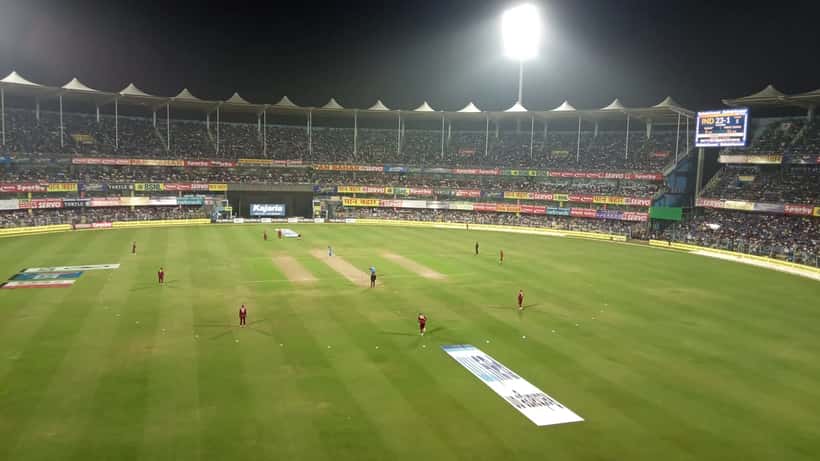
Kulwant Khejroliya walked out to bowl in IPL 2026 Qualifier 1 on May 26, 2026, as Gujarat Titans faced Royal Challengers Bengaluru in Dharamsala — his first appearance this season, brought in mid-tournament as a replacement for injured Prithviraj Yarra. His sudden inclusion in a knockout match that determines a finalist triggered a wave of searches in Canada's large South Asian cricket community.
The question driving most of those searches was simple: can a team just do that? Can a player be parachuted into a playoff at the last minute?
The answer sits inside a set of contractual and regulatory rules that most fans — and many athletes — have never read.
How IPL Replacement Player Rules Actually Work
The Indian Premier League operates under regulations published by the BCCI (Board of Control for Cricket in India), which govern everything from player eligibility to mid-season replacements. Under IPL official rules and regulations, a franchise can replace a player who is ruled out due to injury or national call-up. The replacement must be approved by the league's governing council.
Kulwant Khejroliya was officially registered as a replacement for Prithviraj Yarra, who sustained an injury during the season. This is the mechanism that allowed his qualification for Qualifier 1 — a match where the rules are more restrictive than regular season games.
Critically, the replacement player's auction price, contract terms, and welfare protections all follow the original player's slot in most tournaments. That creates some unusual legal situations: the replacement may perform extraordinarily well (as Khejroliya did, taking wickets in a high-pressure playoff game) while still receiving the compensation negotiated before the season.
The Contract Gap Sports Lawyers Talk About
Sports contracts at the professional level — whether IPL, Major League Baseball, or the Canadian Football League — share a common structural tension: the player's rights are extensively negotiated at entry but rarely revisited mid-season.
Replacement players often enter under compressed timelines. An athlete who joins a squad as an injury substitute may have 48 hours to review and sign documentation that a first-choice player had months to negotiate. That speed differential creates room for unfavourable terms to go unnoticed.
The specific risks include:
Insurance and injury coverage gaps. A replacement player who sustains an injury during his sudden inclusion may find that his coverage was calculated based on the original player's risk profile and timeline, not his own.
Retention and future auction eligibility. How a replacement contract is structured affects whether the player becomes a "retained" asset in the following auction cycle or whether he returns to the general pool. For a bowler like Khejroliya, whose stock rises sharply after a strong playoff performance, this distinction has real financial consequences.
Bonus and performance clauses. Many contracts include performance bonuses triggered by appearances, milestones, or match results. Whether a replacement player's appearances count toward these thresholds — and under whose contract — is a point of frequent dispute in professional sport.
Why Canadian Athletes Face the Same Issues
Canada's cricket ecosystem has grown substantially in recent years. The T20 World Cup 2026 cycle has elevated interest in professional cricket pathways, and Canadian-based players of South Asian heritage are increasingly entering provincial and national programs that feed into professional leagues.
A Canadian cricketer signing a contract with an overseas league — whether in the Caribbean Premier League, the Bangladesh Premier League, or the IPL itself — typically does so without Canadian legal representation familiar with the governing rules of those leagues. Canadian sports law firms have expertise in NHL, CFL, and MLS contracts. Far fewer have deep familiarity with BCCI regulatory frameworks.
The result is that Canadian athletes often rely entirely on the league's standard template contracts without independent legal review. For established stars, agent teams handle this. For emerging or replacement-tier players, the gap is real.
Three Questions a Sports Lawyer Can Help You Answer
Whether you are a Canadian athlete entering professional cricket, a junior player signing their first provincial contract, or a parent supporting a young cricketer navigating a franchise offer, a sports law specialist can help you work through the following.
What rights do you have if the league cancels or modifies your contract? Professional leagues — including the IPL — retain broad rights to suspend seasons, alter formats, or relocate matches. How these events affect player compensation varies dramatically between contracts, and the default terms rarely favour the player.
Does your contract reflect your role accurately? A replacement player who is eventually treated as a first-choice starter in practice, without that being reflected in contract language, has created ambiguity that benefits the franchise. Specifically defining your role, and what triggers re-negotiation, matters.
Are you covered if you are injured during sudden inclusion? Kulwant Khejroliya was selected for Qualifier 1 with minimal lead time. Any Canadian athlete who finds themselves in an equivalent situation — sudden, high-pressure inclusion — should understand their injury liability coverage before they take the field.
The Broader Picture: Professional Sport and Legal Preparation
Kulwant Khejroliya's moment at Qualifier 1 will be remembered as a cricketing story — a bowler given a chance on cricket's biggest domestic stage, performing when it mattered. The legal infrastructure around that moment, the contract signed months earlier, the replacement designation, the welfare provisions — all of that happened without any of the spectacle.
For Canadian athletes watching and dreaming of similar opportunities, the preparation that matters most happens well before the spotlight. On a platform like ExpertZoom, connecting with a sports law specialist who understands professional contract structures is the kind of step that protects careers as they develop — not just when disputes arise.
This article is for informational purposes only and does not constitute legal advice. Athletes should consult a registered legal professional for guidance on their specific contract situations.
