 Julia Vachon
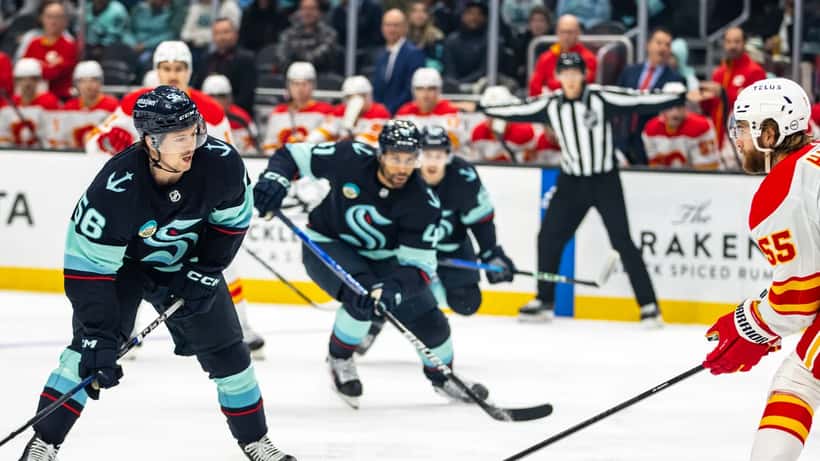
Kailer Yamamoto is playing for his professional future. The Utah Mammoth right winger enters Game 6 of the first-round NHL playoff series against the Vegas Golden Knights on May 3, 2026, with Utah trailing 3-2 and his contract expiring at season's end. His four playoff assists have added to a bounce-back regular season that saw him post 23 points in 59 games — a significant improvement over two difficult prior campaigns. Every shift now carries financial consequences that most fans never see.
The UFA Stakes: More Than Just Hockey
Yamamoto becomes an unrestricted free agent on July 1, 2026 — the first day of NHL free agency. His current contract paid $775,000, a below-market deal he accepted to prove his value after a period of inconsistency. A strong playoff performance could push his next contract into the $2.5–4 million annual value range, based on comparable UFA wingers who signed in similar circumstances over the past two years.
Alexandre Texier, a comparable forward, secured a $5 million extension with the Montreal Canadiens in 2026. Cole Caufield's 50-goal season moved him into the top forward tier. Yamamoto's path sits between these benchmarks — talented, proven, but with enough question marks to keep his market competitive rather than explosive.
For Canadian hockey fans, the Yamamoto situation illustrates a financial reality that applies well beyond the NHL: a single high-stakes performance window can permanently change a career's earnings trajectory. How that windfall is managed can matter as much as the contract itself.
How Playoff Performance Translates to Contract Value
NHL general managers and agents use playoff performance as a data point in contract negotiations, particularly for players whose regular-season statistics have been inconsistent. Yamamoto's four assists through five playoff games represent roughly 0.8 points-per-game — a rate meaningfully better than his regular-season pace of 0.39 points per game.
Agents typically project UFA value based on the most favourable 18-month statistical window. If Yamamoto's team is eliminated in Game 6, his playoff performance still enters his negotiating portfolio. If Utah advances to Round 2, his value grows further with each additional game.
This dynamic — where short-term performance has an outsized effect on long-term compensation — is not unique to hockey. Commissioned salespeople, lawyers billing hours, and entrepreneurs raising capital all face moments where a concentrated effort resets their financial baseline for years ahead. The question is whether the financial infrastructure is in place to capture and protect that value.
The Financial Reality of NHL Free Agency
The average NHL career lasts approximately 5.5 years. Most players retire by their early-to-mid thirties, meaning the number of seasons available to maximize earnings is limited. For a player like Yamamoto, who turns 27 this August, the next contract may be his last opportunity to negotiate from a position of strong leverage.
The NHL Players' Association provides financial education resources and recommends that players work with certified financial planners who specialize in professional athletes. The core challenges for newly wealthy athletes are well-documented: high income over a short window, complex tax obligations across multiple provinces and US states, and the psychological difficulty of planning for retirement in one's early thirties.
Tax complexity alone argues for professional advice. An NHL player signed by a Canadian team in 2026 who previously played US-based games faces a multi-jurisdiction tax picture — Canadian federal and provincial taxes, potential US state tax obligations carried over from prior seasons, and CRA reporting requirements for international income. A wealth manager who works with athletes can identify and address these obligations before they become audit risks.
What Athletes and Young Professionals Should Know
The principles that apply to an NHL free agent's negotiation summer apply equally to anyone whose career enters a high-earning phase. Canadian financial advisors who work with athletes and young professionals typically identify three financial priorities for clients entering a major contract period:
Emergency reserve before lifestyle expansion: A conventional recommendation is maintaining six to twelve months of living expenses in liquid savings before increasing discretionary spending. For athletes, the instability of multi-year guaranteed contracts — where injury or performance clauses can affect payout — makes this reserve more important, not less.
Tax-sheltered investing from day one: Canadian RRSPs, TFSAs, and professional corporation structures each offer different tax advantages depending on the athlete's province of residence and employment structure. Delaying enrollment in these vehicles by even one year can cost tens of thousands in compounding tax savings.
Insurance and income protection: Long-term disability insurance, critical illness coverage, and professional liability protections become significantly more valuable when income is both large and potentially finite. NHL players receive union-negotiated coverage, but privately contracted athletes and non-sports professionals must arrange their own protection.
When to Consult a Wealth Manager
For professionals in Canada who experience a significant income jump — whether from a new contract, a business exit, an inheritance, or a promotion — the optimal time to consult a financial advisor is before the funds arrive. Setting up structures after the fact is possible, but it forfeits planning opportunities that require advance action.
Consider consulting a certified financial planner or wealth manager if:
- Your income is expected to increase by 50 percent or more in the next 12 months
- You are receiving a lump-sum payment, bonus, or signing fee of $50,000 or more
- You have multi-province or cross-border income obligations
- You are approaching a major life transition (UFA, IPO, sale of a business, career change)
- You do not have a current estate plan or named beneficiaries on registered accounts
Yamamoto's playoff run is the kind of moment that NHL contract holders and their advisors track closely. Whatever the outcome of his current series, the financial decisions made in the weeks following free agency will shape the next decade of his life — well beyond the final buzzer.
Note: This article provides general information only and is not a substitute for personalized financial advice. Consult a qualified financial planner licensed in your province for guidance specific to your situation.
