 Ethan Wright
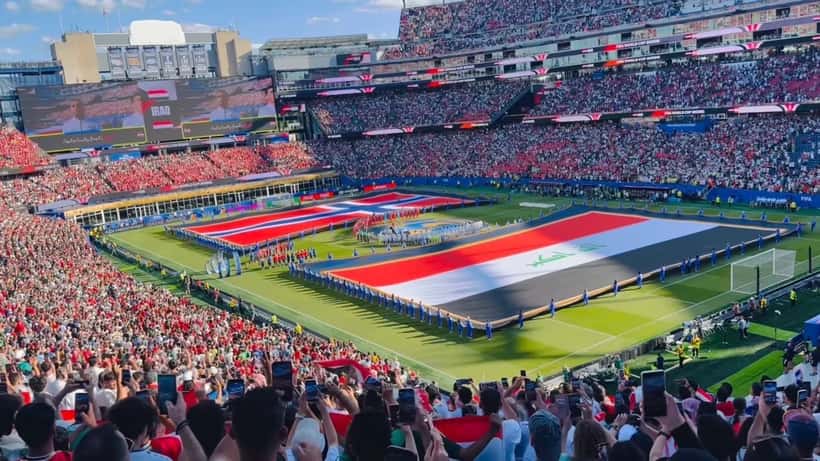
France defeated Iraq 4-0 on June 22, 2026, at Lincoln Financial Field in Philadelphia — a commanding result in World Cup Group I. Kylian Mbappé scored twice, and the final scoreline was never in doubt. But for the tens of thousands of Iraqi-Canadians watching across Toronto, Ottawa, and Windsor, the number on the board mattered far less than the simple fact that Iraq was there. This was Iraq's first appearance at the FIFA World Cup since 1986, a 40-year absence shaped by wars, international sanctions, and political turmoil. Canada, as a co-host of WC2026, gives this moment particular resonance for Canadian students and families eager to understand why.
Why 40 Years? The Long Road Back to the World Cup
Iraq's debut at the 1986 World Cup in Mexico was historic, but the team finished last in their group with zero points and only one goal scored. Even getting there was extraordinary: the Iran-Iraq War (1980-1988) was still raging, making it impossible to host qualifying matches at home. Iraq played so-called "home" games in Saudi Arabia, since domestic stadiums were either damaged or requisitioned for the war effort.
Then, in 1990, Iraq invaded Kuwait. The United Nations Security Council responded with sweeping economic sanctions — Resolution 661 — that restricted travel, finances, and virtually all international cooperation. Qualifying for a World Cup requires years of organized football, travel, and international match schedules. Under sanctions, that became nearly impossible.
What followed were decades of conflict, occupation, and political instability. When the Iraqi Football Association was suspended by FIFA in 2009 for government interference in the sport's governing body, it was the latest chapter in a story of interrupted ambitions.
Their return to the World Cup in 2026 is a story of institutional patience. Here are five lessons Canadian students and tutors can draw from it.
Lesson 1: War Disrupts Everything — Including Sport
The Iran-Iraq War lasted eight years and is estimated to have caused between 500,000 and one million deaths on both sides. For Canadian students studying 20th-century conflicts, Iraq's football story offers a human-scale entry point into an otherwise overwhelming event.
When a country is mobilizing millions of soldiers and struggling with wartime shortages, international sport qualifying becomes a logistical impossibility. Stadiums serve different purposes. Budgets are redirected. Players become soldiers. Ask students to consider: what other national teams were affected by conflict during this era? South Africa's apartheid-era exclusion and the 1980 and 1984 Olympic boycotts offer useful comparisons.
Lesson 2: UN Sanctions Have Real Consequences
UN Security Council Resolution 661 of 1990 imposed comprehensive sanctions on Iraq following the invasion of Kuwait. These weren't abstract economic measures — they disrupted every facet of Iraqi life, from medical supplies to international travel.
For an Iraqi football team, sanctions meant difficulty obtaining visas, foreign currency, and the logistical support needed to participate in international competitions. This is a powerful civics lesson: decisions made in a Security Council chamber in New York have consequences for a goalkeeper trying to board a flight to Amman for a qualifying match.
Canadian students studying international relations or the United Nations system can use Iraq's WC absence to illustrate how multilateral governance mechanisms ripple outward into culture, sport, and daily life — far beyond what textbooks typically describe.
Lesson 3: FIFA's Rules on Government Interference
In 2009, FIFA suspended the Iraqi Football Association because the Iraqi government had interfered directly in the management of the national federation. This suspension barred Iraq from international competition entirely — not for poor results, but for violating FIFA's core statutes requiring that member associations remain independent of political control.
This is a useful civics entry point. According to the Government of Canada's Iraq resource page, understanding Iraq's complex institutional history is essential for Canadian families with ties to the region. Sports governance reflects broader questions of institutional independence: can a government override an international body? Under FIFA's rules, the answer is clear — and the consequences are immediate.
Lesson 4: The 2007 AFC Asian Cup — A Nation Rebuilt Around a Ball
Four years after the 2003 invasion and the fall of Saddam Hussein's government, Iraq won the 2007 AFC Asian Cup. The team defeated Saudi Arabia in the final, and millions of Iraqis celebrated in the streets of Baghdad, Erbil, and Basra — a rare moment of national unity across ethnic and religious divides in a country still in the grip of sectarian violence.
For students learning about post-conflict reconstruction, this moment is essential. Sport became a vehicle for national identity when political institutions were still too fragile to provide it. The 2026 World Cup qualification continues that arc: forty years in the making, and achieved through persistence rather than political stability.
Lesson 5: The Iraqi-Canadian Diaspora and What This Moment Means
Canada is home to an estimated 100,000 to 200,000 Canadians of Iraqi descent. Many arrived as refugees following the 1990 Gulf War, the 2003 invasion, or the violence that followed. For these families, watching Iraq compete in Group I of the 2026 World Cup — hosted in part in Canada — carries layers of meaning that go beyond football.
Diaspora communities carry their national sporting identities across borders. A classroom conversation about Iraq's World Cup return is also a conversation about what it means to belong to two countries at once, about the weight of history that immigrant families bring with them, and about what international recognition means to a nation that has spent decades rebuilding.
This is the kind of history your child's textbook doesn't cover. A private tutor at Expert Zoom can help Canadian students of all ages connect global events like Iraq's WC2026 return to their provincial curriculum in history, social studies, and civics — whether they're preparing for a provincial exam or simply want to understand why a football result made their family cry.
France's 4-0 win over Iraq on June 22, 2026, will be a footnote in World Cup history. Iraq's return after 40 years is something else entirely.
For more on how World Cup 2026 connects to classroom subjects, read our recent piece on Egypt's World Cup win and its geography lessons for Canadian students.
Expert Zoom connects Canadian families with certified private tutors for personalized homework help in history, social studies, geography, and more.
