 Willow Bergeron
The U.S. Navy seized an Iranian-flagged cargo ship in the Gulf of Oman on April 19, 2026, firing on the vessel and blowing a hole in its engine room after its crew refused to comply with a six-hour blockade warning. The seizure of the Touska — a nearly 900-foot vessel under U.S. Treasury sanctions — marks the first time American forces have attacked and captured a merchant ship since establishing the naval blockade of Iran on April 13, 2026.
For Canadian companies that import goods, use international shipping routes, or have supply chains touching the Middle East, this escalation raises urgent questions about legal exposure, contract obligations, and what happens when a global chokepoint suddenly closes.
What Happened at the Strait of Hormuz
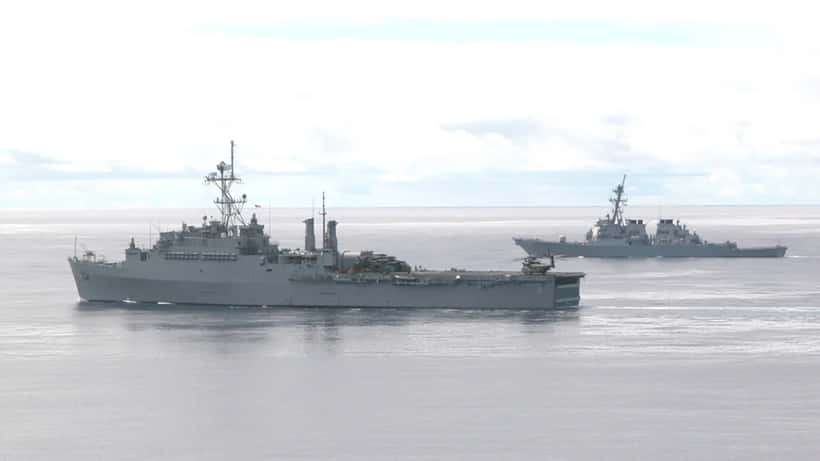
The U.S. Navy's guided missile destroyer USS Spruance intercepted the Touska after the Iranian-flagged vessel attempted to breach the American naval blockade established at the Strait of Hormuz. The crew was given repeated warnings over six hours. When they refused to comply, Navy forces disabled the ship by firing on its engine room before Marines boarded and seized the vessel.
President Donald Trump announced the seizure on April 19, 2026, calling it a direct response to Iran firing on commercial vessels attempting to transit the strait earlier that day.
The Touska had been listed on U.S. Treasury sanctions lists due to prior illegal activity, meaning any company knowingly doing business with such a vessel faces secondary sanctions risk under U.S. law — a detail with direct implications for Canadian firms with American business ties.
The blockade, in place since April 13, 2026, has already cost Iran an estimated $400 million per day in lost oil revenue, according to U.S. officials. The strait is a critical chokepoint through which approximately one-fifth of the world's oil passes. The International Energy Agency has characterised the current disruption as the "largest supply disruption in the history of the global oil market."
Why Canadian Businesses Are Exposed
Canada is a trading nation. Canadian importers, exporters, and logistics companies rely on global shipping routes that connect the Pacific, Indian Ocean, and Gulf shipping lanes. The Strait of Hormuz blockade affects those supply chains in several ways.
Force majeure and contract risk. When a shipper cannot deliver goods because a route is militarily blocked or seized, the default legal response is to invoke force majeure — the clause in commercial contracts that suspends obligations when extraordinary events make performance impossible. But force majeure is not automatic. In Canadian contract law, the party invoking it must prove the event was unforeseeable, outside their control, and genuinely prevented performance. Courts interpret these clauses narrowly. If your contract pre-dates the current Iran conflict but you fail to properly notify the counterparty, you may lose the defence entirely.
Sanctions compliance. Any Canadian company — or its subsidiary — with U.S. business operations must navigate American secondary sanctions. The Office of Foreign Assets Control (OFAC) at the U.S. Treasury actively enforces sanctions against non-U.S. entities that transact with sanctioned Iranian vessels or persons. If your logistics provider subcontracted cargo to a blacklisted Iranian ship like the Touska without your knowledge, your legal exposure depends on whether you performed adequate due diligence. A qualified international trade lawyer can audit your supply chain contracts and shipping agreements to identify exposure.
Insurance and cargo claims. Marine cargo insurance policies typically contain war risk exclusions. Whether those exclusions apply in a "blockade" scenario — as opposed to an active war zone — depends on the exact policy language. The distinction between a military blockade and an armed conflict is not always clear-cut. Canadian businesses whose goods are currently stranded or rerouted should review their marine insurance coverage immediately.
Rerouting costs and demurrage. Vessels that cannot transit the Strait of Hormuz must sail around the Cape of Good Hope, adding 10 to 14 days to voyages and significantly increasing fuel and charter costs. Demurrage — the fee charged when cargo is held at port beyond the agreed time — is accumulating rapidly. Who bears those costs depends on the terms of your freight contract. Incoterms clauses (CIF, FOB, DDP) determine at what point risk and cost transfer between buyer and seller.
What Legal Experts Can Help You Do Right Now
If your business relies on goods shipped through the Persian Gulf, Indian Ocean, or Middle East trade corridors, a commercial or international trade lawyer can help you:
- Review your contracts for force majeure clauses, hardship provisions, and notice requirements
- Audit your supply chain for any exposure to sanctioned entities under U.S. OFAC rules or Canadian sanctions administered by Global Affairs Canada
- Assess your insurance policies to clarify war risk and political risk exclusions
- Draft notices to counterparties if you need to invoke force majeure or seek contract renegotiation
- Navigate cargo claim disputes if goods have been lost, delayed, or seized
According to Global Affairs Canada, Canadian businesses exporting or importing goods with international dimensions must comply with Export and Import Permits Act requirements. In a sanctions environment, those obligations become significantly more complex.
A YMYL Reminder
This article provides general information about legal issues related to international trade and maritime law. It is not legal advice. Every business situation is different. If your company is directly affected by the Strait of Hormuz crisis, consult a qualified Canadian lawyer specializing in international trade, commercial contracts, or maritime law before taking action.
The Bigger Picture for Canadian Supply Chains
The seizure of the Touska is not an isolated incident — it is a signal that the Iran blockade is being enforced with military force. For months, the crisis has been an abstract concern for most Canadian businesses. As of April 19, 2026, it has become a concrete legal and commercial reality.
Companies that act now — reviewing contracts, auditing supply chains, and consulting legal counsel — will be far better positioned than those that wait for a dispute to arrive. The cost of a legal consultation today is a fraction of the cost of a contract dispute or sanctions violation six months from now.
ExpertZoom connects Canadian businesses with qualified lawyers specializing in international trade, commercial law, and maritime disputes. If your supply chain has been affected by the Strait of Hormuz blockade, speaking with a legal expert can help you understand your rights and obligations before they become liabilities.
