 Eleanor Dubois
3 Pre-Race Crashes at Indy 500 2026: When Does a Venue Become Liable for Your Injuries?
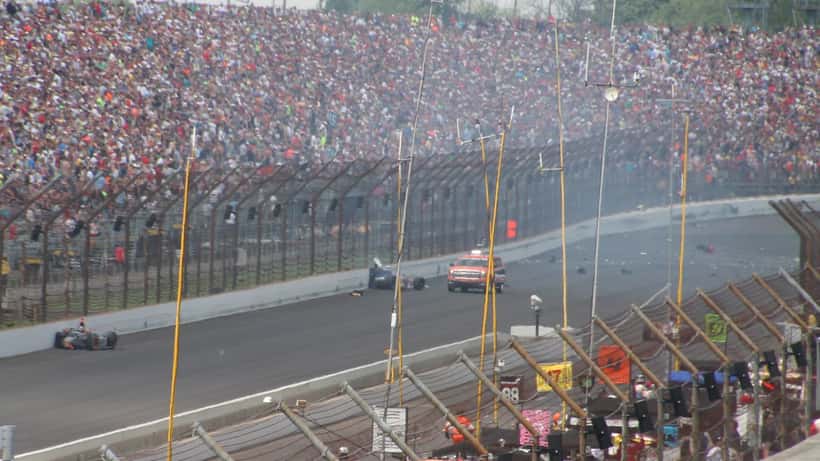
Three cars went airborne at Indianapolis Motor Speedway during practice week for the 110th Indianapolis 500, scheduled for May 24, 2026. Scott McLaughlin crashed heavily in Turn 2, Kyffin Simpson launched into the air in Turn 4, and Colton Herta's machine flipped upside-down and slid across the track at high speed. All three drivers walked away uninjured. Pit crew fueler Spence Hall was not as fortunate — he suffered a right foot injury before the race even began.
For the thousands of Canadians who travel to Indianapolis each year, these incidents raise a legal question that few people think about before buying a ticket: if you are injured at a motorsport event, what are your rights?
The Assumption of Risk Doctrine: What Your Ticket Really Means
When you buy a ticket to the Indianapolis 500, you implicitly accept a legal concept known as "assumption of risk." Under both Canadian and American law, this means you acknowledge that motorsport involves inherent danger and agree to absorb certain risks as a spectator.
Flying debris from tire failures, fragments of bodywork, and even limited car incursions into spectator areas can fall under this doctrine. The theory is that attending a racing event means you understand the sport carries danger — and you accept a portion of that risk by being present.
However, assumption of risk has clear legal limits. It does not grant venues unlimited immunity from liability, and most spectators do not know where those limits are.
When Venues Can Still Be Held Liable
Even at high-risk sporting events, venue operators retain a legal duty of care toward everyone in attendance. Canadian tort law requires that event organizers take reasonable steps to protect spectators from foreseeable harm — and that obligation persists regardless of any waiver you may have signed at entry.
The 2026 IndyCar Rulebook explicitly places responsibility on event promoters to maintain adequate insurance, deploy qualified medical and rescue personnel, and exercise control over spectator access zones. This is not incidental language — it means the sport's governing body formally recognizes that safety at racing events is a managed obligation, not purely a risk that spectators absorb.
Three circumstances where venue liability can apply even at motorsport events:
- Structural failures: A collapsed grandstand, broken catch fence, or defective seating directly causes your injury
- Inadequate medical response: Delayed or absent first aid causes your condition to worsen after an incident
- Negligent crowd management: Overcrowding or blocked emergency exits contribute to harm
The pit road injury to Spence Hall illustrates an important distinction. Pit crew members and event staff are not spectators — they operate under workplace health and safety legislation. In both Canada and the United States, employers face strict legal duties to protect workers from foreseeable hazards on the job. An employer cannot invoke assumption of risk as a defence against a worker's injury claim.
Cross-Border Claims: What Happens When a Canadian Is Injured in Indiana
If you are injured at the Indianapolis 500, you are on American soil — and Indiana law governs your legal claim, not Canadian provincial law.
Indiana applies a modified comparative fault system. If you are found to be less than 51% responsible for your own injury, you can recover damages proportional to the venue's share of fault. A venue that failed to maintain adequate protective barriers, for example, could face significant liability even if you were seated in an acknowledged high-risk zone.
Several practical considerations apply specifically to Canadian spectators travelling to US sporting events.
Your travel insurance may have a gap. Many Canadian travel insurance policies exclude injuries sustained during "hazardous activities," and some insurers classify attending motorsport events as hazardous activity. Review your policy before you travel — and if the language is ambiguous, contact your broker for written clarification.
Provincial emergency health coverage does not match US hospital rates. Most provinces reimburse emergency medical treatment received out-of-province at provincial reimbursement rates, not American rates. For a serious injury requiring emergency surgery or hospitalization in Indiana, the coverage gap can reach tens of thousands of dollars.
You need an Indiana-licensed attorney for any serious claim. Cross-jurisdictional personal injury cases require representation admitted to the bar in the relevant US state. An Indiana attorney can advise on whether any waiver you signed is enforceable, whether the venue's conduct meets the legal standard for negligence, and which damages are recoverable under Indiana law.
What the 2026 Practice Week Crashes Tell Us About Motorsport Safety
The three spectacular crashes at Indianapolis Motor Speedway in May 2026 are, in important ways, a success story. SAFER (Steel and Foam Energy Reduction) barriers, high-mounted catch fencing, and the closed-cockpit Dallara IR-18 chassis absorbed impacts that would have been fatal in earlier racing eras. All three drivers involved walked away from violent accidents.
But spectator protection has not advanced at the same pace. Tire debris remains the primary cause of spectator injuries at open-wheel events. Burning fragments can travel significant distances and pass over catch fencing at high energy levels.
For Canadians at domestic events, similar principles apply. Ontario's Occupiers' Liability Act and Quebec's Civil Code both impose duties on organizers to maintain safe conditions. A venue that allows substandard barriers or fails to deploy medical resources faces civil liability regardless of the sport's inherent risks.
Understanding Your Rights Before Race Day
The 2026 Indianapolis 500 will draw hundreds of thousands of spectators to one of motorsport's most iconic venues. Canadian fans making the trip should take a few steps before they go.
Review the venue's stated safety infrastructure and compare it to what you observe on arrival. Document any safety concerns — broken barriers, overcrowded sections, missing medical personnel — with photographs if possible. That documentation can be critical evidence in any subsequent liability claim.
If you are seriously injured at a motorsport event, connect with a qualified personal injury lawyer as soon as you are medically stable. The question of whether a venue's conduct constitutes negligence rather than assumption of risk is a legal analysis that requires professional assessment — not a determination you should make on your own.
You can also review how Canadian courts have approached similar spectator injury questions at other major sporting events through ExpertZoom's analysis of the 2026 PGA Championship spectator injury case.
The official safety framework governing the Indianapolis 500 and spectator protection standards at IndyCar events is maintained by Indianapolis Motor Speedway, which publishes venue safety protocols and event entry requirements directly on its website.
Three crashes in a single practice week — and a pit crew worker with a right foot injury — are a reminder that the Indy 500 is real motorsport at real speeds. The thrill is part of what makes it an unmissable event. Knowing your legal rights is what makes you a prepared spectator.
This article provides general legal information only and does not constitute legal advice. For guidance specific to your situation, consult a qualified lawyer licensed in the relevant jurisdiction.
