 Michael Young
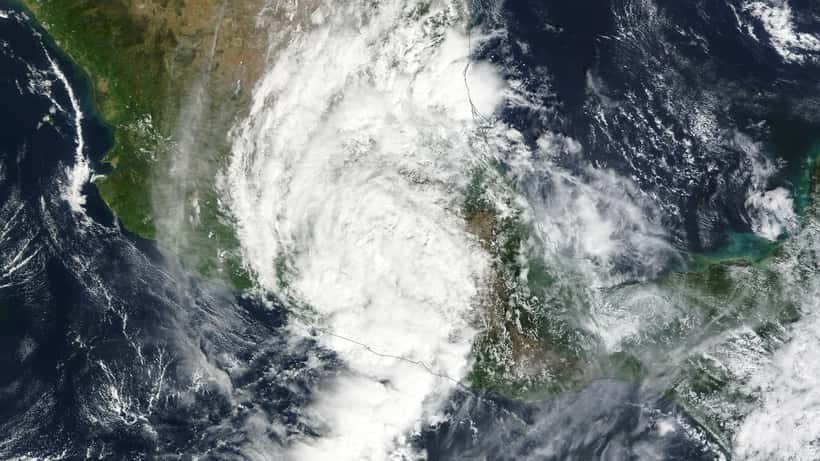
Hurricane Simon barreled toward Mexico's Pacific coast this week, forcing evacuations across Jalisco and Colima as forecasters warned the storm could make landfall as a Category 3 or 4 hurricane on October 11, 2026. The rapid intensification — from a tropical storm to a potential major hurricane in under 48 hours — left vacation towns including Puerto Vallarta and Manzanillo bracing for devastating winds, catastrophic flooding, and storm surge of up to 3.5 metres. For Canadian homeowners thousands of kilometres away, the images serve as a stark reminder: extreme weather can erase years of home equity in a single weekend.
Hurricane Simon: From Tropical Storm to Major Threat in 48 Hours
Simon formed in the Eastern Pacific in early October 2026, rapidly intensifying to a Category 1 hurricane within 24 hours of tropical storm formation. By October 9, forecasters at Mexico's Servicio Meteorológico Nacional and the US National Hurricane Center predicted Simon would reach Category 3 or 4 strength before its expected landfall along the central Pacific coast late October 11 or early October 12, 2026.
The affected states — Jalisco, Colima, Michoacán, and Nayarit — were placed under hurricane warnings. Emergency services in Manzanillo and the resort corridor from Punta Mita to Puerto Vallarta began evacuating coastal residents ahead of the storm's arrival. Preliminary rainfall forecasts called for 50 to 75 millimetres in urban centres and up to 400 millimetres in elevated inland areas, raising serious concerns about landslides in already-stressed terrain. In Guerrero, located farther south, Simon's outer bands had already produced flooding, infrastructure damage, and power outages — though Mexico's Protección Civil reported no confirmed deaths or disappearances as of October 9.
At maximum intensity, a Category 4 hurricane produces sustained winds above 210 km/h. The structural impact is catastrophic: roofs are stripped, windows implode, and floodwaters overwhelm drainage systems built for routine rainfall. Mexico's housing stock, much of which is older concrete-block and tile construction, is particularly vulnerable to the combined loading of sustained wind and rapid flash flooding.
Why Hurricane Simon Is a Wake-Up Call for Canadian Homeowners
Canada does not get Category 4 hurricanes. But in 2026, it does not need them.
Extreme weather has become the defining financial risk for Canadian homeowners. According to Public Safety Canada, natural hazards — including floods, windstorms, and severe precipitation events — are now the leading cause of federal disaster assistance declarations. Climate scientists have documented a clear trend: storms that once qualified as rare events are arriving more frequently, and their intensity when they do arrive has increased.
The mechanism that made Simon so dangerous — rapid intensification driven by unusually warm Pacific sea surface temperatures — is the same mechanism amplifying storm systems over the Great Lakes, powering the atmospheric rivers soaking British Columbia's coast, and driving the post-tropical remnants that have struck Atlantic Canada with renewed force since 2019. What Hurricane Simon illustrates is that the window between "weather system forming" and "catastrophic structural damage" is shorter than it was a generation ago.
For homeowners who have not had their property professionally assessed for storm resilience, this is the warning shot.
The Expert Inspection Gap: What Your Home Might Be Hiding
Most Canadian homeowners think about home maintenance in terms of the visible: the cracked driveway, the peeling paint, the slow drain. Storm resilience is different. It lives in the invisible — the state of a roof membrane beneath the shingles, the integrity of window flashings, the age and drainage capacity of the weeping tile buried along the foundation perimeter, the output capacity of the sump pump installed seven years ago.
A licensed home improvement contractor or certified home inspector who specializes in storm resilience assesses these systems differently from a general handyperson. They are looking for the specific failure points that a sustained 100 km/h wind event or a 60-millimetre rainfall in two hours will expose — not the cosmetic issues a buyer's home inspector might flag.
The critical checklist includes: roof decking attachment and membrane condition (especially in homes built before 1990, which often used thinner OSB boards and fewer fasteners per sheet), sealed chimney and skylight flashings, basement window well drainage channels, foundation cracks allowing subsurface water intrusion, and the condition of the weeping tile system around the foundation perimeter. Each of these is invisible from a street-level walkthrough. Each has caused catastrophic losses in Canadian homes during the past five years. See also: what to check after an orange watch tornado warning in Canada and how experts assessed spring snow damage after the 2026 April snowstorm.
What Simon's Lesson Looks Like in Brampton
Consider a homeowner in Brampton, Ontario — a region that experienced three separate extreme rainfall events between June and August 2026, the third of which produced 98 millimetres of rainfall in under six hours on August 22, 2026.
Before that August event, the homeowner had no professional storm-resilience assessment on record. The property was a 1987-built bungalow with the original weeping tile system and a sump pump that had not been serviced since 2019. When the storm hit, the basement flooded: approximately 1,400 litres of water entered through two foundation cracks and an overwhelmed sump pit.
The restoration bill reached $34,200 — including emergency water extraction ($3,800), mould remediation ($7,400), drywall and insulation replacement ($14,000), basement refinishing ($7,500), and contents replacement ($1,500). The homeowner's insurance covered $22,000 after applying deductibles and depreciation. The out-of-pocket loss was $12,200.
Six months earlier, a licensed home improvement contractor had quoted a preventive storm-resilience package: sump pump replacement, weeping tile inspection and partial relining, foundation crack injection, and window well drain installation. The quote: $4,800 to $6,200.
If the preventive assessment and repairs had been completed in spring 2026, the basement flood is unlikely to have occurred — meaning the $12,200 out-of-pocket gap does not exist. If the flood still occurred despite those repairs, documented professional remediation work would have strengthened the insurance claim and potentially recovered an additional $3,000 to $5,000 in coverage.
The math is unambiguous: $4,800–$6,200 in preventive work versus $12,200 in uninsured losses and a disrupted basement for eight weeks of remediation. The storm makes no distinction between the homeowner who prepared and the one who waited.
What to Do Before Storm Season Closes
The 2026 Atlantic hurricane season officially runs through November 30. On Canada's Pacific coast, atmospheric river season begins in earnest in October and can persist through February. There is still time to act before winter.
Schedule a storm resilience inspection now. Not a general home inspection — a targeted assessment by a contractor who evaluates roof attachment, drainage systems, and foundation integrity. This typically costs $250 to $500 and takes two to four hours. The diagnostic value is immediate; most identified issues can be corrected within days at manageable cost.
Review your water damage coverage in detail. Many standard Canadian home insurance policies exclude overland flooding unless a rider has been added. Sewer backup and overland flooding are frequently sold as separate endorsements. Contact your insurer to confirm exactly what your policy covers — and at what limits — before the next major precipitation event.
Service your sump pump before November. Sump pump failure is the single most common cause of preventable basement flooding in Canada. A pump replacement costs $300 to $700 installed. Failing to replace an aging unit can cost $20,000 or more in basement damage.
Clear gutters and check downspout extensions. Blocked gutters during a high-intensity rain event direct water straight toward the foundation. Downspout extensions that discharge within two metres of the foundation are a recognized flood risk. Both issues can typically be corrected in a single afternoon for under $200.
Document your home's condition before the next storm. Time-stamped photographs of every room, all mechanical systems, and the full exterior provide critical evidence for insurance claims. Store them in cloud backup — not on a local hard drive in the basement.
Hurricane Simon will make landfall, cause damage, and eventually recede from the news cycle. The question it raises for Canadian homeowners is simpler and more immediate: when was the last time a professional looked at the systems your home depends on to survive a major storm? For those who do not have a recent answer, this week is the right time to find one.
This article contains general information for educational purposes. For specific advice about your property's storm resilience or insurance coverage, consult a licensed home improvement contractor or financial advisor in your area.
