 Nathalie Dubois
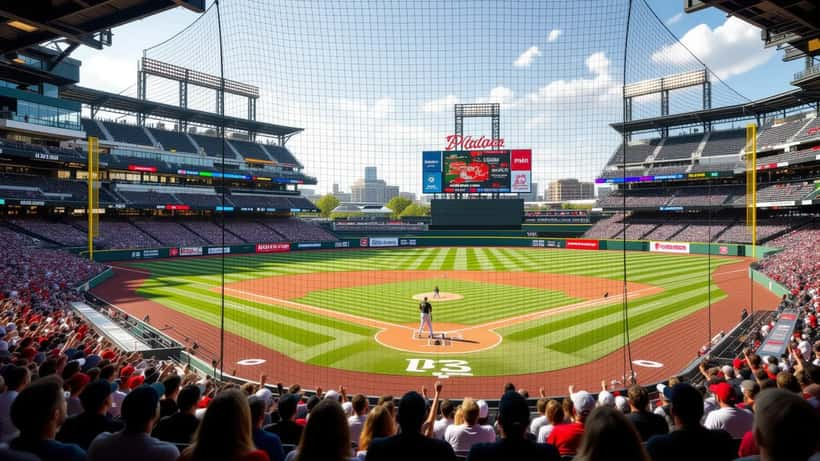
The San Francisco Giants and Chicago Cubs wrapped up a three-game series at Wrigley Field on June 8, 2026, drawing tens of thousands of fans to one of baseball’s most iconic venues. While the Cubs entered the finale with a 34-31 record against the Giants’ 26-39, the on-field statistics were not the only numbers capturing attention. Personal injury lawyers who specialize in premises liability say summer baseball series like this one generate a predictable spike in calls from spectators injured by foul balls, tripping hazards, and overcrowding incidents.
Wrigley Field, which opened in 1914, presents unique safety challenges that newer stadiums have engineered away. The ballpark’s intimate seating configuration places fans closer to the action than almost any other MLB venue. The lack of comprehensive netting down the foul lines — a design feature preserved to maintain sightlines in the historic structure — leaves spectators exposed to line drives traveling in excess of 100 miles per hour. For Canadian fans traveling south to catch games, or for those attending similar vintage venues like Toronto’s Rogers Centre, the legal implications of a stadium injury can be surprisingly complex.
The Hidden Risks of Historic Ballparks
Stadium safety experts classify Wrigley Field as a "legacy facility" — a venue whose architectural significance limits modernization. While the Cubs have extended protective netting in recent years, the coverage remains less comprehensive than at newer ballparks like Globe Life Field in Texas or Truist Park in Atlanta. Fans seated along the foul poles and in the lower boxes face elevated risk from broken bats and foul tips.
The hazards extend beyond flying objects. Wrigley’s concourses are notoriously narrow by modern standards. The steep concrete ramps that connect seating levels become slippery during rain delays. Railings in some sections date to mid-century renovations and may not meet current load-bearing standards. Overflow crowds during marquee matchups like Giants-Cubs create pinch points at gates and concession areas where crush injuries occur.
Dr. Helena Voss, a sports-safety researcher at the University of Toronto, notes that Canada’s stadium infrastructure presents a mixed picture. "Rogers Centre was revolutionary when it opened in 1989, but it too has aging systems. The concrete seating bowls in many Canadian arenas are entering their fourth decade of freeze-thaw cycles. We’re starting to see spalling, cracking, and trip hazards that didn’t exist twenty years ago."
Who Pays When a Fan Gets Hurt?
The legal framework governing stadium injuries differs sharply between the United States and Canada, a distinction that catches many cross-border travelers off guard. In Illinois, where Wrigley Field sits, courts have historically applied the "Baseball Rule" — a legal doctrine holding that fans assume the risk of injury from balls and bats entering the stands. This assumption-of-risk defense has shielded MLB teams from liability in numerous cases, though recent high-profile injuries have prompted legislative challenges in several states.
Canadian courts have taken a more plaintiff-friendly approach. The Supreme Court of Canada has consistently rejected blanket assumption-of-risk defenses in premises liability cases, instead applying a test of reasonable foreseeability and adequate warning. A venue operator in Canada must demonstrate that it took all reasonable steps to protect patrons from foreseeable harm — a higher bar than the Baseball Rule provides.
Toronto personal injury lawyer David Park explains the practical difference: "If you’re hit by a foul ball at Rogers Centre and the team failed to maintain adequate netting despite known risks, you have a much stronger case in Ontario than you would in Illinois. Canadian courts will examine whether the netting was sufficient, whether ushers warned spectators, and whether the team had notice of prior incidents in that specific section."
The Documentation That Wins Cases
For fans injured at stadiums, the minutes immediately following an incident are critical for any future legal claim. Premises liability lawyers emphasize three categories of evidence: photographs of the hazard, witness contact information, and immediate incident reporting to stadium staff.
Photographic evidence should capture not just the injury but the conditions that caused it. A wet floor without warning signage, a cracked step, or a section with obstructed sightlines that forces fans to lean into the aisle — these contextual details often determine case outcomes. Smartphones have transformed premises litigation; jurors expect to see timestamped images taken at the scene.
Witness testimony matters because stadium staff often dispute incident reports. An independent observer who can confirm that no ushers were present, that a hazard existed for multiple innings, or that medical response was delayed provides crucial corroboration.
Immediate reporting creates an official record. Most stadiums generate incident reports that become discoverable documents in litigation. Delayed reporting — common when fans minimize their injuries initially — allows defense lawyers to argue that the incident was fabricated or that the venue had no opportunity to preserve evidence.
Insurance and Cross-Border Complications
Canadian fans injured at American stadiums face additional bureaucratic hurdles. Provincial health insurance plans like OHIP in Ontario or MSP in British Columbia cover emergency treatment abroad, but recovery of out-of-pocket costs, lost wages, and pain-and-suffering damages requires pursuing the American venue or its insurer directly.
Travel insurance policies vary dramatically in their sports-event coverage. Some policies explicitly exclude injuries sustained at professional sporting events, categorizing them as "high-risk activities." Others cap medical evacuation coverage at levels insufficient for serious trauma. Fans who assume their credit-card travel insurance will handle a catastrophic injury often discover gaps only after the fact.
The Chicago Cubs and MLB carry substantial general liability policies, but accessing those funds requires navigating American civil procedure — a process that can take two to four years and requires retaining American counsel. For Canadian plaintiffs, the cost of transnational litigation often deters legitimate claims, particularly for moderate injuries with damages below $50,000.
Prevention and Expert Consultation
The most effective strategy for stadium injuries is prevention. Seating selection matters: sections behind home plate and along the baselines offer the greatest protection from foul balls. Aisles seats reduce tripping risk by eliminating the need to climb over other spectators. Fans with mobility limitations should verify that their section complies with current accessibility standards, as older venues sometimes grandfather non-compliant configurations.
For those who do suffer injuries, early consultation with a personal injury lawyer familiar with cross-border premises liability is essential. The Department of Justice Canada provides guidance on civil litigation procedures for citizens involved in legal proceedings abroad, including information about enforcing Canadian judgments in foreign jurisdictions.
As the 2026 MLB season progresses and Canadian fans continue crossing the border for marquee matchups, the Giants-Cubs series at Wrigley Field stands as a reminder that the ballpark experience carries legal dimensions as complex as the game itself. Whether watching from the bleachers of a century-old stadium or a modern retractable-dome arena, spectators should know their rights before the first pitch.
