 Adèle Chartrand
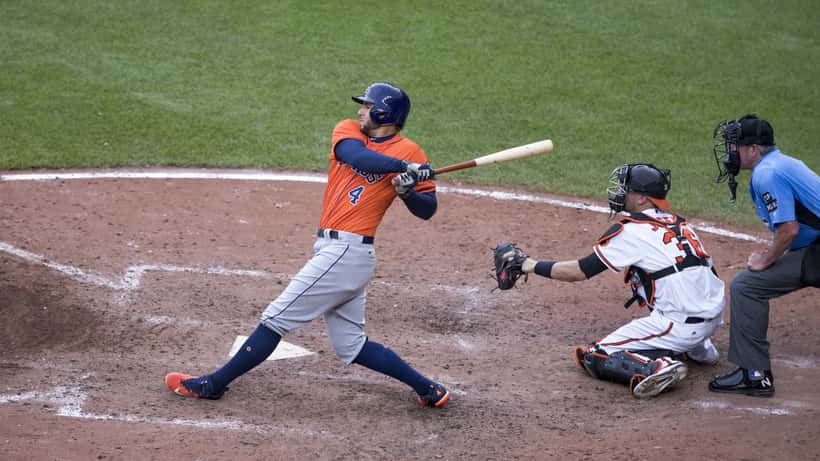
Toronto Blue Jays outfielder George Springer fractured his left big toe on April 11, 2026, after fouling a pitch directly off his foot during a game against the Minnesota Twins. More than two weeks later, manager John Schneider provided an encouraging update on April 24: Springer has been running, taking batting practice off a machine, and could be ready to return "within a day or two."
The injury to one of Canada's most-watched athletes is also a lesson in a risk that sports medicine doctors discuss constantly: what looks like a minor foot injury can turn into something far more serious during the return-to-play phase.
What a Big Toe Fracture Actually Means for an Athlete
The big toe — the hallux — bears an estimated 40 to 60 percent of the body's weight during walking and running. The two bones most commonly fractured in athletic foot injuries are the proximal phalanx (the bone closest to the foot) and the first metatarsal.
In Springer's case, the mechanism — a direct blow from a high-velocity pitch — is classified as an acute traumatic fracture. These differ from stress fractures, which develop gradually through repetitive loading over weeks or months. Acute fractures typically have a more predictable healing timeline, but they still require careful management to avoid complications.
Recovery for an acute big toe fracture in an otherwise healthy adult athlete typically runs two to six weeks, depending on the severity of displacement and how aggressively the athlete is managed. Because the hallux carries such a disproportionate share of running load, any instability or pain in that joint affects gait — and gait, if altered, creates problems elsewhere.
The Hidden Risk: Compensation Injuries
One of the most revealing details from Springer's injury report is what the Blue Jays' medical staff are watching for beyond the toe itself. According to team updates, clinicians are actively monitoring to ensure Springer does not unconsciously alter his running stride to protect the injured foot — because that compensation pattern, if unchecked, could strain his calf, hamstring, or Achilles tendon.
Compensation injury is one of the most underappreciated dangers in sports medicine. When an athlete protects a painful area, they often shift load to adjacent muscles and joints without realizing it. Over time or under sudden force, those overloaded structures can fail — producing an injury that is frequently more serious and longer-lasting than the original one.
This is why experienced sports medicine physicians and physiotherapists insist on biomechanical assessment before returning an athlete to full running loads. Watching how a patient walks, jogs, sprints, and changes direction reveals movement patterns that video analysis or patient self-reporting cannot. A subtle limp, an asymmetric arm swing, or a shortened stride on one side can all indicate that the body is still protecting a structure that hasn't fully healed.
Manager John Schneider acknowledged this directly: "The toe will still take some time to heal fully," he said on April 24, "and there will be some load management going forward."
How the Return-to-Play Protocol Works at the Elite Level
Elite sports organizations follow a staged, gate-based return-to-play protocol that is more rigorous than anything most recreational athletes encounter. For a toe fracture, the typical progression includes:
- Non-weight-bearing phase: Rest, ice, elevation, and monitoring for swelling. X-rays and, where necessary, CT imaging confirm fracture alignment and the absence of joint involvement.
- Partial weight-bearing: Walking in a protective boot. Stationary cycling or pool training for cardiovascular maintenance.
- Full weight-bearing without assistive devices: Confirmed by imaging showing bone bridging and clinical assessment showing stable, pain-free walking.
- Straight-line running progression: Beginning with slow jogging, building to full sprint speed in a straight line before any change of direction is introduced.
- Sport-specific activity: Batting drills, lateral cuts, explosive starts from a stationary position.
Each stage is gated by both objective measures (imaging, force plate data, absence of visible compensation in gait) and subjective pain tolerance. Springer's current activities — running drills and live hitting at Angel Stadium — place him in the later stages of this progression. According to Sports Medicine Canada, return-to-sport decisions at the professional level increasingly incorporate GPS tracking and accelerometer data to detect asymmetry in loading before athletes feel any pain.
Footwear and Protective Equipment After a Toe Fracture
One aspect of Springer's recovery that rarely makes the injury report is footwear modification. Athletes returning from big toe fractures commonly wear rigid-soled footwear, carbon fibre insoles, or turf toe plates — devices designed to limit dorsiflexion (bending upward) of the toe joint during push-off.
These modifications are not simply padding. They fundamentally change how force is distributed through the foot during the gait cycle, allowing the athlete to run at full speed while protecting the healing bone from the repetitive bending stress that would otherwise occur with every stride.
A sports medicine physician or orthotist assesses which modification is appropriate based on the location and severity of the fracture, the athlete's sport, and their position. A baseball outfielder making explosive lateral cuts needs different protection than a distance runner.
When Should a Canadian Athlete See a Sports Medicine Doctor?
For recreational athletes — weekend hockey players, runners, and pickup basketball regulars — the impulse after a foot injury is often to tape it, rest for a day, and see how it feels in the morning.
That approach can turn a two-week recovery into a two-month one.
See a sports medicine doctor or physiotherapist if:
- Swelling and bruising appear rapidly after the injury
- The toe is visibly misaligned or deformed
- Pain prevents normal walking more than 24 hours after the incident
- Symptoms do not clearly improve within 72 hours of rest and ice
- You are an athlete with a training schedule or competition timeline
Without imaging, there is no reliable way to distinguish a bad bruise from a fracture requiring immobilization. A sports medicine specialist can also design a graduated return-to-sport protocol that specifically addresses compensation injury risk — the exact same risk the Blue Jays' medical team is managing as Springer ramps up his activities.
The same principles that govern an All-Star outfielder's recovery apply to a 45-year-old recreational soccer player. The timeline may be different. The clinical reasoning is the same.
You can find a sports medicine doctor or physiotherapist on ExpertZoom and book a consultation. For more resources on managing athletic injuries, see our article on Nathan MacKinnon's return from injury during the 2026 NHL playoffs.
Disclaimer: This article provides general health information only. It is not a substitute for advice from a qualified medical professional. If you have sustained an injury, consult a licensed sports medicine physician, physiotherapist, or general practitioner before returning to physical activity.
