 Olivia Tremblay
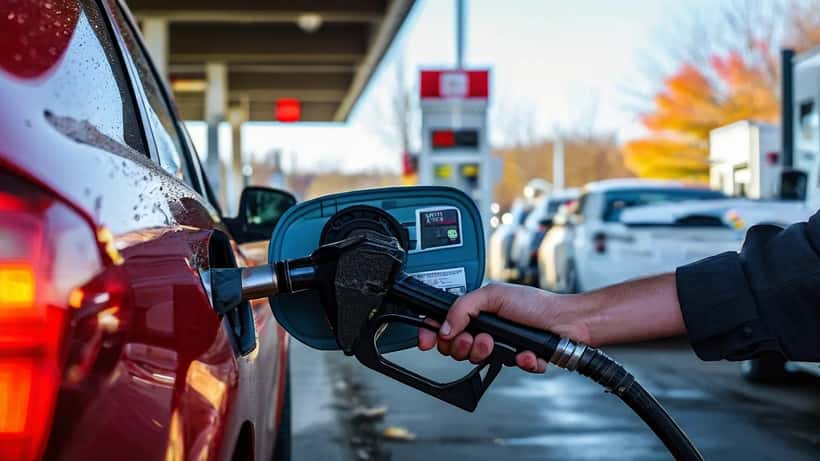
Canada has suspended its federal fuel excise tax effective April 20, 2026, saving drivers 10 cents per litre at the pump through Labour Day — but what does this relief actually mean for your household budget, and when should you talk to a financial expert?
What Changed at the Pump on April 20, 2026
On April 14, 2026, Prime Minister Mark Carney announced a temporary suspension of the federal fuel excise tax on gasoline and diesel, citing global oil disruptions tied to the Middle East conflict. According to Canada.ca, the excise tax rate has been reduced to 0 cents per litre, effective April 20, 2026 through September 7, 2026.
The numbers: gasoline saves 10 cents per litre, diesel saves 4 cents per litre. The federal government estimates the total tax relief at over $2.4 billion — money that stays in Canadians' pockets rather than flowing to Ottawa.
For a driver filling up a 60-litre tank twice a month, that works out to roughly $12 a month in savings, or about $60 over the five-month suspension window. Not a windfall, but not nothing either — especially as household budgets remain stretched.
Why the Government Acted Now
The fuel excise tax suspension is a direct response to the 2026 Iran-Israel conflict. When the Strait of Hormuz — through which roughly 20% of the world's seaborne oil passes — was disrupted this spring, Brent crude prices surged past $120 per barrel. Canadian households, already paying elevated prices at the pump due to earlier market pressures, faced a sharp additional squeeze.
The suspension runs until Labour Day, September 7, 2026. On September 8, 2026, the excise tax reverts to its standard rate: 10 cents per litre for gasoline and 4 cents per litre for diesel. Drivers who benefit from the pause should plan for that return, since fuel costs will jump again regardless of where global crude prices sit at that point.
It is worth noting that the consumer carbon tax was already eliminated effective April 1, 2025, providing additional relief. However, an industrial carbon tax of $110 per tonne remains in place, and independent analysis suggests a "hidden" cost of roughly seven cents per litre remains embedded in the price of gasoline through 2026.
How Much Does This Actually Save — and Should You Care?
For most Canadian households, fuel is a significant recurring expense. According to Statistics Canada, the average Canadian household spends roughly $3,000 to $4,000 per year on gasoline. At current fuel price levels, the 10-cent-per-litre savings are meaningful but modest — perhaps $100 to $200 in total over the five-month window, depending on your driving habits and fuel economy.
Where the real financial exposure lies is in the indirect effects of fuel price volatility. Higher fuel costs flow through to grocery prices, heating bills, and transportation costs for goods. When oil markets spike, the knock-on effects appear in grocery store aisles within weeks.
This is exactly the moment a wealth management expert can add value. Rather than simply tracking savings at the pump, a financial adviser can help you:
- Review your budget to identify where fuel-linked inflation has quietly eroded your disposable income
- Assess your investment exposure to energy sector volatility — both direct holdings and ETFs with oil sands weighting
- Plan for the September 8 reversion, when excise tax returns and fuel costs will rise again
- Evaluate the timing of major vehicle purchases, given that EV incentives, fuel savings, and maintenance costs all interact with your personal financial situation
The Hidden Risk: Planning Around a Temporary Measure
One of the classic mistakes Canadians make with temporary tax relief is spending the savings rather than deploying them strategically. The gas tax suspension is scheduled to last fewer than five months — it is not a permanent structural change to the cost of fuel.
A wealth manager can run a simple scenario analysis: if your household saves $150 at the pump between now and September, what is the most effective use of that cash? Paying down high-interest debt, topping up a TFSA, or simply building a small emergency buffer against the fuel price rebound all beat letting the savings drift into general spending.
The broader point is that energy price volatility — whether from a Middle East conflict, a shift in OPEC production, or domestic policy changes — is a recurring feature of Canadian household finances, not a one-time event. Households that plan around this volatility consistently do better than those that react to it.
What to Do Before September 8
If you have not reviewed your household budget since fuel costs spiked in early 2026, this window is a useful opportunity. Consider the following steps:
- Track your actual savings over the coming weeks — note your fill-up costs before and after April 20, 2026 to get a clear picture of what the suspension is worth to your household
- Check your investment portfolio for unintended energy sector exposure, particularly if you hold Canadian equity ETFs or broad index products
- Talk to a wealth management professional if you are carrying high-interest consumer debt, since the relief window may create a small but real opportunity to accelerate paydown
- Mark September 8, 2026 in your calendar — that is when the full 10-cent excise tax returns, and fuel costs will rise again regardless of where oil prices are trading
The gas tax pause is welcome news for Canadian drivers. But it is also a reminder that household finances are vulnerable to policy shifts and global commodity markets in ways that require active attention — not just passive relief.
Disclaimer: This article provides general financial information only and does not constitute personalized financial advice. Consult a qualified wealth management professional before making investment or financial planning decisions.
For Canadians already tracking fuel costs closely, our earlier analysis of how gas prices dropping 13 cents affects your budget remains relevant — see Gas Prices Drop 13 Cents in Canada: How to Make the Most of Lower Fuel Costs. A wealth management professional can help you build a household financial strategy that accounts for these recurring shifts at the pump.
