 Olivia Dubois
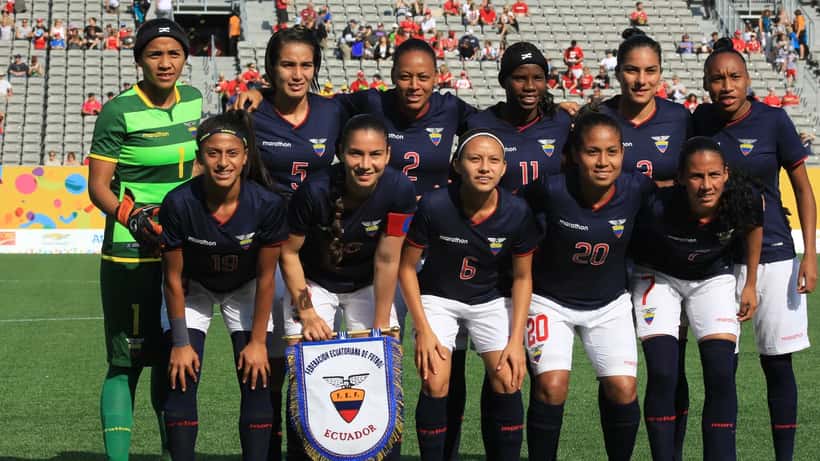
Ecuador defeated Saudi Arabia 2-1 in a FIFA World Cup 2026 warm-up match on May 30, 2026, at Sports Illustrated Stadium in Harrison, New Jersey — but the result is almost secondary to what it revealed. Two of Ecuador's most important defenders, Arsenal's Piero Hincapié and PSG's Willian Pacho, were not on the pitch. Both sat out due to commitments to the UEFA Champions League final, played just days earlier. With the World Cup opening in Canada, the United States, and Mexico in less than three weeks, the absences have put sports medicine specialists on alert.
Ecuador's Preparation — A Picture of Missing Key Players
Ecuador arrived at this warm-up on a 17-match unbeaten streak, ranked 23rd in the world by FIFA, and drawn into Group E against Ivory Coast, Curaçao, and Germany. On paper, a strong contender for the knockout rounds.
But both Hincapié (Arsenal) and Pacho (PSG) played the full 90 minutes of the Champions League final on May 28. That leaves roughly 48 to 72 hours between one of the highest-pressure club matches in football and what is now essentially a national team squad training exercise.
Saudi Arabia, meanwhile, arrived after a difficult period — ranked 61st, with a 2-1 loss to Serbia and a 4-0 loss to Egypt in recent games. Ecuador's 2-1 win tells a limited story about tournament form. What it does tell, clearly, is that the squad available tonight is not the squad that starts on June 15 against Ivory Coast in Canada.
What Champions League Fatigue Actually Does to an Athlete's Body
The medical literature on post-season fatigue in elite footballers is consistent. Researchers studying players who reach the final stages of European club competition find elevated markers of physical stress — cortisol levels, muscle microtrauma, and disturbed sleep patterns — that persist for 10 to 14 days after the final match.
Willian Pacho, for example, has played in PSG's run through the Champions League knockout rounds plus Ligue 1 matches, accumulating more than 3,700 minutes of competitive football since September 2025. Piero Hincapié's workload at Arsenal is comparable.
The specific risk for World Cup squads is timing. Elite players from Champions League clubs typically receive a 10 to 14-day rest window after the season ends. For players whose clubs reached the final on May 28, that window closes just as the World Cup group stage is starting — not before. Some will arrive at their national team camps having had fewer than 12 full rest days.
According to the Canadian Academy of Sport and Exercise Medicine (casm.net), cumulative fatigue in high-performance athletes significantly increases injury risk, reduces explosive output, and impairs decision-making. These are not minor considerations at a World Cup.
Why the 2026 Schedule Is Particularly Demanding
FIFA's 2026 World Cup features 48 teams, expanded from 32. That means more group stage matches, a larger squad of nations, and — for elite players — the possibility of a longer tournament run following one of the longest club seasons in recent memory.
As documented in a sports medicine analysis of tournament fatigue, the accumulation of physical load across consecutive high-stakes competitions is not linear. Players who compete through May in European club finals and then enter a national tournament in June experience a compounding effect that is difficult to manage without active intervention.
The Ecuador situation illustrates a structural problem in the international football calendar. Club interests and national team schedules collide most sharply for players on Champions League semifinalists and finalists. FIFA's rules require clubs to release players for international competitions, but the timing leaves medical staff with an impossible puzzle: how do you adequately rest and prepare a player who finished the most demanding club match of the year 48 hours ago?
Warning Signs Coaches and Medical Teams Watch For
Sports doctors who work with national teams ahead of major tournaments typically look for three clusters of warning signs in the two weeks before competition begins.
The first is objective load data: GPS tracking during training showing reduced sprint distances, lower top-speed outputs, and longer recovery times between high-intensity efforts. A player whose sprint capacity is 15% below baseline during the pre-tournament camp is not physically ready for 90 minutes at tournament pace.
The second is subjective wellness: standardized questionnaires on sleep quality, mood, motivation, and perceived soreness. Players returning from long seasons often score unusually low in these measures even when they report feeling "fine" — a discrepancy that experienced sports medicine practitioners recognize as a flag.
The third is acute injury markers: tendon load tolerance, quad and hamstring eccentric strength, and response to graded training. Players showing deficits here are at elevated ACL, hamstring, and Achilles risk during the first week of tournament competition.
When Athletes and Coaches Should Consult a Sports Medicine Specialist
Individual athletes competing at high intensity through long seasons face parallel questions at every level — not just the elite. A provincial hockey player finishing a junior playoff run and heading into summer tryouts, a recreational cyclist completing a charity ride series and entering a gran fondo two weeks later, a university track athlete overlapping competitive seasons: all face versions of the same accumulated fatigue challenge.
The Canadian Academy of Sport and Exercise Medicine provides guidance for athletes and coaches on recognizing and responding to overtraining. But for personalized evaluation — particularly around return-to-competition timelines after high-load periods — consulting a sports medicine doctor is the most reliable route.
Ecuador's Hincapié and Pacho are unlikely to miss the World Cup. But whether they arrive fully prepared, or carrying the invisible weight of accumulated fatigue, is a question that will be answered in June — not on the warm-up stage in New Jersey.
Disclaimer: This article is for informational purposes only and does not constitute medical advice. Consult a qualified health professional for guidance on training, recovery, and sports performance.
