 Dimitri
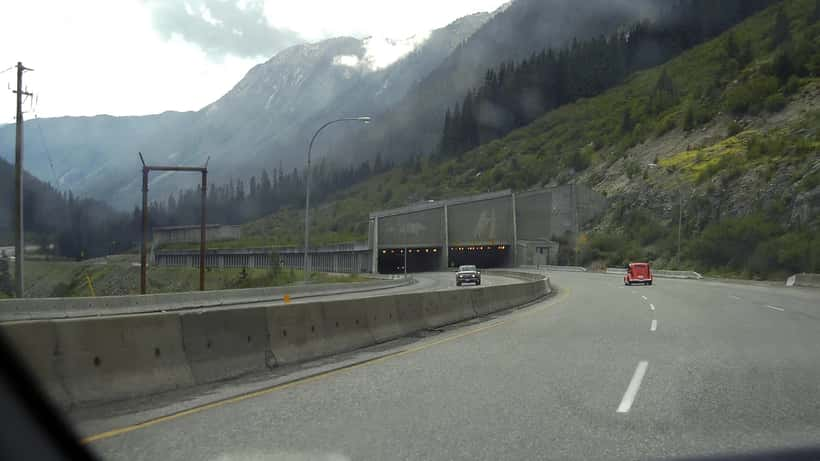
Environment and Climate Change Canada issued special weather statements on Friday, October 16, 2026, for the Coquihalla Highway between Hope and Kamloops, ahead of a cold front crossing the B.C. Interior on Saturday, October 17. Gusts of 60 to 80 km/h are expected, and snow levels could drop to about 1,500 metres in the south and 1,200 metres in the central Interior.
What drivers are actually asking
Most people searching "Coquihalla highway weather" want one answer: can I drive it this weekend, and what do I need on my vehicle? The short version is that a special weather statement is not a closure, but it is a signal that conditions on the high passes can turn quickly.
According to Daily Hive, the same statements also cover Highway 97C between Merritt and Kelowna and Highway 3 between Hope and Princeton via Allison Pass. Environment Canada warns that wet snow could make roads slippery at higher elevations and that the storm could bring localized power outages and fallen branches.
The Coquihalla Summit sits at roughly 1,240 metres. That puts it right at the snow level forecast for the central Interior, which is why a mild day in Merritt or Hope can turn into slush or ice near the top within an hour.
What the winter tire rule requires right now
Winter tire and chain requirements are already in force. Daily Hive reports that from October 1 to either March 31 or April 30, depending on the route, most B.C. highways require winter tires or chains. The Lower Mainland and southeastern Vancouver Island are exempt.
Three points trip drivers up every year:
- Tires must carry the mountain-snowflake symbol or the M+S marking to count as winter-rated.
- Worn tires lose grip well before they look bald. Many mechanics recommend replacing winter tires once tread falls to about 4 mm, even though the legal minimum is lower.
- Chains must be carried and used where signs require them, and commercial vehicles face stricter chain-up rules.
Live closures, camera views and conditions are posted on DriveBC, the province's official road-conditions service. Check it before you leave and again at Merritt or Hope.
What a mechanic checks before a mountain-pass trip
An independent mechanic will usually go through a short list before a pass drive in the shoulder season:
- Tire pressure. Pressure drops roughly 1 psi for every 6°C of temperature decline. A car filled at 18°C in Kamloops can be several psi low by the time the summit reads near zero.
- Tread depth and age. Rubber hardens over time, so tires more than six years old grip worse on cold pavement even with good tread.
- Battery. Cold exposes weak batteries. A battery near the end of its life can fail the first cold morning.
- Wipers and washer fluid. Wet snow and road spray empty a washer reservoir quickly. Use fluid rated well below freezing.
- Brakes. Long descents, such as the run down toward Hope, heat the brakes. Worn pads fade sooner.
A weekend drive, step by step
Consider a driver leaving Kamloops on Saturday afternoon, October 17, for Vancouver, 355 km away, in a sedan fitted with 6-year-old all-season tires at about 3.5 mm of tread.
If the tires are marked M+S, the driver may be legally compliant, but the grip is marginal. The tires are old, the tread is worn, and the summit may be at or near freezing. If the driver also left tire pressure unchecked after a 15°C day, a 12°C drop to around 3°C can cost about 2 psi. That is a small change on its own, but combined with worn rubber it lengthens stopping distance on wet snow.
Now compare the options. If the driver gets a pre-trip inspection costing roughly $50 to $100 at a local shop, corrects the pressure and decides to delay departure by four hours until the cold front has passed, then the same trip happens on a drier, plowed road. If the driver instead leaves into the front with worn tires, then a slide into the guardrail can easily produce a repair bill of several thousand dollars, a deductible, and a tow from a mountain pass.
The numbers favour preparation: an inspection under $100 against a deductible that is commonly $500 to $1,000. A mechanic can also tell you whether the tires should be replaced before the heavier storms of December arrive.
Why October storms catch drivers off guard
The first real cold front of autumn is often the most dangerous, not because it is the strongest but because it arrives before habits change. Summer tires may still be on the car, the washer fluid may still be the summer blend, and drivers carry the mindset of a dry September. Earlier this year, the effects of unseasonal snow on mountain driving were already a talking point; our earlier piece on BC ski resorts hit by summer snow covered the same mountain-weather volatility.
Wind adds a second layer. Gusts of 60 to 80 km/h push light vehicles, campers and empty trailers sideways on exposed stretches, and they do so most strongly where the road crests a ridge or crosses a gap. Snow, even a thin layer, makes that lateral push harder to correct because the tires have less grip to resist it.
Reading the forecast like a professional
A few habits make the difference between a smooth trip and a long wait on the shoulder:
- Look at the snow level, not just the temperature. A forecast snow level of 1,200 metres means the summit is in play even if the valleys are above freezing.
- Watch the timing of the cold front. Conditions are usually worst during and just after the front crosses, then improve as plows and sanding crews catch up.
- Plan an exit. Know where the services are in Hope, Merritt and Kamloops so a delay does not leave you stranded without fuel or food.
- Keep the tank at least half full. A closure can turn a three-hour drive into an eight-hour wait.
When to call a professional
Not every cold-weather question needs a shop visit, but several do:
- You are unsure whether your tires are winter-rated or how much tread is left.
- The car pulls to one side under braking or the brake pedal feels soft.
- The battery is more than four or five years old and cranks slowly.
- You tow a trailer or drive a high-profile vehicle. Environment Canada specifically cautions that high-profile vehicles should take extra care in the strong winds.
Insurance is a separate question. If you are involved in a collision on a mountain highway without required winter equipment, you may face fines and a dispute about fault. For that, speak with a legal expert about your specific situation. This article is general information and not mechanical or legal advice.
What to do before you leave
Check the forecast and DriveBC the morning you travel. Inspect your tires, top up washer fluid and pack an emergency kit with a blanket, water, a flashlight and a phone charger. If the cold front is forecast to cross your route, consider leaving after it passes.
If you are unsure about your tires, brakes or battery, an automotive specialist on Expert Zoom can walk you through a pre-trip check and tell you what is worth fixing now and what can wait.
