 Maya MacDonald
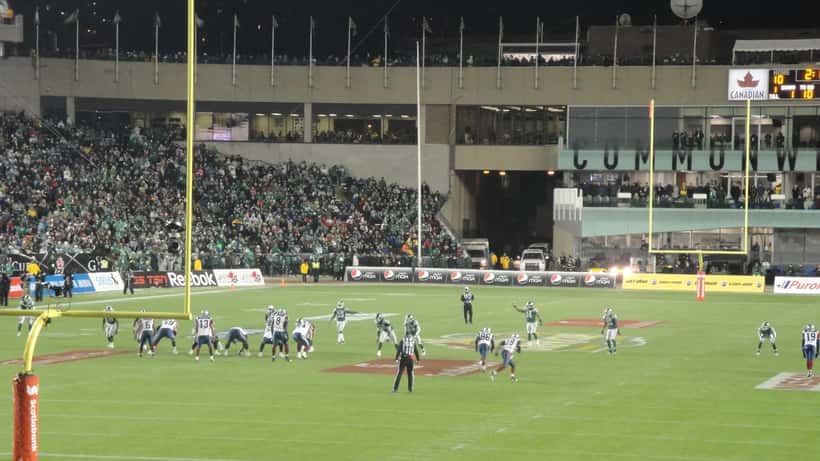
The Canadian Football League's 2026 season is already rewriting record books. Through the first four weeks, teams are scoring at a pace more than 11 points per game higher than in recent seasons, and quarterbacks are on track to shatter long-held passing marks. Last weekend, Vernon Adams Jr. of the Calgary Stampeders matched a franchise record by throwing six touchdown passes in a single game. Meanwhile, the defending champion Saskatchewan Roughriders sit atop the West Division while the Ottawa Redblacks stumble at 0-4.
But beyond the highlight-reel moments, another CFL milestone deserves attention — one that matters far beyond the professional game. Last season, the CFL recorded just 38 concussions league-wide, the lowest number in a decade and a 21 per cent drop from the year before, according to data published on CFL.ca. The league credits this progress to mandatory mouthguards (the CFL was the first professional sports league in North America to require them), Guardian Cap helmet padding introduced for practices and games, and GPS-based load management technology that tracks real-time G-force on players.
For the millions of Canadians who play recreational football, coach youth leagues, or simply watch a CFL game and think about the risks, this milestone carries a direct message: concussions are both preventable and detectable — but only if you know what to look for.
Why CFL Progress Matters to Everyday Canadians
Canada's Public Health Agency estimates that concussions account for roughly 200,000 emergency department visits annually across the country. Most of those are not professional athletes. They are weekend hockey players, youth soccer participants, cyclists, and workers who fall. The same brain injury that sidelined a CFL linebacker in Week 3 can happen on a playground or a construction site.
The CFL's decade-low in concussions did not happen by accident. It came from systematic change: better protective equipment, stricter rules on helmet-to-helmet contact, and — critically — improved recognition of symptoms by players, coaches, and medical staff. That same systematic awareness applies to everyday Canadians. The Hamilton Tiger-Cats reported zero reported concussions through their 2026 training camp, partly credited to enhanced pre-season protocols introduced this year.
5 Concussion Warning Signs You Should Never Ignore
According to Health Canada's concussion guidelines, a concussion is a brain injury caused by a bump, blow, or jolt to the head or body that causes the brain to move rapidly inside the skull. Unlike a broken leg, a concussion leaves no visible wound — and that invisibility is exactly what makes it dangerous.
1. Confusion or "feeling foggy"
The most common early sign is not dizziness — it is mental cloudiness. A person who has just hit their head may seem dazed, have difficulty following a conversation, or repeat the same question multiple times. In the CFL, trainers use the Standardized Concussion Assessment Tool immediately after any suspected head contact. In everyday life, if someone who has hit their head seems "off," that is already a reason to stop activity and seek evaluation.
2. Headache or pressure in the head
A persistent headache after a head impact is the most commonly reported concussion symptom. It may not appear immediately — onset can be delayed by 30 to 60 minutes. If you or someone around you develops a headache within two hours of a head impact, treat it as a potential concussion until a professional says otherwise.
3. Balance problems or dizziness
The brain controls equilibrium. When it is jarred, the vestibular system — which governs balance — is frequently disrupted. CFL teams use sideline balance tests as part of their concussion protocol. A simple heel-to-toe walking test can reveal subtle balance issues that an injured person may not notice themselves.
4. Sensitivity to light or noise
Photophobia and phonophobia — sensitivity to light and sound respectively — are reliable concussion markers, particularly in the hours following an injury. If someone suddenly finds bright environments or loud sounds overwhelming after a head impact, the brain is signalling distress.
5. Sleep disturbances — too much or too little
This symptom is frequently overlooked. Concussion disrupts the sleep-wake cycle in ways that can be counterintuitive: some patients sleep far more than usual; others cannot sleep at all. Any significant change in sleep pattern following a head injury should be flagged to a healthcare professional without delay.
What the CFL's Return-to-Play Protocol Can Teach All Canadians
The CFL operates under a strict five-stage return-to-play protocol that prohibits any athlete from returning to practice or games until they are completely symptom-free. The protocol requires clearance from an independent physician — not the team's own medical staff. That independence removes the pressure to return before the brain has fully healed.
The Ontario Neurotrauma Foundation and the Canadian Concussion Centre recommend a similar graduated approach for all Canadians, including student athletes and recreational players. The core principle is the same: rest first, return gradually, never rush.
The stakes are real. Second Impact Syndrome — a condition in which a second concussion occurs before the brain has recovered from the first — can cause catastrophic neurological damage, particularly in young athletes. The CFL's protocols exist because of exactly this risk.
When to See a Health Specialist
Most concussions resolve within 10 to 14 days with proper rest and management. However, approximately 20 to 30 per cent of patients experience persistent post-concussion syndrome — symptoms lasting longer than three months. Risk factors include prior concussions, anxiety, and returning to activity too soon after the initial injury.
Warning signs that require immediate emergency care — not just a doctor's appointment — include a seizure after head injury, loss of consciousness lasting more than a minute, repeated vomiting, one pupil larger than the other, or extreme drowsiness. These may indicate a more serious traumatic brain injury requiring urgent imaging.
If your symptoms persist beyond two weeks, or if you are unsure whether you have fully recovered, a consultation with a health specialist can provide critical clarity. Physical therapists trained in vestibular rehabilitation, neuropsychologists who administer formal cognitive testing, and sports medicine physicians can all play a role in safe, evidence-based recovery. Finding the right specialist quickly makes a measurable difference in long-term outcomes.
The Bigger Picture: A Safer CFL Season Ahead
As the 2026 CFL season continues — with Winnipeg hosting Hamilton on July 6 and Calgary squaring off against Montreal on July 12 — the focus rightly stays on spectacular play. But behind every tackle is a medical team using protocols that took a decade to build. The league's concussion numbers are now 15 per cent lower per capita than the NFL, a gap that reflects genuine institutional commitment to player safety.
Whether you are a CFL fan, a parent whose child plays minor football, or a recreational athlete who loves the game on weekends, the league's safety progress is directly relevant to you. Know the five signs, act on them early, and consult a health professional if any doubt remains.
This article provides general health information for educational purposes. It is not a substitute for professional medical advice, diagnosis, or treatment. If you or someone you know has sustained a head injury, consult a qualified healthcare provider.
