 Maya MacDonald
The NBA's Top Defender Is 22 Years Old — and His Focus Can Teach Every Canadian Something
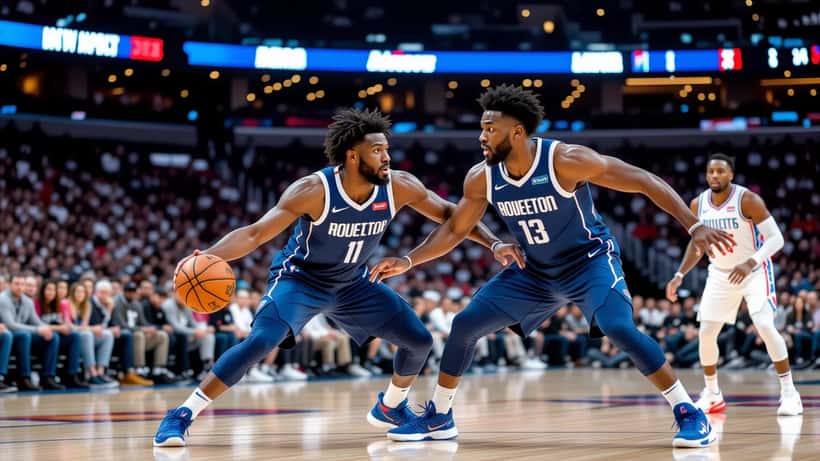
On May 2, 2026, Oklahoma City Thunder centre Chet Holmgren made a claim that stopped the basketball world: Cason Wallace, the 22-year-old guard guarding the world's best offensive players night after night, is "the best defender in the NBA." He can hound you for all 94 feet of the court, Holmgren added, and can "get steals, but he can also play solid and just force you to miss a shot."
The numbers back him up. Among NBA players who played 70 or more games in the 2025-26 regular season, Wallace ranked first in defensive rating, second in defensive win shares, third in steals per game (1.9), and sixth in defensive field goal percentage. In the 2026 playoffs, those steals climbed to 2.0 per game — while his first-round plus/minus reached a remarkable plus-36, even as he averaged only 5.5 points on offence.
For a player making his name entirely through awareness, anticipation, and mental discipline, Wallace's rise is a window into something most Canadians rarely think about: the science of elite mental performance.
What Being the Best Defender Actually Requires
Offensive basketball is relatively intuitive. Scoring is visible, measurable, celebrated. Defence is different. Great defence requires something harder to teach: the ability to track multiple moving threats simultaneously, anticipate what will happen before it happens, stay emotionally regulated under pressure, and recover instantly from mistakes.
Sports science research consistently shows that elite defenders exhibit significantly stronger working memory and attentional control than average players — the ability to selectively focus on what matters while filtering out crowd noise, trash talk, and the distraction of their own offensive role. Wallace, drafted 10th overall out of Kentucky in 2023, has managed to perform at an All-Defensive level in just his second full season, against opponents including LeBron James in the 2026 Western Conference Semifinals.
These are not purely physical skills. They are trained cognitive abilities — and they don't belong only to professional athletes.
Mental Performance Is Not Just for Athletes
The same cognitive toolbox that makes Cason Wallace an elite defender — attentional control, stress regulation, resilience after setbacks, the ability to "reset" between possessions — is directly applicable to high-stakes environments most Canadians encounter every day: high-pressure job interviews, exam periods, courtroom arguments, surgical suites, and demanding creative work.
Mental performance consulting has grown significantly in Canada over the past decade. Sport psychologists and mental performance consultants (MPCs) work not only with elite athletes but with lawyers before major trials, students in competitive academic programs, and executives managing teams through organizational change.
The distinction between a mental performance consultant and a therapist or psychologist is worth understanding. Mental performance work is largely skills-based and forward-looking: it builds mental tools like visualization, arousal regulation, attention control routines, and pre-performance rituals. It is not focused on diagnosing or treating mental illness. Many MPCs hold certifications through organizations such as the Canadian Sport Psychology Association, which maintains a registry of certified practitioners across the country.
Signs That a Mental Performance Consultation Could Help You
Wallace's story is compelling because he excels in the hardest mental moments — guarding NBA All-Stars with millions watching, on the road, in elimination games. Most of us don't face those exact stakes, but we face our own versions: presentations, high-stakes decisions, sustained focus under chronic stress.
Several signs suggest that working with a mental performance professional could be valuable:
Consistent choking under pressure. If your preparation is strong but your execution reliably falls apart in high-stakes moments, the issue is often attentional or arousal regulation — both trainable skills.
Difficulty switching off. Elite defenders like Wallace don't carry their mistakes between possessions. They reset. Chronic rumination after setbacks is one of the most common barriers to sustained high performance, in sports and in professional life.
Loss of motivation or enjoyment. Sometimes called "burnout" colloquially, this pattern often involves a breakdown in how goals are framed and maintained — a core area of mental performance work.
Recovery from injury or performance disruption. Coming back from a physical injury, a failed exam, or a professional setback carries significant psychological dimensions. Mental performance support can accelerate the return to full function.
The Canadian Mental Health Association notes that mental health and performance capacity are closely intertwined — sustained high performance is difficult to maintain without attending to psychological wellbeing alongside physical conditioning. Access to mental health and performance support has expanded significantly across Canadian provinces, with virtual consultations now widely available.
You can find mental health and performance professionals across Canada through the CMHA's online directory.
The Thunder's Defensive Dynasty and What Comes Next
Oklahoma City built a team around defensive identity — and Wallace is now its most recognizable symbol. At 22, he has already won an NBA championship (the Thunder's first, in 2025) and is heading into a Round 2 playoff matchup against the Los Angeles Lakers' LeBron James, widely considered the most difficult player in the league to defend due to his size, vision, and basketball IQ.
Wallace's composure facing that challenge is the product of years of deliberate mental conditioning — starting well before the NBA, according to those who coached him at Kentucky.
The NBA's best defender didn't get there by accident. He got there because someone taught him how to train his mind alongside his body — and because he learned to treat focus, awareness, and emotional regulation as skills, not personality traits.
That's something any high-performer in Canada can take from the Wallace story, whether you're preparing for a playoff game or a quarterly board presentation.
The players who get broken down mentally by high-pressure environments rarely talk about it. Those who perform consistently — like Wallace — have almost always invested in their mental game. For anyone experiencing performance disruption, a consultation with a mental performance expert or sports medicine professional is a reasonable next step.
This article provides general information on mental performance and wellbeing. It does not constitute medical or psychological advice. For personalized guidance, consult a registered health professional.
