 Clara Thompson
Bronny James is heading into his first NBA playoffs. The NBA confirmed in April 2026 that Bronny and his father LeBron James are set to become the first father-son duo in NBA history to share playoff minutes — a moment that would have seemed impossible three years ago, when Bronny suffered a cardiac arrest during a USC practice in July 2023. His recovery, his Draft selection, and now his unexpected late-season emergence as a meaningful contributor for the Los Angeles Lakers make for one of sport's most compelling stories. But behind the inspiring headlines is a quieter question: what does it cost, psychologically, to grow up in the shadow of the greatest basketball player of his generation?
The Historic Moment — and the Pressure Behind It
Bronny James, 20, was selected 55th overall in the 2024 NBA Draft. Many analysts questioned whether he was truly ready or whether his father's legacy had accelerated his path. The criticism followed him into his second year.
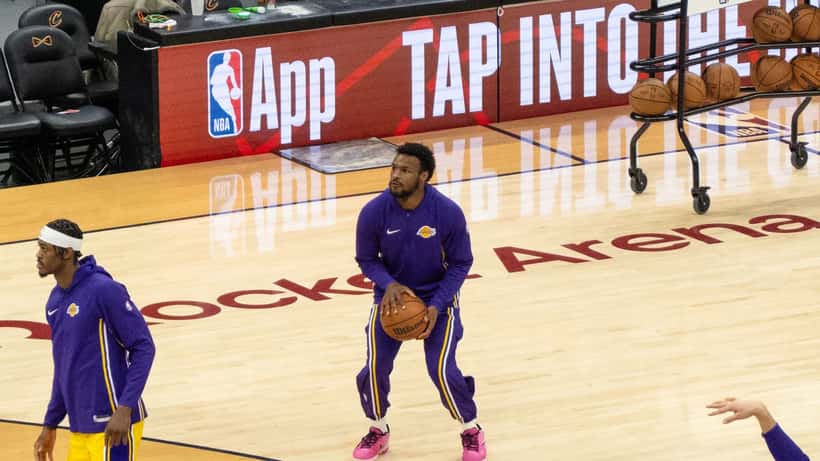
Then injuries changed everything. With Luka Doncic sidelined by a hamstring strain and Austin Reaves out with an oblique injury, the Lakers were forced to rely on Bronny for meaningful minutes against the Houston Rockets. His response: a late-season surge averaging 7+ points per game, shooting 42.9% from three-point range.
"We're gonna have to have all hands on deck," Lakers coach JJ Redick said in April 2026. "He'll have to be ready."
LeBron himself put it more plainly: "Me being on the floor with him — postseason, regular season, training camp, practices — is the best thing that's ever happened to me in my career."
It is a beautiful story. It is also, for sports medicine professionals and psychologists who work with young athletes, a useful lens through which to examine the hidden costs of athletic legacy.
The Cardiac Arrest Nobody Forgets
On July 24, 2023, Bronny James went into cardiac arrest during a workout at USC. He was 18 years old. He underwent emergency treatment, was discharged from hospital days later, and missed the rest of his college season while doctors identified and corrected a congenital heart defect.
He returned to play in February 2024. He was drafted in June 2024. He began his NBA career in October 2024.
In the world of elite sport, this is treated primarily as a medical recovery story — and it is. But for sports medicine professionals and mental health practitioners, the psychological aftermath of a cardiac event in a young athlete deserves equal attention. Research published in the British Journal of Sports Medicine has noted that young athletes who experience sudden cardiac events often face elevated anxiety around exertion, even after successful treatment, alongside identity disruption: sport has been their primary self-definition, and a life-threatening event challenges whether that identity is secure.
For Bronny, that psychological work happened almost entirely in private, during one of the most publicly scrutinized periods of his life.
What Second-Generation Athletes Actually Face
Bronny's situation is extreme in its visibility, but the psychological dynamics it illustrates are common across many levels of competitive sport — and relevant to Canadian families with young athletes.
Sports psychologists identify several characteristic pressures that children of elite athletes or high-achieving parents face:
Identity foreclosure. When a young person is identified as an athlete from early childhood — as Bronny was, almost from birth — they often reach adolescence without having explored alternative identities. The sport is not something they do; it becomes who they are. This makes any setback — injury, performance drop, criticism — feel existentially threatening rather than situationally difficult.
Comparison as a constant. For children of elite parents, every performance is measured against a standard that most athletes never approach. "Good for your age" gets replaced with "how does this compare to your father at the same age?" Coaches, media, and even well-intentioned fans perpetuate this. Over time, comparison becomes internalized — athletes begin to do it to themselves.
Public failure. Most athletes' developmental failures are private. A missed shot in a junior league game is forgotten by Tuesday. Bronny's missed shots are analysed on national television. The combination of high stakes and public visibility significantly raises the psychological cost of failure.
Parental pressure (even when positive). LeBron James has publicly stated that sharing the court with Bronny is the greatest achievement of his career. That is genuinely loving. It is also an enormous amount of meaning to carry. When a parent's proudest moment is contingent on your performance, the emotional stakes of every game become much larger.
Signs That a Young Athlete May Need Support
For parents, coaches, and teachers watching a young person navigate competitive sport, a few signs suggest that the psychological load has become too heavy:
- Disproportionate emotional responses to normal sporting outcomes: crying, rage, or shutdown after losses that are routine parts of development
- Sleep disruption or anxiety before competitions, not just normal nerves but persistent dread
- Avoidance of practice or training that was previously enjoyed
- Statements connecting self-worth to performance: "I'm nothing if I can't play," "You must be disappointed in me," or extreme self-criticism after mistakes
- Resistance to talking about sport with parents or coaches
None of these signs is definitive on its own. But patterns across multiple indicators, or any single sign that is persistent and severe, warrant a conversation with a sports medicine specialist or registered psychologist.
What Professional Support Looks Like for Young Athletes
The field of sport psychology has grown significantly in Canada over the past decade. Most university athletic programs and many provincial sport organizations now offer access to registered sport psychologists. For young athletes outside elite pipelines, a general practitioner is often the right starting point — they can assess physical contributors to anxiety or performance issues and provide referrals to mental health specialists with sport expertise.
Key approaches that have strong evidence for young athletes include:
Acceptance and Commitment Therapy (ACT) — which helps athletes develop a more flexible relationship with performance outcomes and identity, reducing the catastrophic quality that failures can take on.
Performance mindfulness — structured attention training that helps athletes stay present during competition rather than ruminating on outcomes.
Family systems work — where the dynamic between a young athlete and their parents is explicitly addressed, not just the individual's psychology.
According to Sport Canada's Long-Term Athlete Development framework, psychological skill development should be integrated throughout an athlete's career from early stages — not added as a crisis intervention when things break down.
If you are a parent of a young athlete, or a young person carrying the weight of competitive expectations, ExpertZoom connects Canadians with certified health professionals who can provide an initial consultation on sports psychology and performance anxiety.
Bronny James will play in the NBA playoffs this spring. Whether his team wins or loses, his story is already about more than basketball — it's about what we ask of young people born to carry extraordinary weight, and whether we give them the tools to carry it with their sense of self intact.
This article is for informational purposes only and does not constitute medical or psychological advice. If you are concerned about a young athlete's mental health, please consult a qualified health professional.
