 Eleanor Dubois
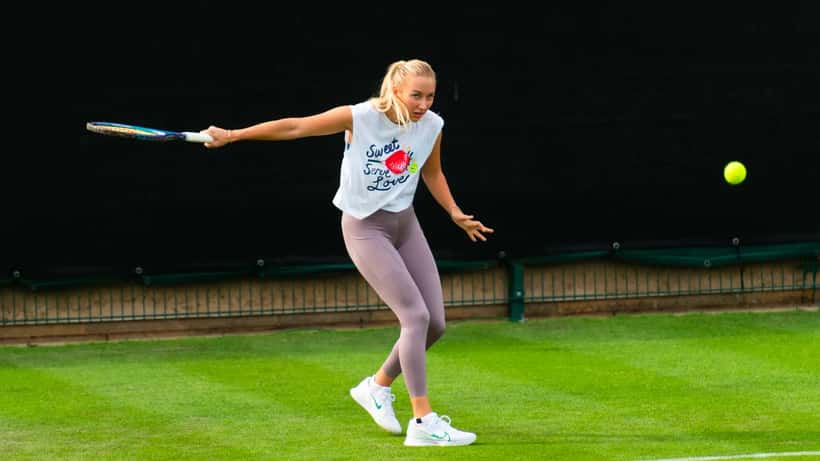
On April 27, 2026, Anastasia Potapova stepped onto the clay courts of the Mutua Madrid Open to face Elena Rybakina in the Round of 16 — competing not under the Russian flag, but under the Austrian one. In December 2025, Potapova became the ninth Russian professional tennis player to switch sporting nationality since Russia's February 2022 invasion of Ukraine, and the process put international sports law into the spotlight again.
Who Is Anastasia Potapova — and Why Did She Switch?
Potapova, 24, is a former WTA top-20 player who had been competing internationally under a neutral banner — like most Russian and Belarusian players — since the ATP and WTA suspended national representation for athletes from those countries following the Ukraine invasion. On December 4, 2025, she announced her switch to Austria via social media, where she immediately became Austria's highest-ranked WTA player.
Her announcement drew attention for a second reason: she was accused by fans and journalists of copying the wording of Daria Kasatkina's earlier announcement, when the latter switched to represent Australia. Potapova dismissed the controversy: "Nobody cares — they just blew it up because they didn't like me." Whether or not the plagiarism story has merit, the broader process she went through is governed by strict international rules that many athletes and families misunderstand.
Her early 2026 season has validated the move: Potapova reached the final of the Porsche Tennis Grand Prix in Linz in April 2026 — the first player representing Austria to reach that final since 1991 — before losing to Mirra Andreeva.
What the ITF's Nationality Change Rules Actually Say
The International Tennis Federation's Rules and Regulations establish a three-year moratorium before an athlete can represent a new country after having previously represented another. This moratorium begins from the last time the player formally competed under their previous national flag.
The three key criteria the ITF evaluates for a nationality change are:
- Citizenship or passport: The athlete must hold legal citizenship (or permanent residency with a valid path to citizenship) in the new country.
- Primary residence: The athlete must demonstrate that their primary home is in the new country, typically supported by tax records, lease agreements, or other official documentation.
- Non-representation period: The athlete must not have represented their original country in an ITF-sanctioned event for at least three years before the switch is approved.
Russian and Belarusian players who have been barred from representing their home countries since 2022 benefit from a specific provision: the non-representation clock started running in February 2022, meaning many are now eligible to formally complete the switch after their three-year window expires in 2025 or 2026.
Sporting Nationality vs. Legal Citizenship: What's the Difference?
This is the most misunderstood distinction in sports eligibility law. Sporting nationality and legal citizenship are not the same thing.
An athlete can hold legal citizenship in one country and compete for another, subject to the governing body's nationality rules. Conversely, holding a passport does not automatically entitle someone to represent that country in professional sport — the sport's specific federation must approve the switch.
The ITF process, for example, requires a formal application reviewed at the federation level, including documentary evidence of residency and a declaration that the athlete understands the moratorium obligations. Approval is not automatic, and incomplete applications are rejected without a right of appeal in the first round.
For team sports like Olympic competition, the rules differ: the International Olympic Committee (IOC) has its own eligibility framework separate from individual sport federations, and athletes competing at the Olympics must meet both their sport's federation criteria and the IOC's residency thresholds.
Canadian Athletes and the Dual-Sport Eligibility Landscape
Canada is a particularly complex environment for sporting nationality questions, for two reasons.
First, Canada has one of the highest proportions of dual citizens among Olympic-level athletes of any country. Athletes born abroad who immigrate to Canada and obtain citizenship are eligible to represent Canada internationally — but only if they satisfy the relevant federation's residency and prior representation requirements.
Second, many Canadian amateur athletes are unaware that informal participation in a sport under a foreign national team — at regional competitions, youth tournaments, or even exhibition events — can trigger the three-year moratorium if the governing body later classifies it as official international competition.
This matters most in individual sports (tennis, athletics, swimming, fencing) where national team selection is less visible than in football or hockey, and where a junior's participation in a foreign club competition can inadvertently affect future eligibility. For example, a 16-year-old who competes for a European national youth squad, then immigrates to Canada at 18, may face a waiting period before they can represent Canada at the senior international level — even after obtaining Canadian citizenship.
When Should You Consult a Sports Lawyer?
Athletes, coaches, and families in the following situations should seek legal advice before making any formal application or competing internationally:
- Dual citizenship and prior international competition: If you or your child holds citizenship in two countries and has competed at any level under a foreign national banner, a sports lawyer can assess whether the moratorium applies and what documentation is needed.
- Immigration pathway and sport eligibility timeline: If you are planning to immigrate to Canada partly to compete for Canada internationally, the order of steps — immigration, citizenship, federation application — matters. Getting it wrong delays eligibility by years.
- Dispute with a national federation: Federation eligibility decisions can be appealed through the Court of Arbitration for Sport (CAS). Appeals require legal representation and must follow strict procedural timelines.
- Youth athlete contracts and agent agreements: In individual sports where young players sign management contracts early, understanding how those contracts interact with nationality change clauses is essential.
Potapova's switch to Austria took years of preparation and documentation well before her December 2025 announcement. For Canadian athletes navigating a similar transition — or for families planning ahead — an experienced sports law practitioner or immigration lawyer can map out the timeline and prevent costly eligibility mistakes.
Note: This article provides general legal information about international sporting nationality rules. It is not legal advice. Consult a licensed lawyer for guidance specific to your situation.
