 Willow Bergeron
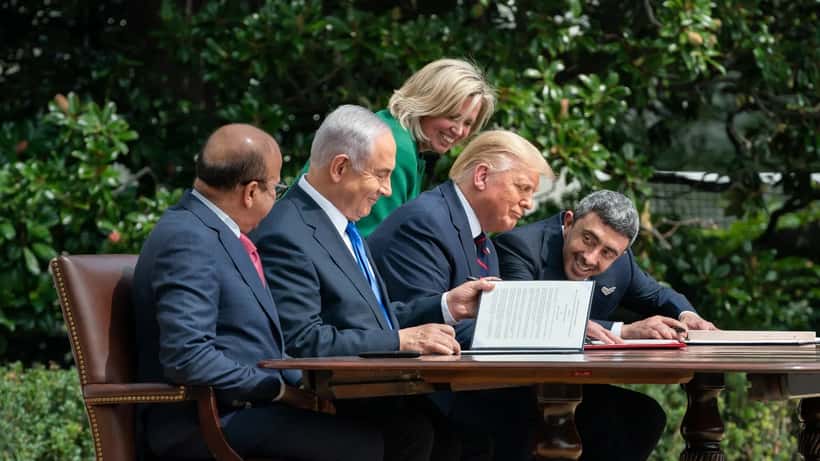
The Abraham Accords, the landmark normalization agreements between Israel and several Arab states first signed in 2020, are generating renewed attention in 2026 as discussions continue around expanding the framework to include Saudi Arabia and other regional players. For Canadian businesses and investors with Middle East ties, the evolving legal and commercial landscape raises important questions that require professional guidance.
What the Abraham Accords Have Changed
Since 2020, the Abraham Accords have normalized diplomatic and commercial relations between Israel and the United Arab Emirates, Bahrain, Morocco, and Sudan. The agreements opened direct flights, enabled banking connections, and established frameworks for bilateral trade and investment that did not previously exist.
By 2026, the practical impact on trade corridors has been significant. UAE-Israel bilateral trade reached several billion dollars within the first years of normalization, and Dubai has emerged as a hub where Israeli technology meets Gulf capital. For Canadian companies with operations or partnerships in any of these markets, the legal environment governing contracts, intellectual property, and dispute resolution has shifted considerably.
The ongoing diplomatic discussions around further expansion — including Saudi Arabia, which has significant implications for regional stability and oil markets — mean this legal and commercial evolution is not yet complete. For a closer look at how U.S.-Gulf trade deals are reshaping commercial law exposure for Canadian businesses, see Trump's Saudi Arabia Trade Deal: What the $142 Billion Agreement Means for Canadian Businesses.
Why Canadian Businesses Need Legal Guidance Now
Canadian companies active in the Middle East and North Africa region face a layered set of legal considerations that have evolved since the Abraham Accords took effect.
Contract enforceability across newly normalized jurisdictions. A Canadian technology firm licensing software to a UAE partner that also works with Israeli entities now operates in a web of overlapping legal frameworks. Understanding which country's law governs a contract, how disputes are resolved, and whether clauses that were legally neutral before 2020 carry new implications is essential.
Sanctions compliance. Canada maintains its own sanctions regimes through the Special Economic Measures Act and the Justice for Victims of Corrupt Foreign Officials Act. Even as certain bilateral relationships between Middle Eastern states have normalized, Canadian businesses must ensure their dealings comply with Canadian, American, and European Union sanctions where they apply. The interaction between Canada's sanctions rules and the newly opened business corridors in the region is complex and case-specific.
Intellectual property protections. Israel has a mature IP legal framework broadly compatible with Western standards. Other jurisdictions that normalized through the Abraham Accords offer varying degrees of IP protection. Canadian companies commercializing technology or creative works in these markets need jurisdiction-specific advice.
Arbitration clauses. With multiple legal systems now interacting in ways they previously did not, selecting the right arbitration seat and governing law in commercial contracts has become more consequential. International arbitration centres in Dubai, London, and Paris regularly handle disputes involving parties from these newly linked economies.
The Law Society of Ontario and equivalents across Canada regularly emphasize that international commercial transactions — even seemingly routine ones — benefit significantly from specialized legal review before signing.
The Investment Angle for Canadian Individuals
Beyond corporate legal matters, individual Canadians with investment portfolios that touch the Middle East are also navigating a changed environment.
Gulf sovereign wealth funds and private equity have expanded investment activity into North America since the Abraham Accords, and reciprocal investment flows mean Canadian high-net-worth individuals may encounter investment opportunities in UAE, Bahrain, or Israeli markets with increasing frequency. Understanding the tax treaty landscape (Canada has tax conventions with Israel; arrangements with Gulf states are more limited), the regulatory requirements for foreign investment, and the disclosure obligations under Canada's Offshore Tax Informant Program is critical.
The Canada Revenue Agency treats offshore investment income and assets with scrutiny, and the Foreign Income Verification Statement (Form T1135) requires reporting of specified foreign property exceeding $100,000 CAD. A wealth management or tax specialist can help ensure compliance while optimizing legitimate structures.
Dispute Resolution: A Growing Concern
One underappreciated consequence of the Abraham Accords' commercial opening is a corresponding growth in cross-border disputes. The more trade that flows between newly connected economies, the more inevitable it becomes that some transactions go wrong.
International commercial arbitration typically offers confidentiality, neutral decision-makers, and enforceability across borders under the New York Convention. Canada is a signatory, as are Israel, the UAE, and Bahrain. This means arbitral awards can generally be enforced across these jurisdictions — but only if the original contract contained a well-drafted arbitration clause specifying the seat, rules, and governing law.
Canadian lawyers with international commercial expertise note that many small and mid-size enterprises enter cross-border agreements with boilerplate contracts poorly suited to multi-jurisdictional enforcement. Reviewing commercial agreements before signing, rather than after a dispute arises, is a fraction of the cost of international arbitration.
Getting Expert Legal Advice
The Abraham Accords represent a genuine geopolitical and commercial shift that continues to evolve. For Canadian businesses and investors with exposure to the Middle East, the practical implications — in contract law, sanctions compliance, intellectual property, and dispute resolution — are real and complex.
Consulting a lawyer with international trade or commercial expertise is not a luxury reserved for large corporations. Many of the legal risks associated with Middle Eastern business — particularly around contract drafting, sanctions screening, and arbitration clauses — are manageable with early, targeted professional advice.
According to Global Affairs Canada's trade information portal, Canadian exporters and investors in the Middle East can access trade commissioner services and country-specific legal and commercial intelligence. These resources are a useful starting point, but they are no substitute for qualified legal counsel on specific transactions.
Expert Zoom connects Canadians with vetted legal professionals specializing in international commercial law, contract review, and cross-border dispute resolution. Whether your business is exploring a first partnership in the UAE or reviewing an existing licensing arrangement with Middle Eastern counterparts, early legal consultation protects your interests.
This article is for informational purposes only and does not constitute legal advice. Consult a qualified lawyer for guidance on your specific situation.
