 Andrew Thompson
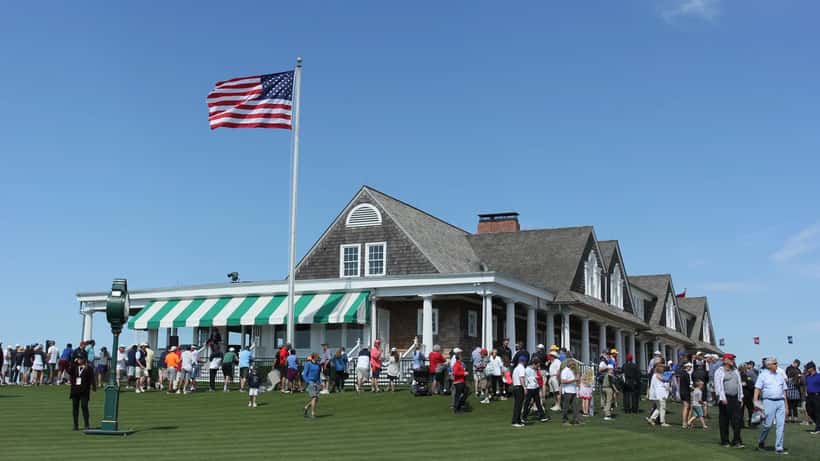
When Wyndham Clark walks onto the 18th green at Shinnecock Hills on 21 June 2026, he will be playing for AU$7 million — equivalent to the record US$4.5 million first-place prize on offer at the 126th US Open Championship. Behind him, 13 players who defected to LIV Golf are battling for their share of a US$22.5 million total purse, despite months of legal and commercial disputes over their right to compete at all. The money has never been bigger. Neither have the legal stakes for professional golfers everywhere.
A Record Purse and the Contracts Behind It
The 2026 US Open at Shinnecock Hills, New York, is the richest major in history. The US$22.5 million purse eclipses previous records, and even the 69 players who missed the cut each receive US$10,000 for the week. For the winner, nearly half a million dollars per competitive round is the reward for four days of elite performance under extreme pressure.
But what most viewers watching on television do not see is the commercial and legal architecture behind every dollar distributed. Between a professional golfer and their prize money stand agents, sponsors, tour agreements, national federation rules, and in many cases, the conflicting demands of rival tours with incompatible obligations.
Australia's own Cameron Smith navigated the career and commercial complexities of moving between tours in 2025 and 2026, illustrating how a single career decision can trigger a cascade of legal and contractual questions that no athlete should face without professional guidance.
5 Legal Questions the 2026 US Open Raises for Every Professional Athlete
1. Can a sporting body legally restrict where you compete?
The LIV Golf eligibility dispute — still playing out as 13 LIV players tee up at Shinnecock — is fundamentally a restraint of trade question. When the PGA Tour initially suspended players who signed with LIV, those players argued that restricting their ability to earn a living elsewhere was an unlawful restraint of trade.
Under Australian contract law, restraint clauses are only enforceable to the extent they are reasonably necessary to protect a legitimate business interest. For any professional athlete — or indeed any employee with a non-compete clause in their contract — understanding the enforceability of those restrictions before signing is critical. A lawyer can assess whether the clause is likely to be upheld or successfully challenged.
2. Who actually gets the prize money?
Most professional golfers work with agents under commission agreements that typically take 4% to 10% of on-course earnings. When US$4.5 million is on the table, the exact definition of "earnings" in that agreement becomes extremely important.
Are appearance fees included in the commission calculation? What about performance bonuses triggered by a major win? What happens if multiple agents have overlapping representation agreements? Disputes between athletes and their managers over prize money entitlements are more common than the public realises, and they are far easier to resolve when the original agreement is clearly drafted by a lawyer.
3. What happens to sponsorship obligations when tours conflict?
Professional golfers typically sign exclusivity clauses with equipment manufacturers, apparel brands, and other commercial partners. These contracts require players to use or wear a sponsor's products at tournaments. But when a player holds contracts with sponsors who align with different tours — as many did during the LIV-PGA conflict — those obligations can create direct commercial clashes.
The financial and contractual pressures facing players who moved between LIV Golf and the PGA Tour demonstrate how quickly sponsorship obligations can become contested legal territory without clearly drafted exclusivity and conflict-of-interest provisions.
4. How is overseas prize money taxed in Australia?
Australian tax residents are taxed on worldwide income, which includes prize money earned in the United States. A player winning US$4.5 million at the US Open would face significant tax obligations both in the US — where withholding tax applies to tournament winnings — and in Australia, where the income must be declared.
The Australia-US Double Taxation Agreement provides a credit for tax already paid in the US, but the calculation becomes complex when prize money is received through a company or trust structure rather than directly by the individual. Professional advice from a sports lawyer and a tax specialist is recommended well before any significant prize is collected.
5. What are your rights if you withdraw through injury?
Several elite players arrived at Shinnecock Hills in 2026 managing injuries — including Brooks Koepka competing with a hand problem — and tournament contracts frequently include performance obligations and appearance guarantees that are triggered or broken by a withdrawal.
When injury forces a player to pull out of a tournament, the legal question is whether that withdrawal constitutes a breach of any commercial or tour obligation, and whether force majeure or medical certification provisions apply. Understanding these protections before signing any performance contract is significantly easier than disputing them after a lost week of earnings.
When Should You Consult a Sports Lawyer?
Sports law is a specialised field that overlaps contract law, employment law, tax law, and competition regulation. While the dollar figures at the 2026 US Open are extraordinary, the legal principles governing professional athlete contracts apply at every level of commercial sport — from elite tours to semi-professional competitions, coaching appointments, and sponsorship arrangements.
According to Sport Integrity Australia, athletes are encouraged to seek independent legal advice before entering any binding arrangement with a tour, sponsor, or management agency. The complexity of modern sports contracts makes that advice not just useful but often essential.
Whether you are a professional golfer evaluating a lucrative offer, a sports manager structuring agent agreements, or a semi-professional athlete negotiating a club contract, a qualified Australian lawyer can help you understand your rights and obligations before you sign.
Legal disclaimer: This article provides general information only and does not constitute legal advice. Laws and regulations vary by jurisdiction and individual circumstance. Consult a qualified legal professional for advice specific to your situation.
