 Dave Campbell
Tropical Cyclone Maila, currently a Category 3 system in the Solomon Sea, is tracking toward Far North Queensland and could make landfall early next week — less than three weeks after Cyclone Narelle caused widespread damage across more than 47,000 square kilometres of Cook Shire. For homeowners in the region, the question is urgent: is your property structurally sound enough to survive another direct hit?
Two Cyclones in Three Weeks: What Maila Means for FNQ
According to the Queensland Government's GetReady Queensland service, Cyclone Maila was declared a Category 3 system on Saturday 4 April 2026, with winds gusting close to 300 km/h at its core. The storm is forecast to cross the coast as a Category 2 system, potentially tracking from Cape York Peninsula as far south as the Cairns area.
Even a Category 2 landfall brings sustained winds of 88 to 117 km/h, with gusts significantly stronger. Combined with intense rainfall, flash flooding and storm surge, these conditions are more than enough to cause serious structural damage to homes — particularly those already weakened by Narelle's passage.
GetReady Queensland has issued preparation guidance urging residents to "stay alert" and take protective action before the system approaches. Communities still dealing with lingering flood damage, damaged rooflines and disrupted infrastructure from Narelle are especially vulnerable to compounding damage.
Why Prior Damage Makes the Next Cyclone More Dangerous
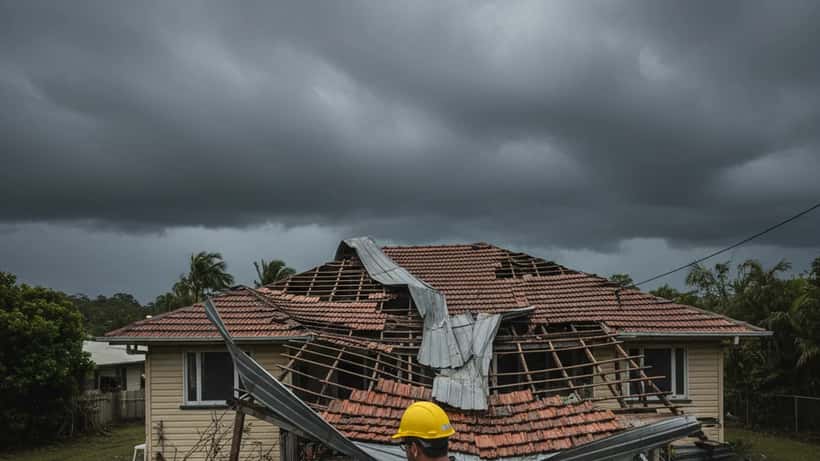
Structural engineers and building inspectors consistently warn that homes compromised by an earlier weather event are at significantly higher risk during subsequent storms. Water infiltration following Narelle may have weakened roof framing, wall cavities and sub-floor structures in ways that are not visible from the outside.
Key signs that your home may have sustained hidden damage after Narelle include:
- Roof movement or creaking during moderate winds, suggesting fasteners or battens have shifted
- New damp patches on ceilings or inside walls, indicating water ingress through the roof or cladding
- Sticking doors or windows, which can signal frame distortion from structural movement
- Visible rust stains around fasteners on metal roofing, indicating moisture penetration
- Cracks along wall-ceiling joins that weren't present before the previous event
A qualified building inspector can assess these risks systematically, using moisture meters and structural inspection protocols that go far beyond a visual check. In cyclone-prone areas, this is not a precautionary nicety — it is the difference between a home that holds and one that fails catastrophically under load.
What a Building Inspector Checks Before a Cyclone
In the lead-up to a cyclone event, a licensed building inspector focuses on the elements most likely to fail under high wind and flood conditions:
Roof-to-wall connections: The most common point of failure in cyclone events is the roof lifting from the wall frame. Inspectors check that roof straps, cyclone ties and fasteners are intact, correctly installed and not corroded.
Roof cladding and sarking: Metal roofing screws and flashings deteriorate over time. An inspector will identify loose sheets, missing screws and compromised flashings that could peel away under sustained wind pressure.
Gutters and downpipes: Blocked or damaged gutters cause water to overflow into wall cavities, exponentially accelerating structural damage. During heavy rainfall, an overwhelmed drainage system can flood a sub-floor area within minutes.
External cladding and windows: Cyclone-rated windows and cladding have specific structural tolerances. An inspector can assess whether these meet current Australian standards and whether any prior damage has reduced their rating.
Sub-floor and foundation integrity: Particularly relevant for raised timber homes, which are common in Far North Queensland. Flooding from Narelle may have eroded soil around stumps or caused timber decay to accelerate.
Can You Prepare Your Home in Time?
With Maila potentially making landfall early next week, homeowners in the warning zone have a narrow window to act. The Queensland Government recommends all residents complete the "Get Ready" checklist, which includes securing loose items, identifying your local evacuation route and preparing an emergency kit.
Beyond these personal safety measures, a rapid structural inspection — even a focused one covering roof fasteners and gutters — can identify the most critical vulnerabilities and allow time for urgent repairs. Not every tradesperson is qualified to assess cyclone readiness, so look for licensed builders or inspectors with experience in cyclone-prone construction.
If Maila's track brings it close to your area, heed all official evacuation orders. No property inspection or repair can guarantee safety in a direct Category 3 or above hit. But addressing known structural weaknesses gives your home the best possible chance of surviving a glancing blow or near-miss.
After the Storm: Don't Skip the Post-Event Inspection
Whether or not Maila causes direct damage to your property, a post-event structural inspection is strongly recommended after any cyclone passes nearby. Hidden damage from wind loading — particularly to roof framing and connections — often does not manifest visibly for weeks or months, until the next rain event or seasonal movement causes it to fail.
An experienced building inspector on Expert Zoom can assess your property for storm-related structural damage, help you prepare documentation for an insurance claim and advise on priority repairs before the next wet season begins.
