 Chloe Wilson
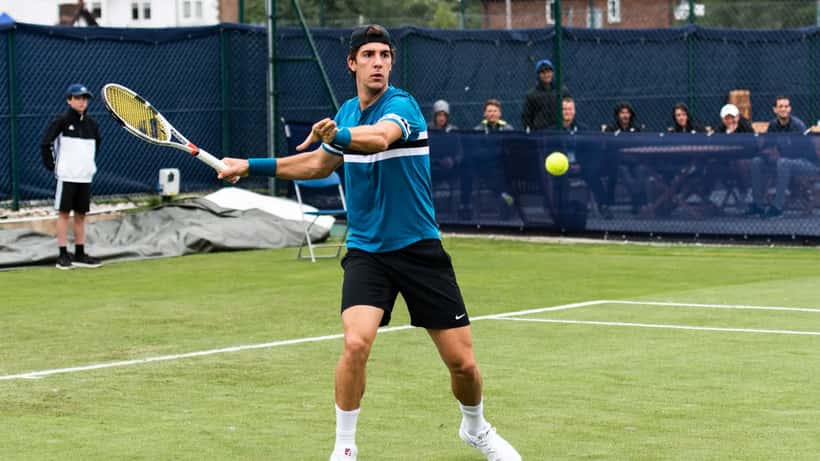
Thanasi Kokkinakis stepped onto the clay at Roland Garros on 25 May 2026 carrying more than a racket. Armed with a protected ranking of 84 — and a reconstructed shoulder containing an Achilles tendon borrowed from a deceased donor — the 30-year-old Australian is competing at his sixth French Open, making this one of sport's most unlikely comebacks of the decade.
A Surgery Unlike Any Other
In February 2025, Kokkinakis underwent a procedure so extraordinary it stopped surgeons short: roughly half of his pectoral muscle was surgically removed, along with five years' worth of accumulated scar tissue. In its place, a surgeon reconnected his shoulder using an Achilles tendon allograft — tissue harvested from a deceased donor.
"I didn't care if I never played again," Kokkinakis told ATP Tour in January 2026. "I wasn't doing that cycle anymore."
For most people, the idea of a donor tendon used in shoulder reconstruction sounds like science fiction. But orthopaedic surgeons familiar with this technique note it is employed in cases where the patient's own tissue is too compromised for standard repair. Chronic overuse injuries that repeatedly fail conventional treatment — physiotherapy, cortisone injections, and extended rest — may eventually require surgical reconstruction well beyond standard rotator cuff repair.
The lesson here extends far beyond elite sport. Kokkinakis's case is an extreme example of what can happen when injuries are managed rather than definitively treated — year after year, cycle after cycle.
Five Years of a Pattern Too Many Australians Recognise
Kokkinakis first had shoulder surgery in 2015, at the age of 19, before his career had properly begun. Over the following decade, the injury cycle continued: partial recoveries, tournament withdrawals, re-injuries. In the 2026 Australian summer alone, he withdrew from the Adelaide International before his second-round match — having secured an emotional three-setter over Sebastian Korda on 13 January 2026 — then pulled out of the Australian Open singles draw entirely, playing only doubles alongside Nick Kyrgios.
By the time of the February 2025 surgery, he had played fewer than five singles matches across the entire 2025 season.
This pattern — injury, partial recovery, re-injury — is far from unique to professional athletes. Shoulder pain is one of the most common musculoskeletal complaints in Australia, affecting roughly one in five adults at any given time, according to Healthdirect Australia. Yet the gap between first experiencing chronic shoulder pain and consulting a specialist remains stubbornly wide. The tendency to self-manage, push through, or rely solely on general practitioners can lead to the kind of cumulative structural damage that ultimately requires far more invasive intervention.
What "Chronic" Actually Means for Shoulder Injuries
The shoulder is one of the most complex joints in the human body. Unlike the knee or ankle, it depends almost entirely on soft tissue — tendons, ligaments, and the rotator cuff — for its stability. This makes it simultaneously powerful and vulnerable.
Sports medicine specialists distinguish between acute injuries (a sudden fall or direct impact) and chronic overuse injuries (the kind Kokkinakis sustained through years of powerful serves and groundstrokes). The critical difference is this: acute injuries are often obvious and immediately disabling. Chronic injuries are insidious — they worsen gradually, allow patients to "manage" them for months or years, and become significantly harder to treat the longer they are left unaddressed.
Signs that warrant specialist consultation rather than continued self-management include:
- Pain that persists beyond six weeks despite rest and physiotherapy
- Loss of range of motion that affects daily activities
- Pain that wakes you at night
- A previous shoulder injury that re-presents differently after a new incident
A sports medicine physician or orthopaedic specialist can assess whether imaging (MRI or ultrasound) is warranted, determine the most appropriate intervention, and identify whether an injury pattern suggests the kind of scar tissue accumulation that ultimately required such dramatic intervention in Kokkinakis's case. The earlier the consultation, the wider the treatment options available.
For Australians who have been managing a shoulder issue themselves, the story of Kokkinakis is worth considering alongside recent cases like Ben Shelton's shoulder injury prevention approach — different injury profiles can call for very different specialist strategies.
The Protected Ranking: A Window That Closes
In professional tennis, a "protected ranking" allows an injured player to re-enter tournaments at their former ranking for a limited number of events. It is a finite second chance — a window that closes regardless of whether the body is ready.
Kokkinakis entered Roland Garros 2026 using his protected ranking of 84, derived from a peak of 65. His current live ranking sits around 883 — not a reflection of talent, but of five years of enforced absences. He qualified for the Zagreb Open main draw in May 2026, winning back-to-back matches on 12 May for his first consecutive wins in months. Those results confirmed the surgery had at least restored competitive function.
This metaphor extends beyond tennis. For shoulder injury patients, the body's "protected window" is its remaining structural integrity. The longer decisive treatment is delayed, the fewer surgical options remain — and the more invasive those options become. Kokkinakis is a case study in both the risks of endurance beyond the point of wisdom, and the extraordinary possibilities of modern reconstructive surgery when conservative options are truly exhausted.
When to See a Specialist: The Practical Takeaway
Kokkinakis faced Frenchman Terence Atmane in the Roland Garros first round on 25 May 2026 — his sixth appearance at the tournament and, as commentary noted, a "make-or-break year" for his career. Whatever the result, his presence on a Grand Slam court is a testament to the quality of modern sports medicine.
For Australian health consumers, the key message is straightforward: the Kokkinakis story is not fundamentally about tennis. It is about what becomes possible when the right specialist is finally involved — and how much more limited those options become if consultation is delayed.
A sports medicine specialist or orthopaedic surgeon can provide diagnosis, imaging referrals, surgical opinion, and a structured rehabilitation plan. They can assess whether your injury pattern responds to conservative care or points toward something more serious.
If your shoulder has been "not quite right" for months — or years — Kokkinakis's journey is a reminder: the worst outcome is not specialist intervention. The worst outcome is years of managed decline, followed by more invasive intervention anyway.
This article provides general health information only. It does not constitute medical advice. If you are experiencing shoulder pain or injury, consult a qualified health professional.
