 Emily Turner
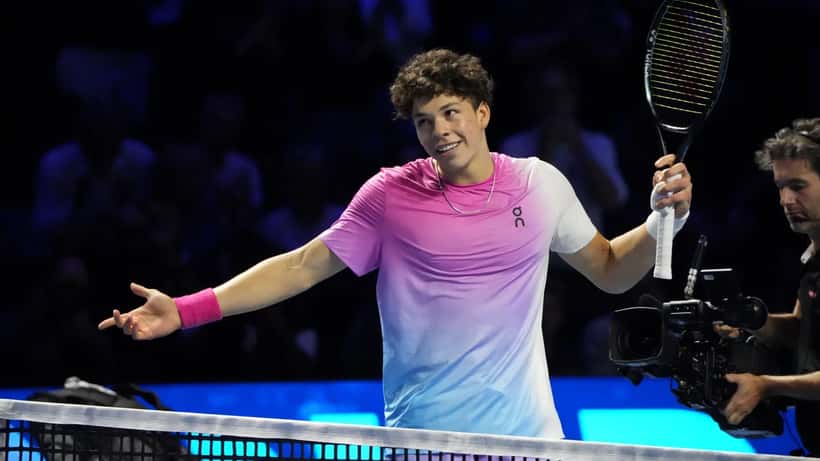
Ben Shelton reached the final of the BMW Open in Munich on 19 April 2026, defeating Slovak qualifier Alex Molcan 6–3, 6–4 — and in doing so became the first American to reach back-to-back European clay-court finals since Jim Courier competed at Roland-Garros in the early 1990s. But behind every thunderous serve lies a warning Australian recreational tennis players need to hear.
A Dominant Run to the Munich Final
The world number 6 Shelton has been in formidable form during the 2026 clay-court swing. He opened his campaign at the Fayez Sarofim & Co. U.S. Men's Clay Court Championship in Houston on 2 April, defeating China's Zhang Zhizhen 7–6(5), 7–6(3) with a staggering 21 aces. His combination of explosive serving power and heavy topspin groundstrokes has unsettled opponents at every stage.
In Munich, Shelton dispatched Molcan in 65 minutes, producing clean, confident tennis after a slightly tentative first set. "I went for a lot of B serves early," Shelton noted after the match, "but got better as the match went on." His final opponent is Italian fourth seed Flavio Cobolli, against whom Shelton leads 3–2 in career head-to-heads, winning all three encounters in 2025.
For Australian tennis fans, Shelton's story is compelling: a powerful all-court player dominating on Europe's red clay, a surface that typically rewards patience and movement over raw power. But his serve — clocked regularly above 220 km/h — is also a clinician's case study in what happens when the shoulder and elbow absorb explosive loads repeatedly.
The Serving Machine: What 21 Aces Costs the Body
Shelton's serve relies on a complex chain of movement: the shoulder rotators accelerate the racquet, the elbow extends under enormous torque, and the wrist snaps through the contact zone. At elite level, this motion is refined over years. At amateur level, it can cause significant harm.
Australian sports medicine specialists regularly treat three injury patterns linked to high-volume serving:
Tennis elbow (lateral epicondylalgia) Despite the name, tennis elbow does not only affect the elbow. The lateral epicondyle — the bony prominence on the outer elbow — is the attachment point for the wrist extensors. Repetitive, forceful wrist snap during serve and forehand can inflame this area, producing a nagging, persistent pain that worsens with grip activities. The Australian Institute of Sport estimates that lateral elbow pain accounts for up to 40% of recreational tennis injuries.
Shoulder impingement and rotator cuff tears The rotator cuff is a group of four muscles that stabilise and rotate the shoulder joint. Repeated overhead serving loads the supraspinatus and infraspinatus tendons against the acromion (the roof of the shoulder), producing impingement syndrome in the short term and partial or full-thickness tears with sustained overuse. Symptoms include pain on lifting the arm above shoulder height, weakness, and night pain. Without treatment, minor tears can progress.
Stress fractures of the ulna Less discussed but clinically significant: the repetitive torque of serving can produce stress fractures along the shaft of the ulna bone in the forearm. These injuries are most common in adolescents with growing bones, but are seen in adults who increase serving volume too quickly. They present as forearm pain that builds gradually rather than appearing suddenly.
Why Amateur Players Are at Greater Risk Than Shelton
Paradoxically, the amateur tennis player faces higher injury risk from serving than an elite professional like Shelton. Here's why:
Technique matters more than power. Shelton's serve has been engineered over years under expert coaching. His biomechanics distribute load efficiently. A club player who has never had a serve lesson may compensate with shoulder substitution patterns that load the rotator cuff abnormally.
Recovery is proportionally worse. Shelton has physios, ice baths, compression gear, and daily load monitoring. The weekend tennis player recovers with a hot shower and a coffee. Muscle fatigue increases injury risk significantly in undertreated athletes.
Volume spikes are dangerous. If you've been playing once a week and suddenly compete in a two-day tournament with multiple matches, your serving volume may increase fivefold. Tendons and bones adapt slowly to load increases — the classic "10% rule" (increase training load by no more than 10% per week) exists because soft tissue repair is slower than fitness gains.
According to Sports Medicine Australia, recreational sports injuries cost the Australian healthcare system over $2 billion annually, with a significant portion attributable to preventable overuse conditions — precisely the kind that accumulate from serving errors.
When to See a Doctor About Your Tennis Arm
Australians with the following symptoms should consult a GP or sports medicine doctor rather than waiting:
- Pain on the outer elbow that persists more than two weeks despite rest
- Shoulder pain when raising your arm above 90 degrees
- Weakness in grip, particularly noticeable when opening jars or lifting objects
- Night pain in the shoulder interrupting sleep
- Any forearm pain that doesn't resolve within a week of rest
Early intervention changes outcomes dramatically. Lateral epicondylalgia treated early responds well to physiotherapy, load modification, and in some cases, corticosteroid or platelet-rich plasma injections. Rotator cuff tears caught before they progress to full thickness can often be managed conservatively. Delayed diagnosis frequently means longer recovery, higher costs, and — in the worst cases — surgical intervention.
The Courier Comparison and What It Means for Serious Amateurs
Shelton's achievement in reaching back-to-back European clay finals mirrors Jim Courier's sustained excellence in the early 1990s. Courier was famous for conditioning and work ethic. Shelton's explosive athleticism represents a different model — serve-dominant, physically imposing, tactically smart on clay.
For Australian tennis players inspired by watching Shelton power through Munich, the lesson is clear: exceptional serving ability is built on exceptional preparation. Every 200 km/h serve starts with a healthy shoulder.
If your game has been hampered by elbow or shoulder pain, a sports medicine physician can assess load tolerance and return-to-play timelines accurately. Expert Zoom connects you with qualified sports doctors and physiotherapists across Australia who understand how to keep you on court.
This article is for general informational purposes and does not replace professional medical advice. Consult a qualified health professional for diagnosis and treatment of any injury.
