 Olivia Miller
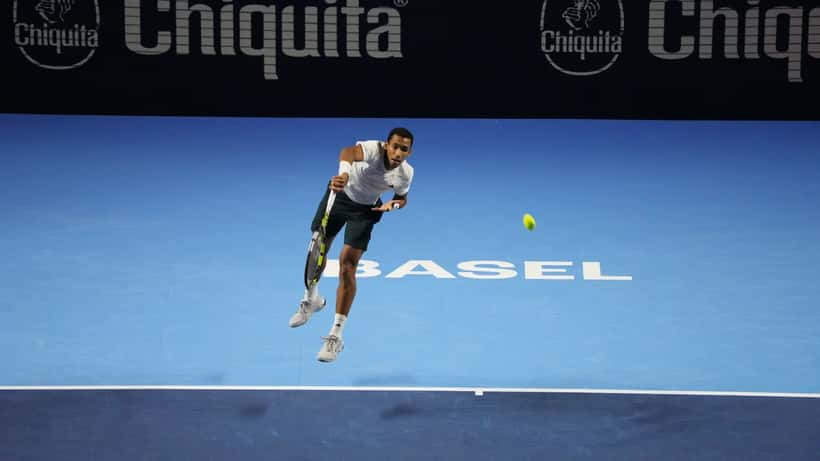
Felix Auger-Aliassime retired from his Rolex Shanghai Masters match against Casper Ruud on 14 October 2026, trailing 2-5 in the first set after a medical timeout and a visible knee twist. Ruud advanced to the quarter-finals, and the Canadian's left knee, wrapped in white strapping, is now the question hanging over his season's end.
For Australians who play weekend tennis, netball, football or touch footy, the scene is familiar. A foot plants, the body keeps turning, and the knee gives a sharp signal that something is wrong. The real question is what to do in the next 48 hours.
What happened in Shanghai
According to a report published by Kuwait Times on 14 October 2026, Auger-Aliassime, the fourth seed, took a medical timeout after the fifth game of the opening set. He returned with strapping on his left knee but could not continue. Ruud told reporters the Canadian appeared to twist his knee and was in a lot of pain.
The same day, Aryna Sabalenka played her second-round match at the Wuhan Open with protective taping on her right knee. She asked for the trainer in the deciding set before losing to Ann Li 3-6, 6-4, 7-6. Two high-profile knee scares in one day put the joint squarely in the headlines.
Neither player has publicly confirmed a diagnosis at the time of writing. Anything beyond the reported facts would be speculation, and this article does not try to diagnose either athlete.
Why knee twists matter beyond the tour
The knee is a hinge joint held together by ligaments, cartilage and the muscles around it. Twisting injuries can stress the ligaments that stop the shin sliding forward or sideways, and the menisci, the cartilage pads that cushion the joint. Healthdirect Australia notes that knee injuries range from minor sprains to serious ligament tears, and that some need prompt professional assessment.
The difficulty is that early symptoms overlap. A mild sprain and a significant tear can both produce pain, swelling and a feeling of instability in the first hours. Pain alone is a poor guide to severity.
Sports physiotherapists and sports doctors commonly look for a handful of warning signs after a twist:
- Swelling that appears within a few hours, which can indicate bleeding inside the joint
- A feeling that the knee "gives way" or cannot take your weight
- A pop or tearing sensation at the moment of injury
- Locking, where the knee will not fully straighten
- Numbness, a cold or pale foot, or severe pain that is getting worse
Any of these is a reason to be assessed rather than wait and see. A pale, cold or numb foot is an emergency and means calling triple zero (000).
The first 48 hours: what experts suggest
Tour players have a physio, a doctor and imaging on tap within minutes. Most of us have a car park and a bag of frozen peas. The gap between those two worlds is where avoidable damage happens.
In the first two days, clinicians generally recommend protecting the joint from further twisting, using crutches if walking is painful, applying cold for short periods, and elevating the leg. Many now favour gentle movement as soon as pain allows over prolonged rest, though the right balance depends on the injury. A physiotherapist or GP can tell you which applies to you.
What to avoid matters just as much. Playing on to "test" the knee is the most common mistake in amateur sport, because a joint that is already unstable can be damaged further by a second twist. Taking anti-inflammatory tablets without advice is another, since they are not suitable for everyone.
A realistic scenario: the Saturday doubles player
Consider a 42-year-old who plays doubles every Saturday morning. On the second set, they pivot sharply for a wide forehand and feel a pop in the right knee. They finish the match, drive home, and by mid-afternoon the knee has swollen to roughly the size of a grapefruit.
If the swelling appears within two to four hours of the injury, that is a stronger signal of bleeding in the joint than swelling that develops slowly over a day or two. Fast swelling after a pivot is the pattern clinicians associate with ligament injuries such as an anterior cruciate ligament (ACL) tear, which is why it warrants an assessment within the first week rather than a month of hoping it settles.
Here is the if/then logic. If the knee swells within four hours and feels unstable on the stairs, then book a GP or sports physio within 3 to 7 days and ask whether imaging is needed. If swelling is mild, appears the next morning and the knee takes weight comfortably, then a few days of protected movement is reasonable, with a review if it has not clearly improved by day 7. If the same person plays on at week two with an undiagnosed instability, then each further giving-way episode risks additional meniscus or cartilage damage, and what could have been a 6 to 12 week recovery can turn into a much longer one.
The numbers are illustrative, but the principle is real: the timing of swelling and the stability of the knee guide urgency better than the pain score does.
Which expert for which problem
Different professionals cover different parts of the journey:
- GP: first assessment, referral for imaging, ruling out emergencies
- Sports doctor or orthopaedic specialist: diagnosing ligament and meniscus injuries and discussing surgical versus non-surgical paths
- Physiotherapist: rehabilitation, strength and balance work, and a graded return to sport
- Exercise physiologist or strength coach: rebuilding load tolerance once the acute phase has passed
Matching the problem to the right specialist early saves weeks. Previous cases on tour show how long comebacks can take, as in our coverage of how Alexander Zverev's ankle recovery was managed, and what Thanasi Kokkinakis's landmark comeback demanded from his support team.
What the Shanghai retirement tells amateurs
Retiring from a match is a decision elite players make because the downside of continuing is bigger than a lost round. Auger-Aliassime was trailing in a Masters 1000 event and still stopped. That is a useful model for recreational players, who often have far less at stake and still push on.
A few habits make a difference. Warm up the hips and ankles as well as the knees, because stiffness above and below the joint changes how force travels through it. Build single-leg strength through the week, not just on the court. Replace worn court shoes, since grip that is too high on hard courts can fix the foot while the body rotates.
Hard courts like those in Shanghai are also less forgiving than clay or grass. Many Australian clubs play on similar surfaces, so the same logic applies to your local courts.
Returning to sport safely
Recovery is rarely a straight line. After the acute phase, clinicians typically look for a full range of motion, no swelling after activity, and strength in the injured leg that is close to the other side before clearing a return to pivoting sports. Many physios use hop tests and single-leg squats as simple checks. Returning too early is a leading reason people re-injure the same knee, so patience in the first month often saves months later.
What to do now
If you have twisted a knee recently, do not wait for a diagnosis from the internet. Note when the swelling started, whether the knee gives way, and whether you can straighten it fully. Those three details help a clinician decide how urgent the assessment is.
To discuss a knee injury with a qualified health professional, browse the Health experts on Expert Zoom and book a consultation that fits your symptoms and timing.
This article is general information, not medical advice. It does not diagnose any player's injury. If you have a knee injury, see a qualified health professional, and call 000 in an emergency.
