 Olivia Miller
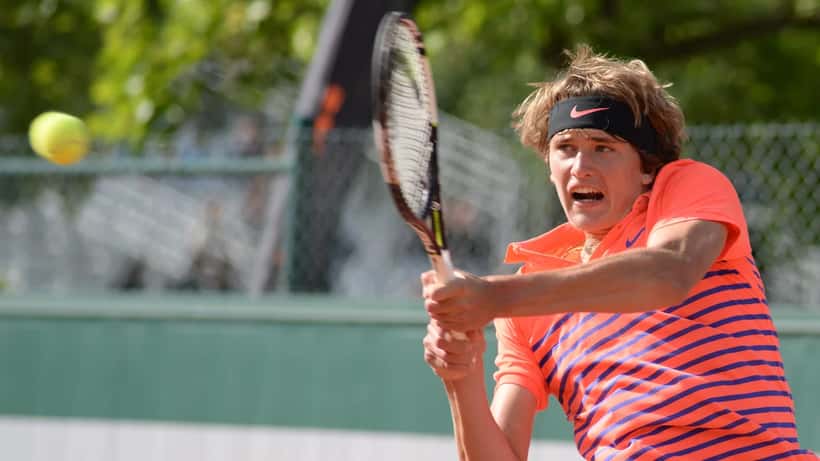
Alexander Zverev claimed his third BMW Open title in Munich on 20 April 2026, defeating Ben Shelton 6–2, 6–4 on his 28th birthday — and his comeback from a catastrophic ankle injury four years ago is a textbook lesson in what sports injury recovery actually demands.
The Injury That Nearly Ended His Career
On 3 June 2022, during his French Open semi-final against Rafael Nadal, Zverev's right ankle buckled on a routine forehand. He collapsed on the clay at Roland Garros, left the court on crutches, and was rushed into surgery three days later. The diagnosis was devastating: all three lateral ligaments in his right ankle were completely torn, along with bone damage, bone oedema, and a stress fracture.
"I basically broke everything that I can in my ankle," Zverev later said. "I thought my career was over."
The surgical repair took place on 6–7 June 2022 in Germany, and what followed was more than a year of rehabilitation, setbacks, and false dawns. At one point, believing himself ready to return for Davis Cup, he discovered the bones still weren't healed and he needed more time.
Why Complete Ankle Ligament Tears Are so Difficult to Treat
For athletes — weekend warriors and professionals alike — ankle injuries are among the most common sports injuries seen by sports medicine specialists. According to Sports Medicine Australia, ankle sprains account for up to 20% of all sports injuries, with lateral ligament sprains being the most common type.
The three lateral ligaments most often involved — the ATFL, CFL, and PTFL — provide rotational stability to the ankle. A complete tear of all three, as Zverev suffered, is classified as a Grade III sprain and typically requires surgical intervention rather than conservative management.
Recovery timelines vary significantly:
- Mild sprains: 1–2 weeks
- Moderate partial tears: 2–4 weeks
- Severe complete tears: 6–8 weeks (conservative) or 3–6 months (surgical)
- Complex cases with bone damage: 12+ months for full return to competition
Mechanical stability improvements are not reliably seen until 6 weeks to 3 months post-surgery. Research published in BMC Musculoskeletal Disorders notes that up to 70% of people who suffer lateral ankle sprains develop chronic ankle instability and recurring injury risk — particularly if rehabilitation is incomplete.
Zverev's 2026 Comeback: What "Staying Fit" Really Means
Entering 2026, Zverev was candid about his priorities. "Staying fit is my number one priority because then I can build. It's as simple as that," he said ahead of the Australian Open, where he reached the semi-finals.
He described 2025 as a year with "not many ups" before citing his Munich 2025 title and Australian Open final appearance as bright spots. Early 2026 was frustrating — early exits at Monte-Carlo and elsewhere prompted him to say in April: "It has been the worst period since my injury."
Then came Munich. Zverev did not face a single break point during the entire final against Shelton. He reclaimed the World No. 2 ranking and won his 24th ATP title in front of 70,000 spectators — on his birthday.
The arc from crutches to clay court dominance took four years, multiple setbacks, and a single overriding focus: prioritise recovery over results.
When Should Australian Athletes See a Sports Medicine Specialist?
Zverev's journey illustrates a mistake many amateur and recreational athletes make: underestimating the complexity of ankle injuries and attempting to return too quickly.
Sports medicine specialists and physiotherapists see this pattern constantly. An ankle that feels "okay" after a few weeks may still have compromised proprioception — the body's ability to sense joint position — which significantly raises re-injury risk.
Seek specialist assessment if:
- Pain or swelling persists beyond 72 hours after an ankle injury
- You experienced an audible "pop" or immediate weight-bearing inability
- Bruising extends significantly above the ankle joint
- You have recurring ankle sprains (possible chronic instability)
- You are returning to a sport after a significant lower-limb injury
Red flags requiring urgent attention:
- Severe swelling within the first hour
- Inability to bear any weight
- Visible deformity of the joint
A GP can provide initial assessment, but a sports medicine physician or orthopaedic specialist is best placed to interpret imaging results and recommend appropriate management — including whether surgical intervention is warranted or whether a structured rehabilitation programme will suffice.
The Proprioception Factor That Athletes Miss
One of the most overlooked aspects of ankle ligament recovery is proprioceptive retraining. Even after ligament healing, the nerve endings that tell your brain where your ankle is positioned in space — and how fast it's moving — are damaged. Without specific rehabilitation targeting proprioception, athletes return to sport with a joint that is structurally repaired but functionally compromised.
Programmes incorporating balance boards, single-leg exercises, and sport-specific movement progressions are standard in sports medicine rehabilitation. For professional athletes like Zverev, these are conducted under close specialist supervision with objective measures of progress. For recreational athletes, this phase is often skipped — which explains the high rate of re-injury.
Getting the Right Advice
Whether you are a tennis club member, a weekend touch-football player, or a competitive cyclist, ankle injuries deserve proper medical evaluation. In Australia, you can access sports medicine specialists through a GP referral (which may attract a Medicare rebate) or directly through private sports medicine clinics.
Expert consultation early — rather than waiting to see if the ankle "sorts itself out" — is consistently associated with better long-term outcomes and faster return to sport.
Zverev's Munich title was won not just with talent, but with four years of disciplined, specialist-guided recovery. The lesson for every Australian athlete is the same: take ankle injuries seriously, get expert advice, and don't rush the process.
This article is for informational purposes only and does not constitute medical advice. Consult a qualified sports medicine specialist for assessment of any injury.
