 Mark Taylor
Sydney received more than 100 millimetres of rain in under three hours in early March 2026 — triggering 500 emergency calls to the NSW State Emergency Service and 42 flood rescues. Now, as onshore winds continue to drive showers and thunderstorms across New South Wales this week, Sydneysiders are searching the rain radar in record numbers. Here is what the water is actually doing to your home, and when you need a professional.
What Happened: Sydney's March 2026 Rain Events
The Bureau of Meteorology issued severe weather warnings throughout March 2026 for multiple NSW districts, with six-hourly rainfall totals of 50 to 80 mm forecast for parts of Western NSW as recently as 17 March. In Sydney's south-west, the rainfall was so intense that six people were stranded by rising floodwaters in Fairfield, and a dozen properties were evacuated due to water entering homes.
This follows January 2026, when Sydney experienced what weather experts described as a one-in-200 to 500-year rainfall event: 80 to 140 mm fell in one to three hours, the NSW SES received over 1,400 severe-weather incident reports, and one fatality occurred near Wollongong due to a falling tree branch.
March 2026 may not have reached January's extremes — but the pattern is clear: Sydney's wet season is producing repeated heavy rain events that test the resilience of residential buildings.
The 5 Most Common Types of Water Damage After Heavy Rain
Water does not need a flood to cause serious structural damage to a home. Even moderate rain events — if your home has vulnerabilities — can lead to thousands of dollars in damage over hours. Here are the most common failure points:
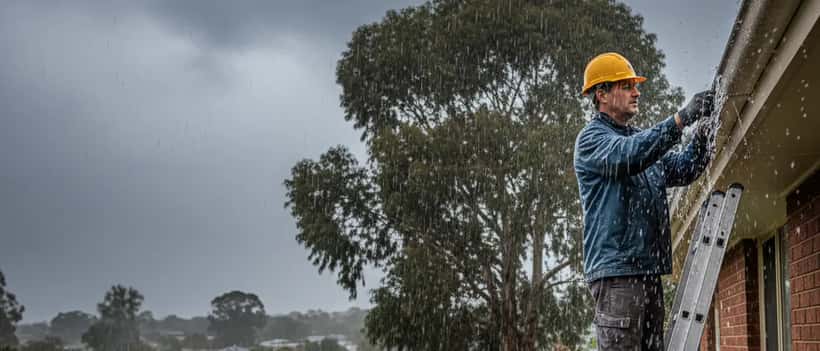
1. Roof leaks. The most immediate risk. Missing or cracked roof tiles, failing flashing around chimneys and skylights, and blocked gutters all create entry points for water. Even a small roof leak can saturate insulation and ceiling plaster within a single storm event.
2. Gutter and downpipe overflow. When gutters are blocked with leaf debris, water cascades behind cladding, down external walls, and into subfloor areas. Blocked downpipes direct water pooling directly against foundations.
3. Subfloor and foundation ingress. Water pooling against a home's perimeter can penetrate subfloor voids — especially in older Sydney homes built on brick piers. Persistent subfloor moisture leads to rising damp, termite attraction, and timber rot.
4. Rising damp in internal walls. Often invisible from the surface until plaster begins to bubble or mould appears. This occurs when ground-level waterproofing membranes have failed or when drainage around the home is insufficient.
5. Deck and pergola water pooling. Flat or low-gradient outdoor structures that are not properly waterproofed can hold standing water after heavy rain, allowing moisture to penetrate timber joists and wall junctions below.
What Sydneysiders Should Inspect After a Rain Event
After any heavy rain event, a simple walkthrough of your property can identify problems before they become expensive repairs. Focus on:
- Ceilings and cornices: Watermarks, bubbling paint, or sagging plasterboard indicate active or recent roof leaks
- External walls: Damp patches below window frames or weepholes suggest failed flashing or blocked drainage
- Gutters and downpipes: Check for blockages, overflows, or sections pulled away from the fascia under water weight
- Subfloor vents: Ensure ground-level vents are not blocked by mulch, soil build-up, or garden beds — these allow air circulation and prevent moisture accumulation
- Garage and shed floors: Hairline cracks in concrete slabs allow water ingress under sustained rainfall pressure
When to Call a Licensed Builder or Waterproofing Specialist
Many Sydneysiders treat roof and drainage issues as DIY projects — replacing a few tiles or clearing gutters themselves. This is fine for basic maintenance. But several situations require a licensed tradesperson:
- Any leak that cannot be traced to a single visible cause: Multiple water entry points often indicate a systemic problem with roof drainage design or waterproofing membranes
- Mould appearing inside walls: Structural mould remediation requires specialist containment — and the water source must be eliminated before remediation begins
- Foundation cracking or movement: Soil subsidence from water saturation can shift footings. This is a structural issue requiring a licensed builder, not a cosmetic repair
- Post-storm insurance assessments: If you intend to file an insurance claim, having a licensed tradesperson document the damage professionally increases claim success rates significantly
- Solar panels, skylights, or roof penetrations: Any roof work near these elements requires licensed electrical and waterproofing qualifications
Preparing Before the Next Storm
Sydney's BOM forecasts indicate continued wet and stormy weather through late March 2026, with onshore winds sustaining elevated rainfall risk across coastal NSW. Now is the time to act — not after the next downpour.
Key preventive steps:
- Book a gutter clean if you have not done so since autumn leaf fall
- Ask a roofing tradesperson to inspect flashing around any roof penetrations
- Ensure stormwater drains on your property are clear and discharging correctly
- Check that external downpipes discharge at least 300 mm away from your home's perimeter
Finding a qualified and trustworthy tradesperson or waterproofing specialist in Sydney has never been easier. ExpertZoom connects you with licensed home improvement professionals who can inspect your property and provide a realistic assessment of your water damage risks — before the next storm hits.
Sources: Bureau of Meteorology NSW Severe Weather Warning, 17 March 2026; Weatherzone – Sydney storms cause flash flooding, March 2026; The New Daily – Flash flooding leads to rescues, evacuations across Sydney, 27 February 2026; Grokipedia – 2026 Sydney floods (January event)
